

Third Heathrow runway conditional on green funding
Climate Change Committee advises clearing Heathrow expansion only if airlines fund green tech, pushing New York airfares up by £400.
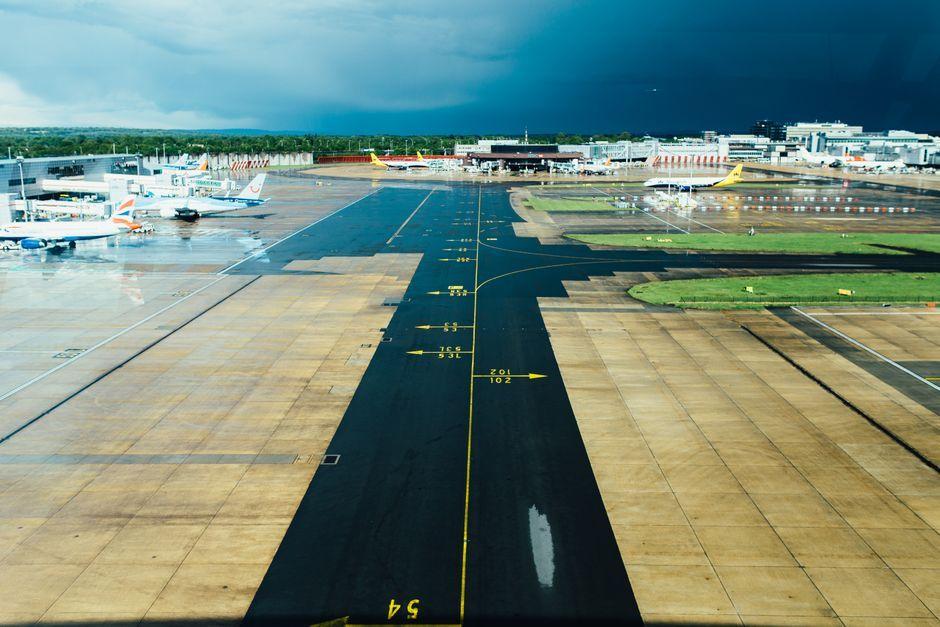
Stock photo for illustration only, not from the actual event
- CCC advises approving Heathrow third runway under strict environmental conditions
- Aviation industry must fund clean fuels and carbon-removal machines
- Return flights to New York could rise by up to £400 by 2050
- Government will review advice before a House of Commons vote this year
The Climate Change Committee (CCC) has released a report stating that the proposed £33bn expansion of Heathrow Airport, featuring a third runway, can proceed only on the condition that the aviation industry funds cleaner fuels and pays for machines designed to suck carbon dioxide directly out of the air.
Implementing this requirement is projected to increase ticket prices for travelers. According to the committee, a return trip to Alicante, Spain, could cost around £150 more, while a return flight to New York could rise by up to £400 in today's prices by 2050. This approach shifts the financial burden of decarbonisation directly onto the industry rather than relying on government funding.

Stock photo for illustration only, not from the actual event
Once completed, the expanded airport would increase passenger capacity from 85 million to 150 million people annually. However, it would also generate more carbon dioxide emissions than any other single sector of the UK economy by 2050. Consequently, the committee emphasizes that engineered carbon-removal machines must be deployed to eliminate more than one-third of these emissions.
Despite these proposals, airline industry representatives have rejected the approach, arguing that scaling up carbon removal is highly challenging and that the sector cannot shoulder the burden alone without government support. Meanwhile, Dr. Lois Pennington from the Tyndall Centre for Climate Change Research warned that because clean fuels and carbon removal are unlikely to scale up sufficiently, halting or reducing flight expansion remains the only reliable method to stay within UK carbon limits.
"After years of delay, years of indecision... we have given the go-ahead to this project quite simply because the economic case stacks up and will help bring growth."
John Healey, UK Chancellor
The CCC's recommendations highlight the ongoing tension between economic growth and national climate commitments in the UK. By invoking the polluter-pays principle for direct air capture technologies, the committee attempts to internalize the environmental costs of aviation growth. However, because large-scale engineered carbon removal remains largely unproven at this scale, the upcoming House of Commons vote will serve as a crucial test for whether economic arguments can successfully override severe environmental and local community concerns.
Political figures, including Prime Minister Andy Burnham and London Mayor Lord Sadiq Khan, have previously raised concerns regarding environmental impacts, regional investment distribution, and noise pollution. Furthermore, the £33bn project faces strong opposition from local residents and councils situated beneath the flight path, with approximately 750 homes facing demolition to make way for the new runway.
Source: BBC Science & Environment
Found something wrong in this article? Report an issue with this article
Comments
Leave a Comment