

I Mined Crypto for 40+ Hours and Made Less Than a Dollar
Mining Iron Fish on an RTX 4070 laptop for over 40 hours yielded under a dollar. Every metric, profit threshold, and thermal fix is fully published.

Stock photo for illustration only, not from the actual event
- Mined crypto using an RTX 4070 laptop for over 40 hours with profits under one dollar.
- Fixed thermal throttling by locking core clock to 1600 MHz, boosting performance by 25%.
- Launched a public dashboard allowing verification across three independent data sources.
- Emphasized radical transparency over unrealistic passive income promises in crypto.
Cryptocurrency mining content generally falls into two extremes: screenshots showcasing unbelievable profits, or vague warnings claiming the activity is completely dead. Neither approach helps everyday users who want to know what happens when they plug in their own graphics card. To challenge this trend, a developer launched an experiment utilizing an ASUS gaming laptop equipped with an NVIDIA RTX 4070 GPU, mining Iron Fish while publishing a public dashboard where every single figure down to $0.01 can be cross-checked against verifiable sources.
After running the hardware for over 40 hours, the total revenue generated was less than a single U.S. dollar. The creator points out that this tiny return is the core message of the project: small amounts are acceptable as long as the numbers are completely honest and verifiable. Every single data point can be audited across three independent mirrors consisting of the pool ledger, the on-chain ledger, and live exchange prices, ensuring any discrepancy is immediately exposed.
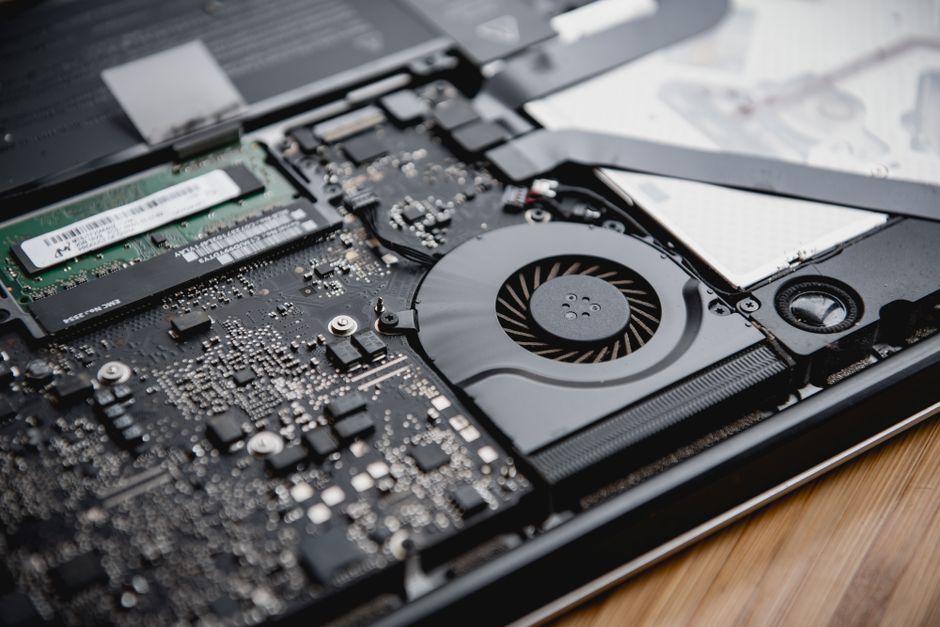
Stock photo for illustration only, not from the actual event
Out of the box, gaming laptops make terrible mining rigs, primarily due to thermal limitations rather than GPU power. Boost clocks spike aggressively, cooling fans scream, the chassis overheats, and thermal throttling kicks in to reduce performance. The solution discovered during the experiment counterintuitively involved lowering and locking the core clock speed down to 1600 MHz on Windows with an NVIDIA graphics card.
Executing a single command, nvidia-smi -lgc 1600, immediately raised the sustained hashrate from 13.33 MH/s to 16.67 MH/s, delivering a 25% performance improvement while significantly dropping temperatures and fan noise. The machine now operates quietly next to the workspace throughout the night, despite lolMiner's native --cclk flag failing to execute on this specific laptop GPU architecture.
"I'd rather lose a visitor than have someone lose money on my numbers."
Project Creator
The experiment also highlights the exact threshold where mining ceases to make financial sense. Operating at the locked setting of 14.5 MH/s while consuming 40 watts at an electricity rate of ¥0.55 per kWh, a custom watchdog script automatically pauses the miner if the price of IRON drops below $0.047. Running at a loss is treated as a deliberate choice rather than an accident. Furthermore, if local electricity costs exceed roughly ¥1.20 or $0.17 per kWh, the project website displays a hard verdict advising visitors not to run the software.
From an engineering perspective, utilizing a consumer gaming laptop for continuous cryptocurrency mining imposes severe thermal stress on components not originally engineered for 24/7 maximum loads. Furthermore, running local AI workloads such as ComfyUI on an 8GB VRAM graphics card consumes approximately 4.6GB of memory for the DAG, leaving insufficient headroom and causing background mining operations to fail silently. This demonstrates the inherent hardware conflict between localized generative AI tasks and continuous background computation on mobile GPUs.
A notable five-hour mining outage occurred during the test simply because the creator forgot a local AI image generator running ComfyUI occupied the same GPU. Because the FishHash algorithm requires roughly 4.6GB of VRAM for its Directed Acyclic Graph while an 8GB card only had 183MB free, the mining software failed silently in the background. The key takeaway is that local AI pipelines and active mining cannot coexist smoothly on an 8GB mobile GPU without automated switching scripts.
Source: Dev.to
Found something wrong in this article? Report an issue with this article
Comments
Leave a Comment