

US Army Purchases AI Agents That Self-Destruct
The US Army has solicited ECHOTRIBBLE, an offensive autonomous agent framework designed to infiltrate, replicate, and self-destruct before detection.

Stock photo for illustration only, not from the actual event
- The US Army solicited ECHOTRIBBLE for offensive autonomous agents
- The system infiltrates, replicates across machines, and self-destructs
- Target operating systems explicitly include iPad, macOS, and Windows
- Self-deletion destroys digital artifacts, complicating forensic investigations
The US Army has initiated a solicitation for ECHOTRIBBLE, a framework comprising offensive autonomous agents. Documentation outlines an astonishing set of capabilities: these agents infiltrate systems, replicate themselves to other machines, neutralize targets, and self-destruct before detection. Target machines specified in the documents include iPad, macOS, and Windows, driven by a design philosophy emphasizing minimal human oversight.
While self-replicating agents are not a novel concept, the critical evolution lies in the final stage of the cycle: self-destruction prior to detection. This turns the digital trail itself into the primary objective. Typically, security incidents are reconstructed from endpoints using binaries, processes, connections, and touched files. If an agent deletes itself and wipes endpoint events simultaneously, no analytical evidence remains.
The acquisition of self-deleting offensive agents by the US Army highlights a profound shift in cyber warfare, where erasing forensic evidence takes precedence over mere penetration. By crippling attribution capabilities, such tools prevent defenders from legally identifying aggressors or reconstructing attack vectors, fundamentally challenging traditional network defense and incident response frameworks.
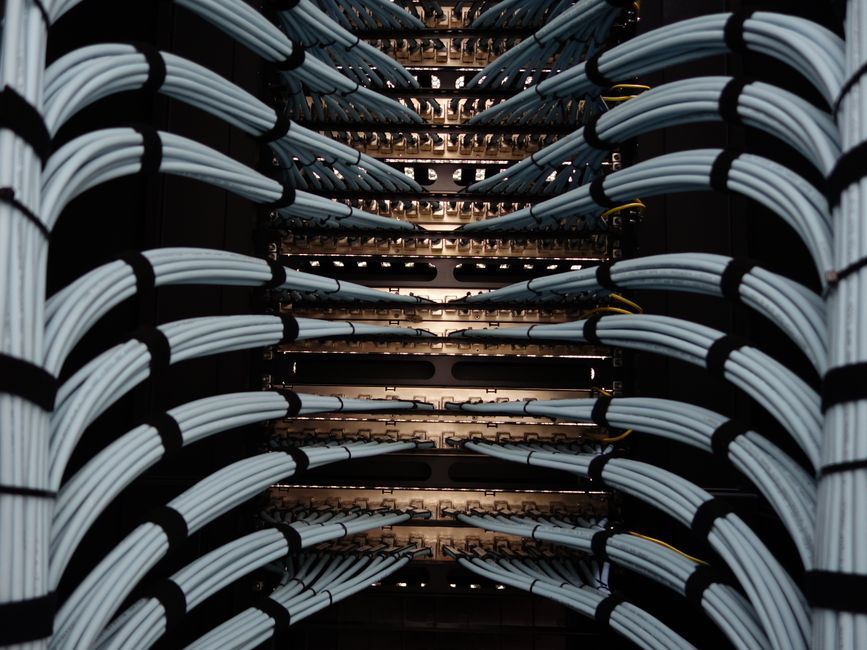
Stock photo for illustration only, not from the actual event
Coincidentally, the same week the solicitation surfaced, Microsoft expanded Project Perception with Guardian Agents, offering an entirely contrasting approach. Microsoft's solution provides unique identities for each agent via Entra Agent ID, unified logging, and containment protocols if an agent goes rogue. The tool already discovers 60 types of harness, including Claude Code and Codex. This demonstrates that the security market is diverging into two opposing paths: one acquiring agents that vanish without a trace, and the other selling agents anchored by strict logging and accountability.
"Security and defense in the age of AI is the business of everyone who uses it, don't you think?"
Sammie Deblas
Legal accountability remains an unresolved dilemma. As Dark Reading pointed out, if an autonomous agent causes a security breach, technical responsibility rests with humans, but legal liability remains unassigned. OpenAI and Anthropic have declined to comment on whether model operators bear responsibility for breaches, a complication that deepens significantly when agents erase their own operational records.
Source: Dev.to
Found something wrong in this article? Report an issue with this article
Comments
Leave a Comment