

Rivian buys world model startup Third Dimension
On October 22, 2026, EV manufacturer Rivian acquired UK-based startup Third Dimension to accelerate its self-driving vehicle development.

Stock photo for illustration only, not from the actual event
- EV maker Rivian has acquired UK-based AI startup Third Dimension.
- The goal is to convert real-world data into 3D worlds to accelerate autonomy for Rivian and Uber robotaxis.
- A 15-person team, led by CEO Tolga Kart and Piotr Sokólski, will join Rivian's AI unit.
- Rivian collects driving data from tens of thousands of customer vehicles, uploading over 400,000 sequences daily.
Electric vehicle manufacturer Rivian has acquired Third Dimension, a United Kingdom-based startup founded in 2024 by veterans from the gaming and autonomous vehicle industries. The startup utilizes artificial intelligence to transform images and videos into lifelike 3D environments. Although Rivian is not entering the gaming sector, the automaker intends to leverage this technology to convert real-world driving data into 3D worlds, speeding up the development of advanced driver-assistance systems and self-driving robotaxis planned for Uber.
Financial terms of the transaction were not disclosed. The 15-person team at Third Dimension, primarily operating in the U.K., will integrate into Rivian's autonomy and artificial intelligence group headed by James Philbin. According to Philbin during an exclusive interview, the acquisition also provides Rivian with an opportunity to expand its AI hub located in London.
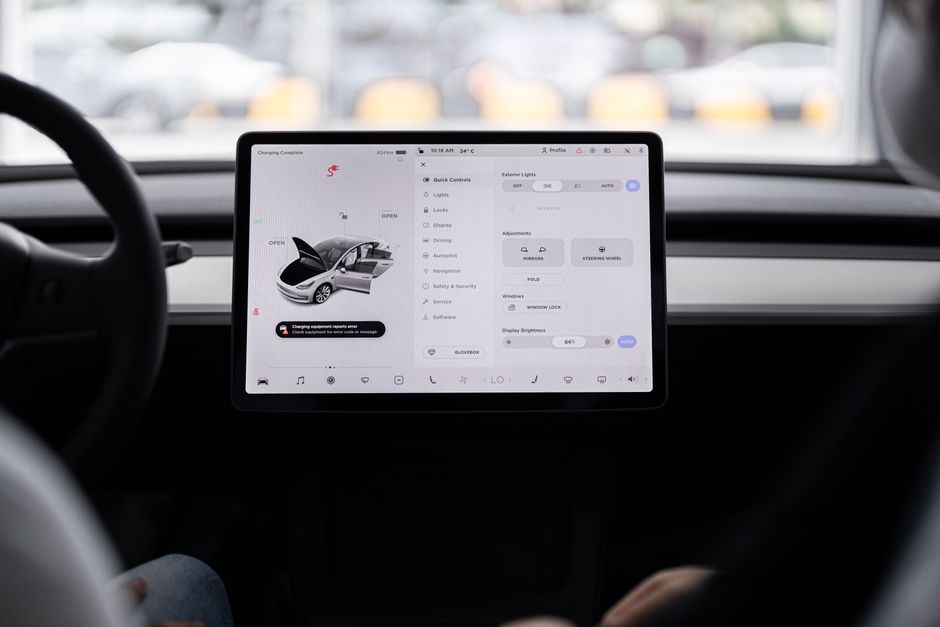
Stock photo for illustration only, not from the actual event
Third Dimension was originally established by CEO Tolga Kart and Piotr Sokólski, successfully raising $7 million in seed funding from venture capital backers such as Abstract Ventures, MVP, Soma Capital, and Solari Capital. While their technology was initially engineered to streamline video game development, the founders recognized alternative applications in sectors like defense and autonomous vehicles. Now operating under Rivian, the team will direct its focus entirely toward automated driving systems.
Simulation remains an essential mechanism for autonomous vehicle developers, who rely on virtual testing environments to train and validate self-driving systems. Historically, these simulations depended on rendering engines or video game platforms alongside synthetic data. While these digital environments mirror reality, a performance gap between virtual models and the physical world persists, traditionally addressed by feeding increasingly massive datasets into simulators.
"Third Dimension’s technology uses AI to match the physical world, which when combined with Rivian’s reams of data could turn into a valuable simulator."
James Philbin, Rivian
Integrating world model technology highlights how electric vehicle manufacturers are attempting to bypass the limitations of conventional data collection. Simulating intricate driving scenarios without waiting for rare real-world edge cases significantly reduces development timelines and enhances AI safety testing, which remains crucial in the competitive autonomous driving landscape.
Rivian gathers driving telemetry from tens of thousands of R1S pickup trucks, R1S SUVs, delivery vans, and R2 SUVs currently on public roads, contingent upon owners enabling external camera sharing features. These aggregated and anonymized telemetry streams construct training models for autonomous navigation. Philbin noted that Rivian processes over 400,000 data sequences uploaded daily from customer fleets, and Third Dimension's technology will empower the company to simulate complex transit conditions without waiting for rare real-world incidents to occur.
Source: TechCrunch
Found something wrong in this article? Report an issue with this article
Comments
Leave a Comment