

Youtaro Sakamoto: Schattenrequisit Column Art
Japanese artist Youtaro Sakamoto presents Schattenrequisit: Column, a kinetic thread installation that transforms human presence into shifting shadows.

Stock photo for illustration only, not from the actual event
- Japanese artist and engineer Youtaro Sakamoto created Schattenrequisit: Column.
- The kinetic installation consists of fine threads forming a cylindrical architectural column.
- Millimeter-wave sensors detect visitors and drive a computational stepper motor to rotate the threads.
- The project draws inspiration from the light-filtering qualities of traditional Japanese sudare screens.
Created by Japanese artist, engineer, and researcher Youtaro Sakamoto, Schattenrequisit: Column is an innovative kinetic installation that explores the profound relationship between architectural permanence, human presence, and shifting shadow projections within a shared space.
The concept draws direct inspiration from the light-filtering characteristics of sudare, which are traditional Japanese slatted screens. By treating physical materials and immaterial shadows as unified components, the project forms a single cohesive sculptural composition.
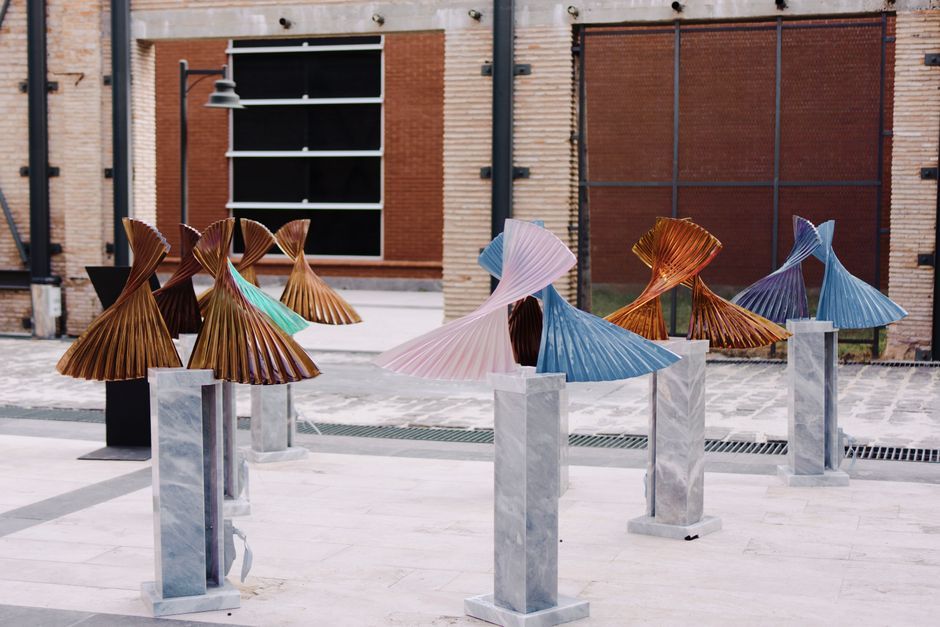
Stock photo for illustration only, not from the actual event
The artwork takes the physical form of an architectural column constructed from closely spaced fine threads. Integrated millimeter-wave sensors carefully detect the proximity of visitors, triggering a precision stepper motor developed through advanced computational design and physical prototyping.
In response to movement within the space, the motor slowly rotates and shifts the thread assembly, altering the overlap of linear strands. This mechanical movement continuously transforms the shadow silhouettes cast across surrounding walls and floors.
By animating a structural archetype that is typically static, Sakamoto's kinetic column mirrors the constant interaction between fixed urban infrastructure and transient human circulation. The piece successfully bridges traditional crafts with modern computational mechanics to visualize the invisible flow of human activity.
Source: designboom
Found something wrong in this article? Report an issue with this article
Comments
Leave a Comment