

Mars Cloud 2026: 1,000-Mile Cloud May Reveal Novel Physics
A new model suggests Mars may host a 1,000-mile ice-forming cloud driven by physics never directly observed in nature, reports Ars Technica.

Stock photo for illustration only, not from the actual event
- Researchers developed a new model detailing giant Martian clouds
- The cloud formation spans over 1,000 miles across the planet
- It may reveal ice-forming physics never before seen in nature
A fresh scientific study has captured the attention of astronomers after researchers developed a sophisticated computer model indicating that Mars could harbor unprecedented meteorological phenomena, centered around the formation of a colossal cloud stretching across vast distances.
This phenomenon revolves around understanding the mechanics of ice crystal condensation in the thin and unique atmosphere of the Red Planet. The latest model simulates how atmospheric dust particles and water vapor interact, leading to the remarkable conclusion that ice aggregation may occur through pathways never previously documented in natural environments on Earth.
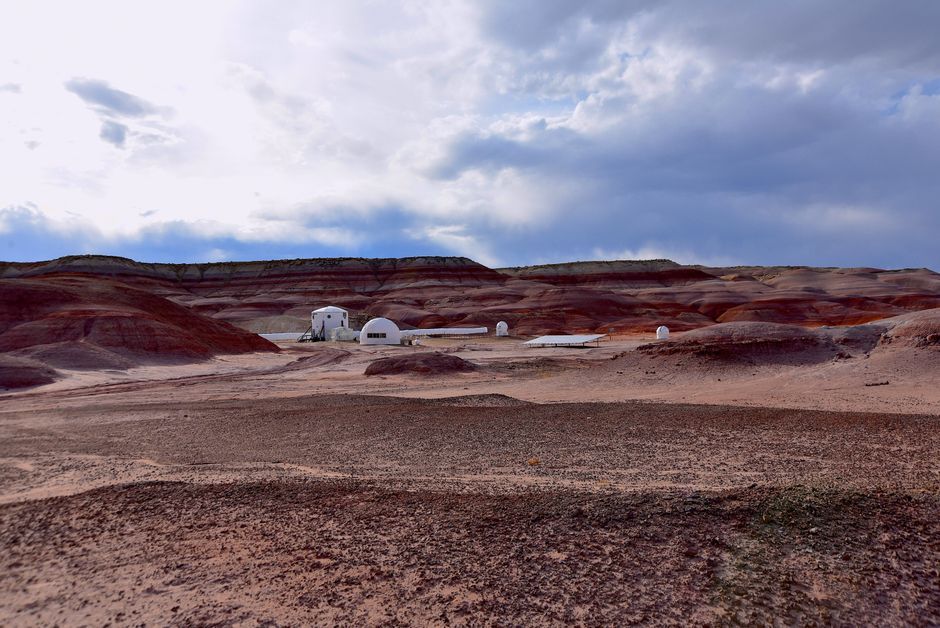
Stock photo for illustration only, not from the actual event
The sheer scale of the simulated cloud structure is particularly striking, spanning an impressive 1,000 miles across the Martian landscape. This feat leaves scientists questioning how atmospheric winds, temperatures, and airborne dust combine to forge such a massive structure.
This theoretical modeling breakthrough is crucial for advancing our understanding of planetary atmospheric physics. Because the Martian atmosphere features extremely low pressure and high dust content, condensing water or carbon dioxide into a 1,000-mile cloud requires complex thermodynamic mechanisms. If confirmed by future observations, these findings could help scientists decode Mars' ancient climate history and apply these insights to exoplanet studies.
Although currently based on theoretical simulations, this discovery opens fresh horizons for space exploration and theoretical physics, with researchers worldwide eagerly anticipating future observational data to test the hypothesis.
Source: Ars Technica
Found something wrong in this article? Report an issue with this article
Comments
Leave a Comment