

Flash Forest uses drones to scatter seeds in Canada
Canadian startup Flash Forest uses customized drones and biodegradable capsules to restore wildfire-damaged forests across Canada.

Stock photo for illustration only, not from the actual event
- Flash Forest uses drones to scatter seed capsules for reforestation
- Biodegradable pods contain nutrients and beneficial mycorrhizal fungi
- Partnered with Oujé-Bougoumou Cree First Nation to gather native seeds
- Planted 686,147 trees across five sites in Canada throughout 2025
Across the blackened forests of northern Quebec, drones are flying above the remains of burned timber, launching small seed-filled capsules directly into the earth. Developed by Canadian company Flash Forest, this aerial technology aims to replant landscapes devastated by wildfires, reaching remote and rugged areas that are extremely difficult to access on foot without heavy machinery.
This initiative follows Quebec's severe 2023 wildfire season, which burned approximately 4.5 million hectares across the province. Flash Forest has since expanded its operations nationwide in Canada. According to its latest impact report, the company successfully planted 686,147 trees across five distinct sites in 2025, covering 429 hectares of burned forest land.
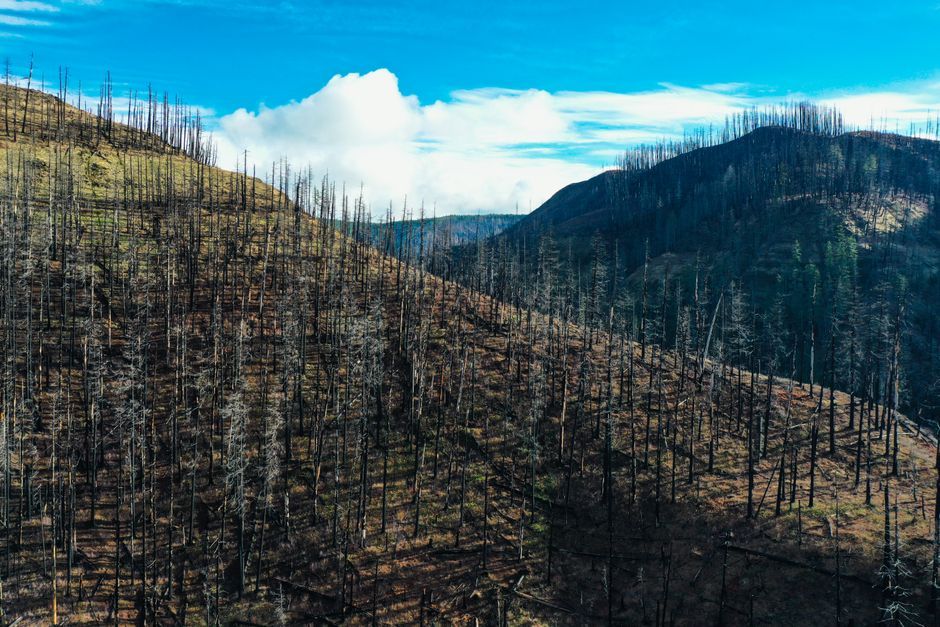
Stock photo for illustration only, not from the actual event
At the core of the operation is a biodegradable seed pod designed to support young trees through early growth stages. Each capsule contains nutrients, moisture-retaining additives, and mycorrhizal fungi to help developing roots absorb soil nutrients. Customized drones propel the pods straight into the ground, allowing seeds to germinate instantly without requiring a traditional tree nursery phase.
"The aerial process offers a way to restore habitats while avoiding further disturbance to the land."
Benny Blacksmith, Oujé-Bougoumou Cree First Nation
Behind the automated planting lies a collaborative seed-gathering effort with the Oujé-Bougoumou Cree First Nation. To combat a shortage of native seeds, the team traveled by snowmobile and climbed through northern Quebec forests in temperatures plunging to -30°C to harvest jack pine cones directly from living trees. This winter operation yielded roughly 8.5 million seeds, which were integrated into planting pods within five months.
Deploying drones equipped with bio-engineered seed capsules represents a major leap in overcoming traditional reforestation bottlenecks, such as manual labor limits and dangerous terrain access. By combining cutting-edge aerial robotics with indigenous ecological knowledge, projects like this offer a scalable model for mitigating climate-driven forest loss.
Flash Forest's work extends well beyond the initial drone deployment. The company conducts field surveys to assess vegetation recovery and monitors seedling survival rates against untreated control plots. Ongoing evaluations continue to study how changing climate conditions, such as warmer temperatures and shifting rainfall, impact long-term forest regeneration.
Source: designboom
Found something wrong in this article? Report an issue with this article
Comments
Leave a Comment