

Hope: Split Ceramic Table Lamp by Alexey Danilin for Maytoni
Designed by Alexey Danilin for Maytoni, Hope is a split ceramic table lamp inspired by classical Roman statuary and traditional pottery.

Stock photo for illustration only, not from the actual event
- Hope is a table lamp designed by Alexey Danilin for the German lighting brand Maytoni.
- The fixture is composed almost entirely of natural ceramic, allowing 90% recyclability.
- The sculptural silhouette draws inspiration from classical Roman statuary and pottery.
- A small metal sphere at the apex doubles as a touch-sensitive switch and dimmer.
Designed by Alexey Danilin for German lighting brand Maytoni, Hope is a table lamp composed almost entirely of natural ceramic. Conceived for mass production within technical and budgetary parameters, the design replaces conventional fabric or metal shades with a split ceramic envelope.
This innovative construction allows approximately 90% of the fixture’s mass to remain recyclable at the end of its lifecycle, highlighting a sustainable approach to modern lighting product design and manufacturing.
For the lamp’s sculptural silhouette, the designer draws inspiration from classical Roman statuary and traditional pottery forms, pairing curved, arching geometries with
- contemporary product design standards
- arch-like architectural silhouettes
- a split body divided by a central gap
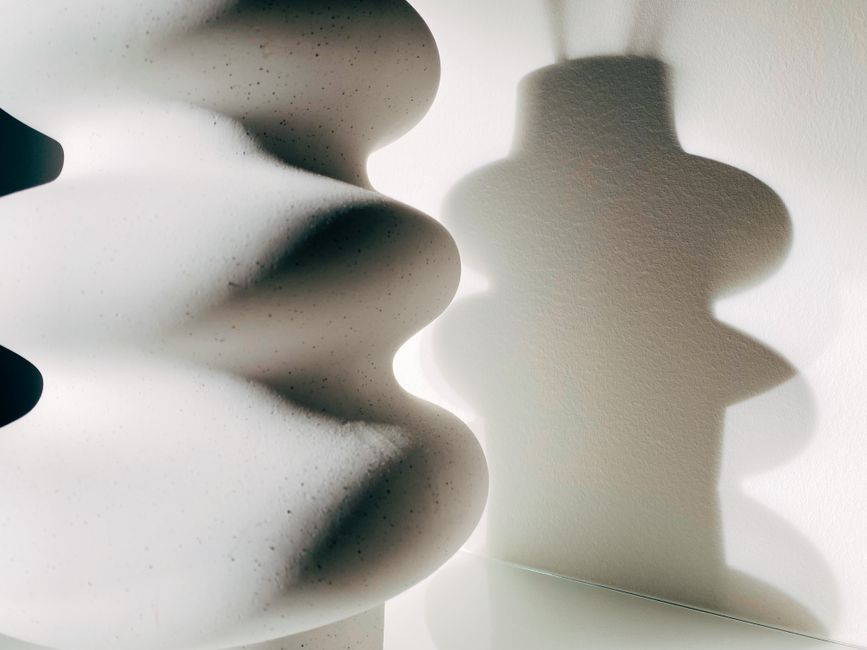
Stock photo for illustration only, not from the actual event
Internally, integrated LED boards are oriented to direct illumination outward through the central gap separating the two ceramic halves. This mechanism utilizes surface reflection to soften the light output and eliminate direct glare from the source.
"reflected light bouncing off the inner ceramic faces softens direct glare from the light source"
Alexey Danilin
A central vertical stem fastens the two ceramic elements, capped by a small metal sphere at the top. This structural component doubles as a functional touch-sensitive switch and continuous dimmer, offered in various metal finishes to integrate with diverse interior palettes.
The integration of monolithic ceramic materials in lighting design demonstrates a growing shift toward simplifying multi-material assemblies. By eliminating complex glued or mixed-material shades, designers facilitate end-of-life recycling while achieving unique aesthetic and acoustic light diffusion qualities.
Source: designboom
Found something wrong in this article? Report an issue with this article
Comments
Leave a Comment