

From Russian cages to Irish sanctuary: Brown bears rescue
Two brown bears rescued from cramped cages in Dagestan, Russia, after a five-year international journey to Wild Ireland sanctuary in County Donegal.

Stock photo for illustration only, not from the actual event
- Brown bears Bu and Tyapa rescued from small cages in Russia
- The mission took five years and faced geopolitical disruptions
- Over 100 people collaborated to transport the bears via Moscow and Abu Dhabi
- The bears now reside in a natural woodland habitat at Wild Ireland
A remarkable five-year rescue mission to save two brown bears from the Republic of Dagestan in Russia and bring them to the Irish countryside has concluded successfully. The bears endured harrowing pasts, with one forced to perform in a circus and the other confined to a cage so cramped that standing upright was impossible.
Today, the two bears are adapting to a completely new lifestyle surrounded by trees and grass at Wild Ireland, a sanctuary located in Burnfoot, County Donegal, which provides a safe haven for rescued animals including brown bears, monkeys, wolves, and lynx.
Killian McLaughlin, founder of Wild Ireland, first learned about Bu and Tyapa in 2021 and committed to bringing them to safety. He noted that the bears were in extremely poor health upon initial rescue, with Tyapa living in an open-air concrete enclosure measuring just 2.5 by 2.5 meters and 2 meters high, lacking a roof against harsh weather and relying on a garden hose for drinking water while being raised for potential taxidermy.
"These bears have suffered trauma and the first step of that recovery process is get them back out into the forest, get their paws into the soil and on the grass and get them exploring."
Killian McLaughlin, Wild Ireland Founder
The rescue operation faced severe logistical hurdles, including Russia's invasion of Ukraine in February 2022 which blocked the original transport corridor, followed by Middle Eastern airspace closures in February 2026 due to escalating conflicts involving Iran. Ultimately, more than 100 individuals—including volunteers, lawyers, veterinarians, and cargo specialists—coordinated the effort. In late 2025, Dima and Yana Kim from Tiger House sanctuary drove 36 hours to Dagestan to cut the bears out of their rusting steel cages, before eventual transit via Moscow and Abu Dhabi to Dublin in August 2026.
Cross-border wildlife rescue operations involving captive animals from remote regions frequently encounter complex legal hurdles, veterinary protocols, and sudden geopolitical shifts. The successful relocation of Bu and Tyapa highlights the immense dedication required from international networks of specialists to overcome wartime logistics and bureaucratic delays for animal welfare.
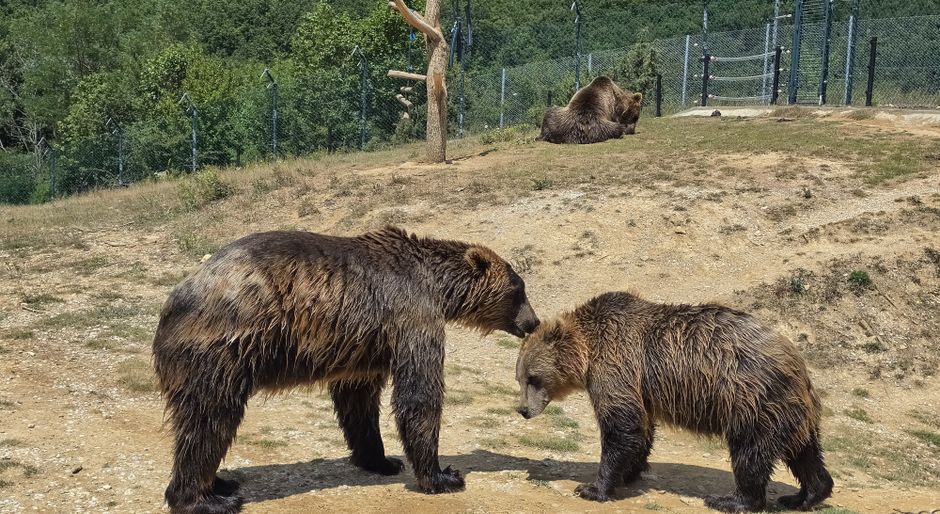
Stock photo for illustration only, not from the actual event
Since arriving at Wild Ireland, McLaughlin reported that both bears have gained weight, improved their coat condition, and recovered normal kidney function according to follow-up blood tests. They now enjoy woodland and water features with private retreat areas. Staff member Chloe McElhatton and regular visitor Chris Roberts both expressed delight in seeing the impressive bears thriving in their spacious new natural habitat after overcoming such severe initial trauma.
Source: BBC Science & Environment
Found something wrong in this article? Report an issue with this article
Comments
Leave a Comment