

Thai Basil Controversy: Company Clarifies New 4 Varieties
A private firm and Kasetsart University Kamphaeng Saen campus developed and registered 4 new Thai basil varieties for 12 years of protection, assuring no impact on traditional crops.

Stock photo for illustration only, not from the actual event
- Private firm partnered with Kasetsart University Kamphaeng Saen to develop 4 new basil varieties.
- Registered for plant variety protection with the Department of Agriculture for 12 years.
- Public expressed deep concern over potential restrictions on growing traditional basil.
- Company clarified protection applies exclusively to the 4 new proprietary varieties.
A widespread public debate has emerged in Thailand after a major private company collaborated with Kasetsart University Kamphaeng Saen campus to research and develop four brand-new plant varieties, namely Kaew Juri 01, Kaew Juri 02, Kaew Juri 03, and Kaew Juri 04 Thai basil.
Following the development, the company submitted an application to the Department of Agriculture under the Ministry of Agriculture and Cooperatives to secure plant variety protection rights for these four specific strains, spanning a protection period of 12 years.
This registration sparked intense anxiety among farmers, food vendors, and the general public who grow Thai basil for household consumption, with many worrying that ordinary citizens would no longer be legally allowed to grow or sell basil as usual.
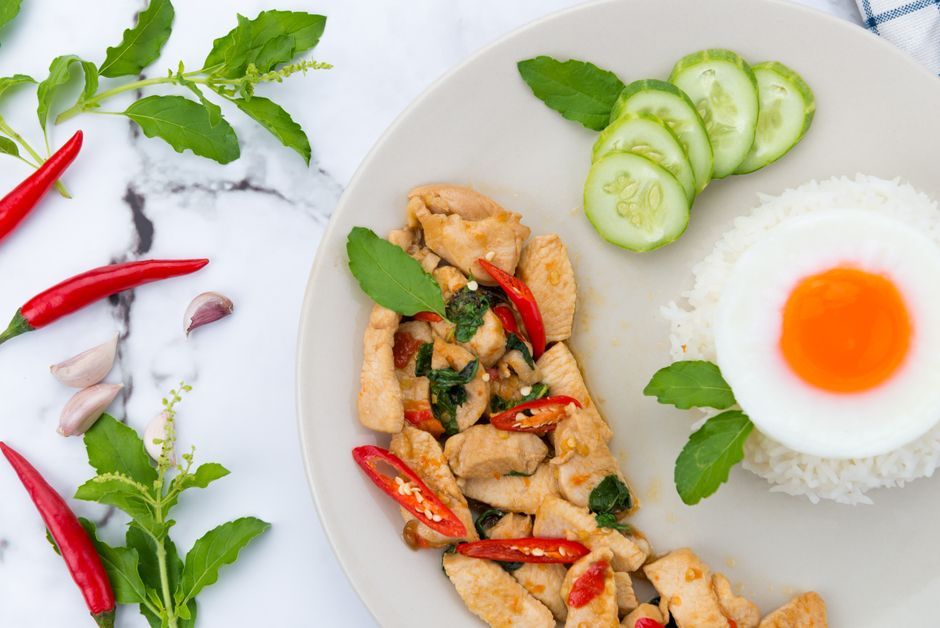
Stock photo for illustration only, not from the actual event
This controversy highlights the ongoing tension in Thailand regarding agricultural intellectual property rights. While plant variety protection laws encourage private investment in breeding higher-quality crops, they frequently trigger public fears about corporate monopoly over seeds and restricted access for small-scale farmers, making transparent communication essential.
In response to the growing apprehension, the private company issued an official clarification to address public concerns, firmly asserting that the legal protection covers exclusively the four newly developed strains.
The company explained that these varieties were bred specifically to serve as ingredients for its ready-to-eat food production lines, operating strictly within the company's supply chain and network of contracted growers.
Furthermore, the firm emphasized that it has no intention of commercializing the seeds to the general public, nor does it claim proprietary rights over traditional Thai basil varieties currently grown and consumed by citizens.
Consequently, the company assured that traditional Thai basil varieties cultivated across the country can still be freely grown, consumed, and sold by anyone without any legal disruption.
Source: Khaosod Politics
Found something wrong in this article? Report an issue with this article
Comments
Leave a Comment