

Inploration: Space Art & Earth Understanding 2026
New book by Richelle Ellis and Lawrence Azerrad gathers over 50 contributors to explore space perspectives and planetary care.

Stock photo for illustration only, not from the actual event
- Gathers insights from over 50 artists, astronauts, scientists, and cultural thinkers.
- Inspired by the iconic Earthrise photograph captured by Apollo 8 on December 24, 1968.
- Examines how art transforms planetary wonder into tangible environmental responsibility.
- Published by DelMonico Books under the title Inploration.
Understanding our home planet requires looking far beyond its familiar horizons. A newly published book titled Inploration: Art Exploring Space to Understand Earth, created by artist Richelle Ellis and creative director Lawrence Azerrad, brings together more than 50 artists, scientists, astronauts, ecologists, and cultural thinkers to examine how space exploration reshapes our perception of Earth.
"We are not observers of this world. We are participants in it. We always were," state Richelle Ellis and Lawrence Azerrad in an interview with designboom. Published by DelMonico Books, the publication explores how art can translate a deep sense of cosmic wonder into a more active and grounded form of environmental responsibility for people living on the surface.
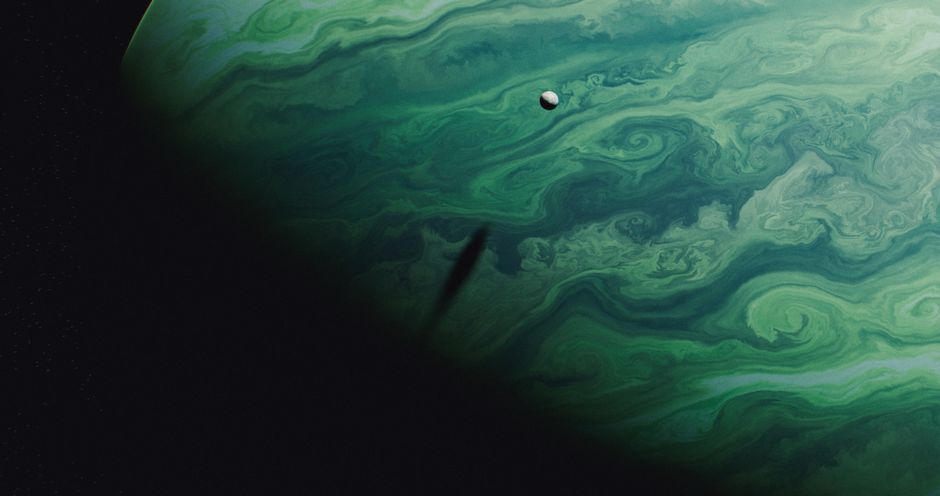
Stock photo for illustration only, not from the actual event
The book's origins trace back to Earthrise, the historic photograph captured spontaneously by Apollo 8 astronaut Bill Anders on Christmas Eve in 1968. Revealing Earth as a fragile blue and white sphere suspended in darkness without visible borders, the image fundamentally shifted humanity's perspective. Nearly six decades later, Ellis and Azerrad revisit this moment, asking how the Overview Effect can resonate with a culture saturated in digital feeds and screens.
The Overview Effect describes the cognitive shift reported by astronauts when viewing Earth from orbit, characterized by a sudden appreciation for the planet's fragility and unity. Translating this profound psychological experience through artistic mediums bridges the gap between abstract scientific data and personal ecological stewardship.
For Richelle Ellis, whose artistic practice moves between deep space, remote oceans, and analog space missions, leaving familiar surroundings highlights our absolute dependence on Earth. Meanwhile, Lawrence Azerrad draws on his creative direction work for the 40th-anniversary edition of NASA's Voyager Golden Record, treating the selection of human artifacts and sounds as an exercise in collective self-understanding as much as interstellar communication.
"Our only true relationship with the planet exists in the finite moment we are in. The past and the future are really just ideas."
Richelle Ellis and Lawrence Azerrad
The book also integrates Indigenous knowledge systems and cultural cosmologies, emphasizing reciprocity, care, and long-term obligations toward living systems rather than viewing nature merely as a resource. Furthermore, contributions from creators like musician Beatie Wolfe highlight how art translates complex climate data into emotional resonance, bridging the gap where raw numbers alone might fall short.
Source: designboom
Found something wrong in this article? Report an issue with this article
Comments
Leave a Comment