

Saudi Giga Project Spending Shrinks. Hotel Developers Keep Building
Saudi Arabia scales back giga project contract awards to $10.6 billion this year, yet hotel developers continue expanding pipelines by 13%.

Stock photo for illustration only, not from the actual event
- Saudi giga project contract awards dropped to $10.6 billion this year from a peak of $31.7 billion in 2023.
- The decline is primarily driven by scaling back the Neom development, including The Line and Trojena.
- Hotel development pipelines grew 13% year-over-year to 387 projects, heavily skewed toward luxury segments.
Saudi Arabia is trimming budgets for massive infrastructure developments to meet tight event deadlines in Riyadh. Although overall state spending has softened, hotel developers are continuing to build as if previous targets remain unchanged, creating a widening mismatch between public megaprojects and private hospitality pipelines. Alongside cost inflation and security pressures, this divergence poses a critical challenge for asset owners and international hospitality brands.
According to business intelligence platform MEED, the kingdom has awarded $10.6 billion in giga project contracts so far this year, extending a downward trend that began in 2024 as Riyadh scaled back expenditures on Neom.
Edward James, MEED’s head of content and research, noted during a market webinar on Tuesday that contract awards peaked at $31.7 billion in 2023 before dropping to $26.7 billion in 2024 and $13.6 billion in 2025. He attributed the ongoing slowdown primarily to Neom, specifically the postponement of marquee components like The Line and the Trojena ski resort.
Even during peak periods, these giga projects constituted a minor fraction of the wider Saudi construction sector. Total awards for these developments have reached roughly $117 billion to date, representing about 17% of the $700 billion awarded across the kingdom over the past decade. James emphasized that the contraction in giga project spending is not the main driver behind the broader drop in national construction awards.
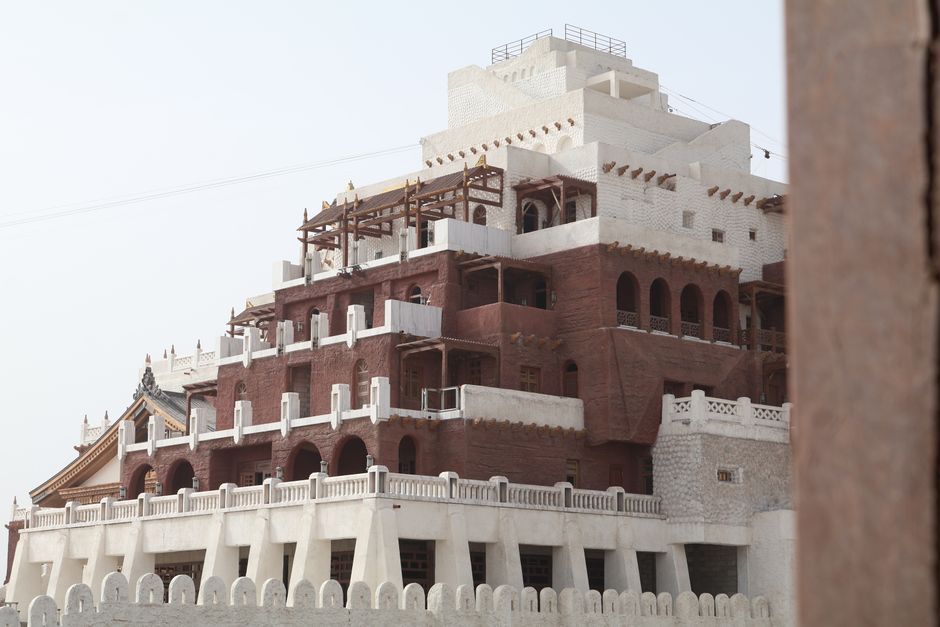
Stock photo for illustration only, not from the actual event
The strategic trimming of ambitious projects like Neom reflects a policy shift under Saudi Vision 2030, where investment priorities are increasingly pivoting toward artificial intelligence infrastructure and preparations for mega-events like Expo 2030 and the 2034 World Cup. Government agencies are redirecting capital to ensure essential transport hubs and stadiums in Riyadh are operational on schedule.
The majority of this year's giga project awards have flown to Qiddiya and Diriyah, with smaller allocations going to Rua Al Madinah and Roshn. MEED anticipates that the subsequent wave of construction will stem from King Salman International Airport upgrades, Expo 2030 sites, and World Cup stadium developments beginning in 2027.
"The decline in giga project awards is not the overriding reason for a drop in project awards in the kingdom."
Edward James, Head of Content and Research, MEED
In stark contrast to public infrastructure cutbacks, hospitality developers show no signs of slowing down. Data from Lodging Econometrics reveals that Saudi Arabia maintained 387 hotel projects in its pipeline during the second quarter, marking a 13% increase from the previous year. However, a vast portion of this new supply targets the ultra-luxury tier, even though upcoming crowds for Expo 2030 and the World Cup will likely require a greater volume of mid-scale accommodations.
Compounding these development hurdles, ongoing security incidents—such as the Houthi drone and missile activity targeting Riyadh's airport since September, including an October 10 strike that claimed 13 lives—introduce heightened operational risks to the infrastructure priorities the kingdom is striving to execute.
Source: Skift
Found something wrong in this article? Report an issue with this article
Comments
Leave a Comment