

Are back-to-back relegations from Premier League rising?
Analyzing consecutive relegations from the Premier League to League One as Burnley face a similar threat to Leicester and Luton amid financial struggles.

Stock photo for illustration only, not from the actual event
- Consecutive relegations from the Premier League down to League One are becoming statistically more common in English football.
- Burnley face the threat of a double drop following a 4-1 defeat against Lincoln City.
- Debt burdens and management issues have severely impacted former top-flight clubs.
- The Independent Football Regulator (IFR) proposes reforming parachute payments to reduce financial distortion.
In English football, the rapid descent from the top flight down to the lower tiers was once exceptionally rare. However, statistics show that back-to-back relegations, known as the double drop, are becoming increasingly common. A prime example is Leicester City, which went from playing Liverpool in the Premier League to facing Notts County and MK Dons in League One within 15 months, echoing the current plight of Burnley in the Championship relegation zone.
For the 1,450 Burnley supporters who traveled to Lincoln City last weekend, the threat is all too real. Head coach Nicky Hayen lost his position following a 4-1 defeat against a Lincoln side that played in non-league football 10 years ago. The club subsequently appointed Diego Lopez as chief football officer and Fabio Celestini as their new manager to spark a turnaround.
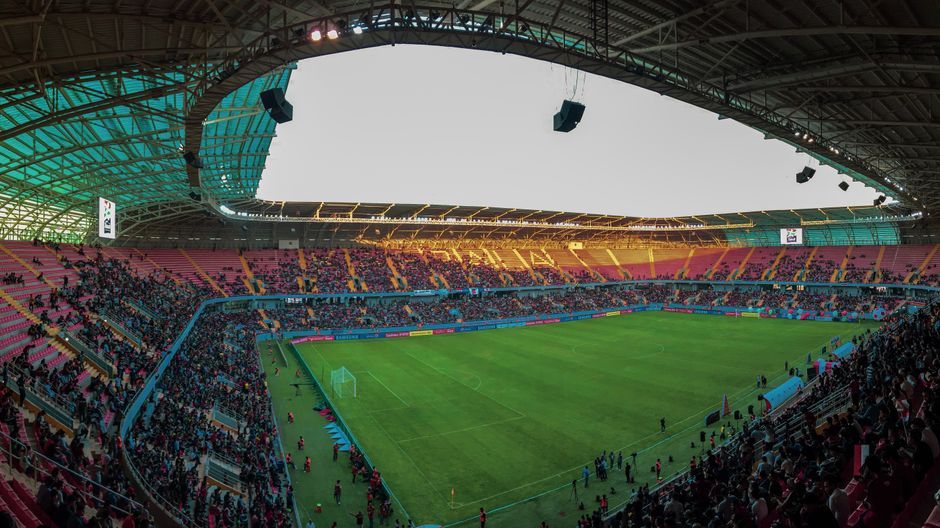
Stock photo for illustration only, not from the actual event
Fifteen years ago, the prospect of a top-flight club being relegated in consecutive seasons was unthinkable. In the first 20 seasons of the Premier League, it happened only once to Swindon Town in 1994-95 due to divisional restructuring. Since 2011-12, the feat has occurred four times in 14 seasons, or three times in nine seasons since Sunderland's drop between 2016 and 2018, followed subsequently by Luton and Leicester.
Significant turmoil on and off the pitch contributed to the demise of clubs like Wolverhampton Wanderers, who burned through four managers during their descent, and Sunderland, who finished bottom of both divisions. Meanwhile, Leicester's relegation to League One resulted from poor boardroom decisions, including a six-point deduction for breaching profit and sustainability rules, leaving them 23rd in the Championship.
"For both of those clubs, in my opinion, it was a case of mismanagement of the playing squad."
Football Expert
The phenomenon of consecutive relegations highlights the widening financial chasm between the Premier League and the Championship. Relegated clubs often inherit high wage bills and financial commitments while facing drastically reduced broadcast revenues. While parachute payments offer initial cushioning, poor financial governance can quickly compound into unsustainable debt and further relegations.
In contrast, Luton Town demonstrated responsible management despite recruitment hurdles, progressing with a new 25,000-capacity stadium at Power Court scheduled for 2028-29. For Burnley under Alan Pace's ALK Capital, the club carried £142m in loans in the 2024-25 accounts—the highest debt in the Championship—and recently set a new English league record for the longest winless run at home, reaching 378 days.
A State of the Game report published by the Independent Football Regulator (IFR) emphasized that a new financial agreement between the Premier League and the EFL must reduce the distortive impact of parachute payments. IFR chair David Kogan noted that narrowing the financial gap between recipient and non-recipient clubs will make the Championship a much more competitive league.
Source: BBC Sport
Found something wrong in this article? Report an issue with this article
Comments
Leave a Comment