

Understanding Virtual Aperture and Radar Antenna Channels
Discover how virtual antenna channels in radar modules dictate angular resolution, combining gain, and performance limits for presence and fall detection.

Stock photo for illustration only, not from the actual event
- Antenna channel count is not a linear scale of overall radar quality.
- Virtual channels are calculated using N = T x R to determine angular resolution.
- Breathing detection relies on wavelength and phase rather than channel count.
- Excessive channels increase hardware cost, power consumption, and processing load.
Channel counts are the specification most often quoted when radar modules are compared, such as one transmit and three receive, or six and six. While meaningful, this comparison is frequently misinterpreted as a linear quality scale. What a channel actually buys depends entirely on the specific task assigned to the radar. This article explores what channel counts determine, what they do not, and how they map onto presence sensing, breathing and sleep monitoring, and fall detection.
Using T transmit antennas and R receive antennas, time-division MIMO produces a virtual array defined by N = T x R. This virtual array sets the angular capability. Theoretical configurations and their approximate angular resolutions illustrate this relationship clearly.
These figures represent theoretical bounds at broadside with a strong signal-to-noise ratio. Real-world performance degrades further away from the antenna boresight. Processing across N channels also delivers a combining gain of approximately G = 10 x log10(N) dB, which extends detection range modestly based on the fourth root of the signal-to-noise ratio
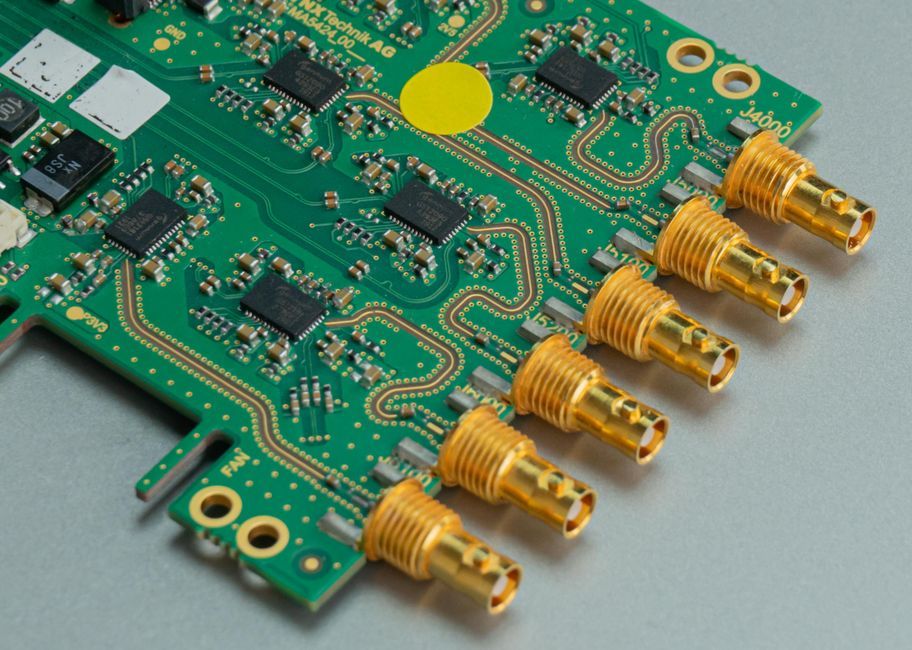
Stock photo for illustration only, not from the actual event
Furthermore, azimuth resolution alone falls short when elevation is required. Estimating height demands receive elements distributed vertically, as a single row provides azimuth data only regardless of count. L-shaped or triangular layouts achieve both dimensions at the cost of lower resolution.
"Two of the three do not need angle at all. They need sensitivity and phase, which come from wavelength, bandwidth and combining gain."
Dev.to
From an engineering perspective, adding more channels does not solve every sensing challenge. Similar to camera optics, matching hardware capabilities to the specific application environment ensures optimal efficiency, keeping hardware cost and power consumption low for consumer devices.
Other vital parameters operate independently of channels. Range resolution depends on swept bandwidth, whereas displacement sensitivity relies entirely on wavelength and phase. For instance, operating at 61–62.5 GHz yields a wavelength of about 4.9 mm, producing roughly 144° of phase change per millimetre of displacement. This mechanism enables accurate breathing measurement without requiring extra channels.
Fall detection serves as the primary exception requiring elevation data to distinguish postures like lying, seated, or standing. However, it only requires enough precision to classify coarse states within a limited radius of about 1.5 meters. Adding channels beyond this classification threshold yields unuseable detail while imposing penalties in board area, power, and processing frame duration.
Source: Dev.to
Found something wrong in this article? Report an issue with this article
Comments
Leave a Comment