

Edicola 518 2026: Perugia Newsstand Becomes Oak Reading Kiosk
Designer Giuseppe Arezzi transforms the historic Edicola 518 newsstand along the Sant’Ercolano staircase in Perugia, Italy, into a red oak public reading kiosk reopening June 1, 2026.

Stock photo for illustration only, not from the actual event
- Giuseppe Arezzi redesigns the historic Edicola 518 newsstand in Perugia, Italy.
- Features vibrant red oak stepped seating, a built-in timber structure, and a free water fountain.
- The project marks the site's tenth anniversary and reopened on June 1, 2026.
Located along the historic Sant’Ercolano staircase in Perugia, Italy, Edicola 518 has been transformed by multidisciplinary designer Giuseppe Arezzi into a micro-architecture and cultural hub. Realized for the Laboratorio di Creatività Contemporanea open call promoted by the Italian Ministry of Culture under the L’Edicola che Vorrei initiative, the intervention marks the site's tenth anniversary. Reopening on June 1, 2026, the project repurposes the traditional newspaper kiosk typology, shifting it from a commercial sales stall into an open, community-oriented reading hub and public amenity.
Arezzi’s design preserves the original exterior envelope while applying a saturated red finish that creates a sharp chromatic contrast against the stone staircase. Inside, the conventional vendor-counter barrier is replaced by a stepped, multifunctional furniture installation built from red-lacquered oak, concealing technical compartments while providing integrated bench seating. At the core of the timber structure, a stainless-steel fountain supplies free drinking water to pedestrians. The window frames are re-engineered to double as external display racks for independent magazines and art books, while an exterior platform extends outward onto the historic steps to ensure seating remains accessible outside business hours.
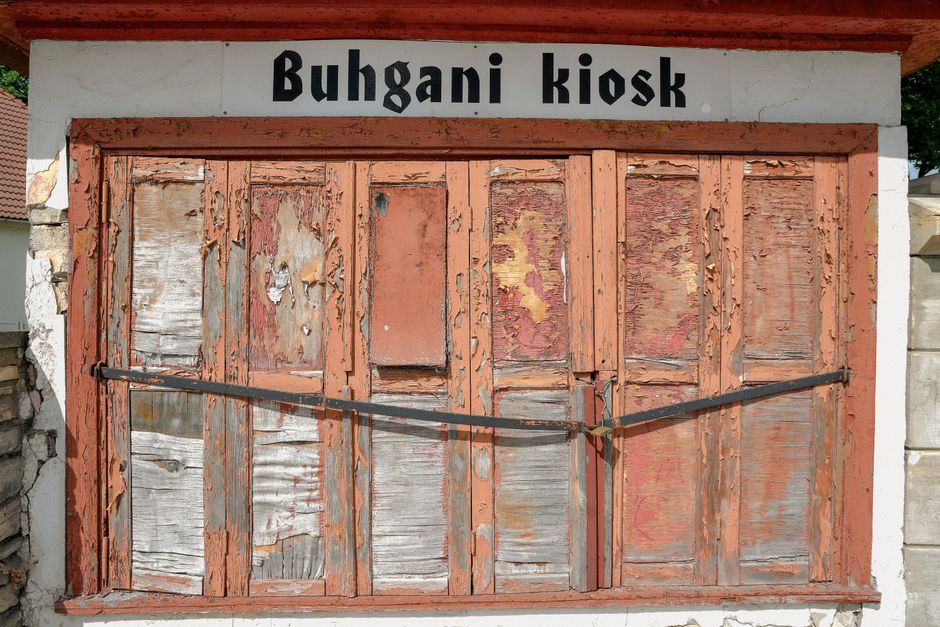
Stock photo for illustration only, not from the actual event
Transforming a micro-retail newsstand into civic infrastructure reflects modern urban design trends focused on returning public space to pedestrians for rest and interaction. Blending contemporary architectural interventions with historical Italian urban settings demonstrates how adaptive reuse can actively foster everyday community engagement.
Additionally, the installation incorporates Ambo, a 20-centimeter-high modular stool-bookstand designed in collaboration with the Seed Festival to match the elevation rise of the urban stairs as both mobile seating and a display surface. Arezzi aimed to preserve the daily ritual associated with the newsstand, shifting the purpose from purchasing information to processing it through rest and reading.
"I interpreted the kiosk not merely as micro-architecture, but as a versatile, spatial piece of furniture, where every technical element is conceived to foster interaction and the free enjoyment of public space."
Giuseppe Arezzi
The project was realized through contributions from designer Giuseppe Arezzi, development collaborator Matteo Pettorali, technical partners Seed 360 and Umbra Acque, with photography captured by Giovanni Emilio Galanello.
Source: designboom
Found something wrong in this article? Report an issue with this article
Comments
Leave a Comment