

Middle East War Takes Heavy Toll on IndiGo, Leading to Massive Loss Despite Surging Ticket Prices
India's IndiGo airline swings to a net loss in the first quarter of fiscal year 2027, despite raising fares and achieving strong unit revenue growth, as it faces a severe shock from skyrocketing fuel costs.
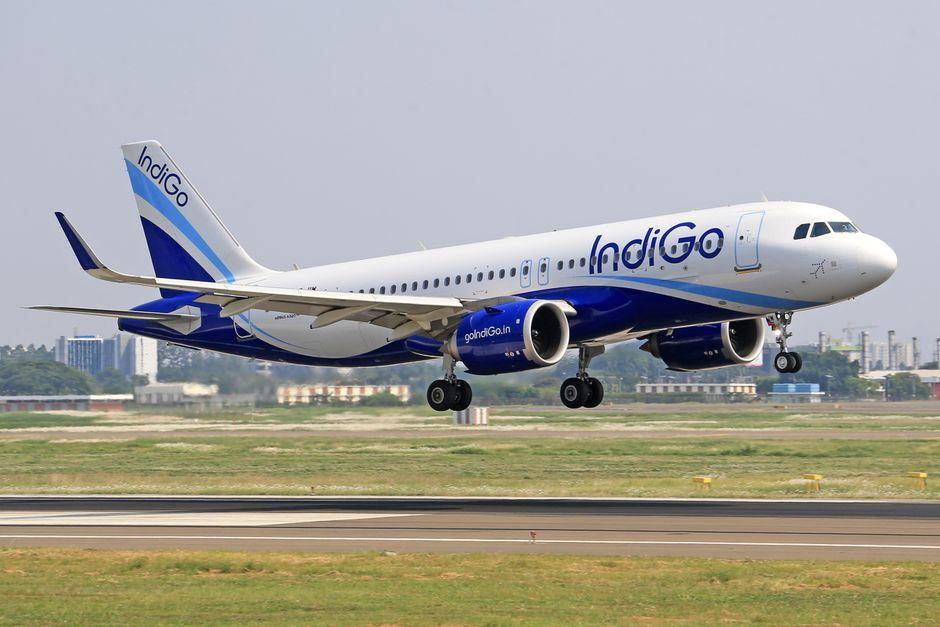
Stock photo for illustration only, not from the actual event
- IndiGo swings to a net loss of 2.4 billion rupees in Q1 of fiscal year 2027
- Fuel cost per available seat kilometer surges by about 80% due to the Middle East conflict
- The airline raises ticket prices and pushes unit revenue up by over 21.3% to cope
- Presses ahead with long-term plans including a deal for over 1,000 CFM LEAP-1A engines and international expansion targets
The aviation industry is facing yet another brutal test as Indian airline giant IndiGo reports its financial results for the first quarter of fiscal year 2027, swinging to a net loss of 2.4 billion rupees (approximately 24.5 million USD). This marks a stark reversal from the net profit of 21.8 billion rupees (around 225 million USD) recorded during the same period in the previous year.
Gaurav Negi, Chief Financial Officer, revealed the data during the earnings conference call, stating that renewed tension in the Middle East region has undermined the airline's efforts to manage record-high fuel costs. In particular, fuel costs per available seat kilometer skyrocketed by about 80% compared to the same period last year, a factor that eroded nearly half of the airline's fundamental profit-making capacity.
The challenges faced by IndiGo highlight the vulnerability of low-cost carriers to external factors, such as geopolitical conflicts that directly impact Middle Eastern flight routes and airspace closures. Dealing with volatile fuel costs alongside the expiration of domestic price caps forces the business model to rely heavily on aggressive ticket price hikes simply to survive.
Despite severe cost pressures, the airline has fought back by significantly increasing passenger ticket prices, driving up yields by 21.3% year-over-year. Executives also forecast that unit revenue growth for the current quarter will exceed 25%.
However, uncertainty continues to cloud second-quarter earnings due to the resurgence of violent conflicts and the expiration of domestic jet fuel price-cap measures by the Indian government, which adds further complexity to cost management. Consequently, the company has had to implement belt-tightening measures, such as delaying executive salary hikes and keeping capacity flat for the September quarter.
On the long-term growth front, IndiGo remains undeterred in executing its strategic roadmap, having signed an agreement to procure more than 1,000 CFM LEAP-1A engines while maintaining its target to expand international flights to 40% by 2030.
Source: Skift
Found something wrong in this article? Report an issue with this article
Comments
Leave a Comment