

ecoLogicStudio uses living organisms to build better spaces
London design studio ecoLogicStudio integrates algae, fungi, and bacteria into architecture through projects like DeepForest³ in Milan and a healthcare garden in Switzerland.

Stock photo for illustration only, not from the actual event
- ecoLogicStudio integrates algae and fungi as active parts of architecture
- DeepForest³ was showcased at the Triennale Design Museum in Milan in 2025
- A Swiss healthcare project uses Chlorella algae to filter polluted air
- These bio-integrated systems capture carbon dioxide and generate energy
London-based design studio ecoLogicStudio, co-founded by Claudia Pasquero and Marco Poletto, has pioneered architectural concepts that do not exclude microbes, instead utilizing algae, fungi, and bacteria as active components of healthier living environments. Their work champions a style of architecture that grows alongside the natural ecosystem rather than against it.
In 2025, the studio presented DeepForest³ inside the Triennale Design Museum in Milan, Italy, as part of the exhibition We the Bacteria: Notes Toward Biotic Architecture, curated by Beatriz Colomina and Mark Wigley. The installation proposed how domestic spaces could transform through natural processes, described by Poletto as a fully functional biotechnological living system rooted in the metabolic cycles of algae and fungi.
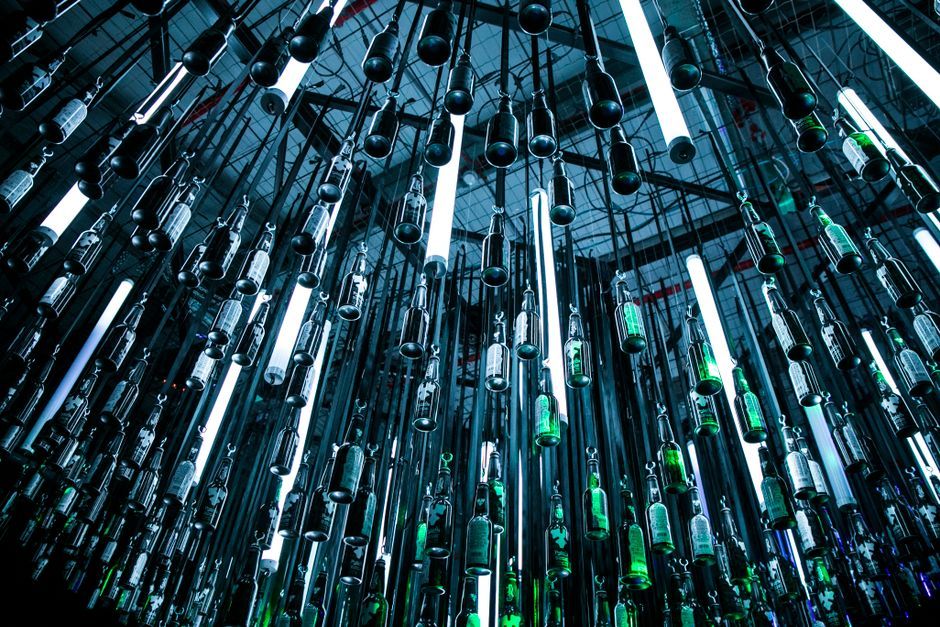
Stock photo for illustration only, not from the actual event
Nearly ten years prior at EXPO Milano 2015 Future Food District, the studio erected The Urban Algae Folly, a triangular canopy glowing with green algae in the central square. The structure utilized Spirulina microalgae to provide shade while acting as an effective CO₂-capturing organism. Visitors standing underneath contributed to the system's growth through their exhaled carbon dioxide, creating a symbiotic relationship between humans, the sun, and algae.
In Nyon, Switzerland, the studio developed an outdoor healthcare garden combining air-purifying algae cultures with medicinal plants. Housed within a circular tent-like structure made of semi-transparent fabric, the space features 36 large borosilicate glass bioreactors containing 350 liters of living green Chlorella algae cultures capable of filtering 150 liters of polluted air per minute, challenging the assumption that healthy spaces must be sterile.
"We are now more and more aware that our own nature is cyborgian and collective, and that our own identities extend far beyond the limits of our bodies. We are microbial ecosystems, we are algorithmic networks. It is a necessary consequence that our home becomes an extension of these ecosystems and networks. Our home is our microbiome."
Claudia Pasquero
The integration of biotic architecture represents a significant shift from treating nature merely as decorative construction material to viewing microorganisms as essential living infrastructure. By turning facades and urban spaces into biological metabolisms, future buildings could actively purify air and harvest clean energy independently of traditional mechanical systems.
Additionally, in collaboration with the Synthetic Landscape Lab at the University of Innsbruck, the studio created CryoflorE for MUDAC’s 2025 Solar Biennial, Soleil·s. This near-hexagonal model of a miniature cityscape filled with cyanobacteria captures electrons from photosynthesis and channels them into electrical currents along copper-wired streetscapes, marking early steps toward bio-solar urban networks.
Source: designboom
Found something wrong in this article? Report an issue with this article
Comments
Leave a Comment