

Gulf Hotels Peak Season Stalls as Travelers Wait Out U.S. Vote
Gulf hotels enter peak season behind last year as leisure travelers delay bookings and cancel trips ahead of the U.S. midterms amid security concerns and high airfares.

Stock photo for illustration only, not from the actual event
- UAE hotel occupancy fell to 67.6% in September down from 79.9% a year earlier
- Dubai short-term rental forward bookings dropped 37.5% for November
- Nine foreign airlines have suspended Dubai service into 2027
- International tourists generate an estimated 70% of Gulf hotel revenue
Hotels across the Gulf region are heading into their crucial peak quarter well behind last year's performance. Leisure travelers are holding off on making reservations until after the U.S. midterm elections on November 3, while some are canceling their travel plans outright.
Traveler hesitation is closely tied to ongoing security anxieties in the region. U.S. President Donald Trump stated he would not launch an attack on Iran prior to the November 3 vote, and while Iran has not attacked the UAE since May, the nation bore the brunt of missile and drone strikes back in March. Operators note that guests are now fearful of a fresh wave of military escalation once the election concludes.
"Is Q4 as good as what we thought in August? No, it’s not. Leisure travelers are waiting and watching until after the U.S. midterm elections. They are thinking twice before booking their tickets, also influenced by the high airfares."
Saurabh Tiwari, IHCL Vice President for Middle East, Maldives and Sri Lanka
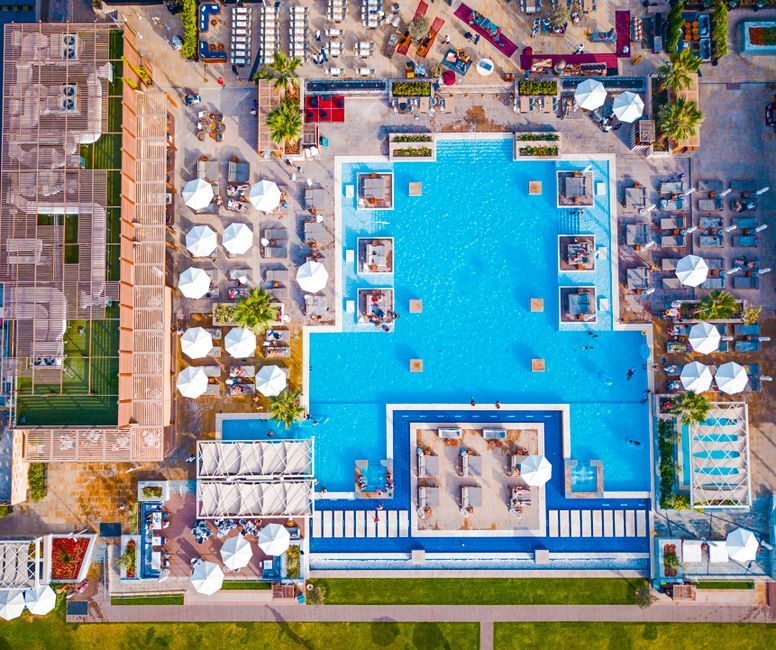
Stock photo for illustration only, not from the actual event
Official figures highlight the steep slowdown facing the market. CoStar data shows that UAE hotel occupancy dropped to 67.6% in September, compared to 79.9% during the same period last year. Meanwhile, Dubai's Department of Economy and Tourism reported a 44% drop in international visitors to 6.97 million through August. Short-term rentals have experienced the sharpest deterioration, with AirDNA figures from October 30 showing November forward bookings down 37.5% year over year, and December and January tracking roughly 26% behind—a dramatic shift from late September when the booking gap sat at just 6% to 8%.
Compounding the problem is a severe restriction in airline capacity. Nine foreign carriers—including KLM, Singapore Airlines, Wizz Air, Cathay Pacific, United, Air Canada, Finnair, Luxair, and Virgin Atlantic—have suspended their Dubai services well into 2027. Corporate travel has also taken a hit, with Reuters reporting that major firms like ExxonMobil and Chevron reversed executive travel plans to the Adipec conference in the UAE due to safety apprehensions.
From an analytical perspective, Gulf hotel markets are uniquely vulnerable due to their heavy reliance on international tourists, who account for roughly 70% of total regional revenue. When geopolitical tensions, aviation bottlenecks, and elevated airfares converge, the impact on booking velocity is immediate. The tendency of travelers to pause trips ahead of major political events demonstrates just how sensitive global consumer confidence is to security perceptions.
Despite these headwinds, local operators are finding some cushion from staycations, long-stay guests, and visitors arriving from India, Russia, the UK, and Eastern Europe. In response, Dubai has introduced new incentive packages, including the invitation-only Dubai Access Club, which offers a five-year multi-entry visa, a complimentary SIM card, and AED 2,000 ($545) in spending credit to help stimulate visitor demand.
Source: Skift
Found something wrong in this article? Report an issue with this article
Comments
Leave a Comment