

Starlink Mobile needs $200B to launch, T-Mobile owner says
Deutsche Telekom CEO Tim Höttges estimates SpaceX must spend at least $200 billion to build a mobile network, welcoming Elon Musk to the industry.

Stock photo for illustration only, not from the actual event
- Deutsche Telekom CEO Tim Höttges estimates SpaceX needs at least $200 billion for Starlink Mobile.
- Elon Musk aims to compete with major US carriers using a mix of direct-to-cell satellites and terrestrial towers.
- Building out spectrum positions and cell tower infrastructure will require massive capital expenditures.
- Industry executives warn against ignoring this new communications threat, drawing parallels to the automotive sector.
The head of T-Mobile’s parent company is sharing heavy skepticism regarding SpaceX’s ambitions to establish Starlink Mobile as a primary cellular carrier in the United States. During an earnings call, Deutsche Telekom CEO Tim Höttges stated that while he treats Elon Musk's venture with utmost seriousness, the immense capital required to set up the infrastructure remains a massive hurdle.
Höttges outlined his financial assessment during the briefing, calculating that entering the professionalized telecommunications sector will demand a baseline investment of roughly $200 billion from SpaceX to secure necessary assets and network footprints.
Breaking down the estimated expenses, the telecommunications executive highlighted several financial milestones required for the rollout:
- Acquiring competitive spectrum licenses, noting that Musk currently holds 76 megahertz compared to Deutsche Telekom's 400 megahertz.
- Renting or constructing cell towers, which could add another $20 billion to $30 billion on top of establishing a vast site network.
- Procuring and deploying specialized antennas to handle satellite-to-cellular communication links.
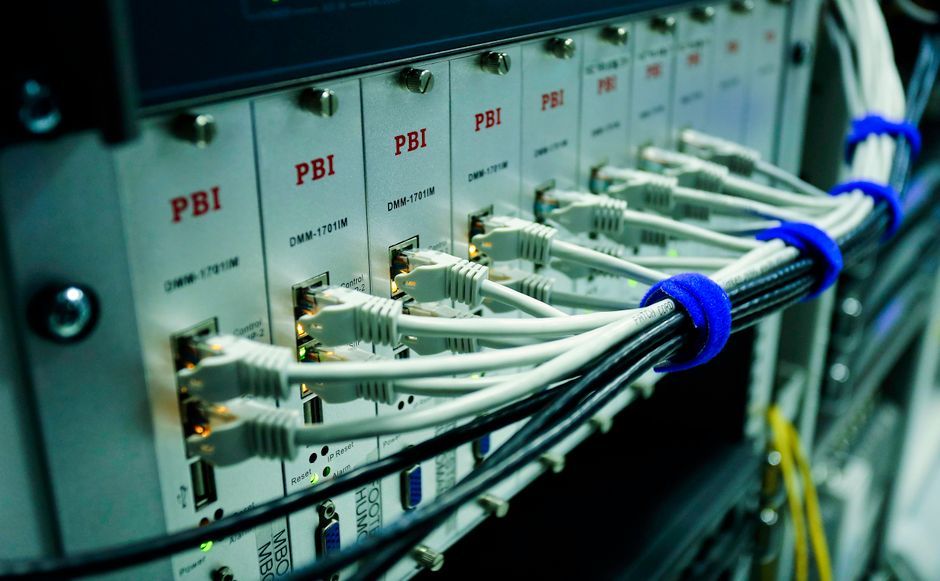
Stock photo for illustration only, not from the actual event
"He [Musk] has now bought 76 megahertz of spectrum. By the way, we have 400. So if you now say he can buy the spectrum prospectively, do your math. These are kind of triple-digit billions which are needed to gain the spectrum position. If he has the money, go for it. Then he has to build a network. I can tell you, we have 85,000 towers. No, he can rent towers, no question. But this is another $20 to $30 billion which are required."
Tim Höttges
The remarks follow SpaceX's recent framework presentation detailing plans to rival T-Mobile, AT&T, and Verizon by combining direct-to-cell satellite technology with terrestrial networks. Reports indicate potential access to 80,000 cellular towers nationwide, alongside discussions regarding Boost Mobile. Additionally, Qualcomm recently confirmed that SpaceX will utilize its cellular infrastructure technology to support the expanding network.
This commentary highlights a broader industry shift toward non-terrestrial networks, where satellite operators bypass traditional boundaries to offer direct mobile connectivity. By controlling proprietary chipsets, data centers, artificial intelligence tools, and satellite constellations, SpaceX possesses an integrated ecosystem that could fundamentally alter how communication services are delivered and monetized.
Höttges acknowledged the disruptive potential of Starlink Mobile, noting that Musk's ecosystem combining AI, cloud infrastructure, and social integration could invent entirely new communication models. He cautioned the telecom market not to repeat past mistakes witnessed in the automotive industry, where legacy players were slow to adapt to incoming technological shifts.
Source: The Verge
Found something wrong in this article? Report an issue with this article
Comments
Leave a Comment