

Thai Parliamentary Committee Assures Kaew Juri Basil Patent
MP Thanyatorn Thaninwattanatorn announced at the Thai parliament on Nov 6, 2026, that the Kaew Juri 1-4 basil patent does not affect native strains.

Stock photo for illustration only, not from the actual event
- The committee confirms the Kaew Juri 1-4 patent does not affect native basil strains.
- The public can still freely grow, consume, and sell other local basil varieties.
- The research project involved Kasetsart University and CPRAM with a 5.5 million baht budget.
On November 6, 2026, at 09:30 AM at the Sappaya-Sapasathan Thai Parliament Bangkok, MP Thanyatorn Thaninwattanatorn of the People's Party, serving as the spokesperson for the House Committee on Higher Education, Science, Research and Innovation, held a press briefing following the committee's latest meeting. The session focused on reviewing research and development policies for economic crops, intellectual property management, and the fair commercial and public utilization of research outputs.
This topic has drawn significant public attention due to widespread concerns regarding intellectual property rights and their potential impact on everyday citizens. Consequently, the committee summoned relevant agencies to provide detailed testimonies, specifically addressing the controversial research surrounding newly bred holy basil strains to clear up any misunderstandings.
The committee spokesperson firmly clarified that the plant variety protection granted for Kaew Juri basil strains 1 through 4 applies strictly to the newly bred variants developed through scientific enhancement. It does not grant exclusive ownership rights over all types of holy basil. Everyday citizens retain the full right to grow, consume, and commercialize other traditional and native basil varieties without any legal restrictions.
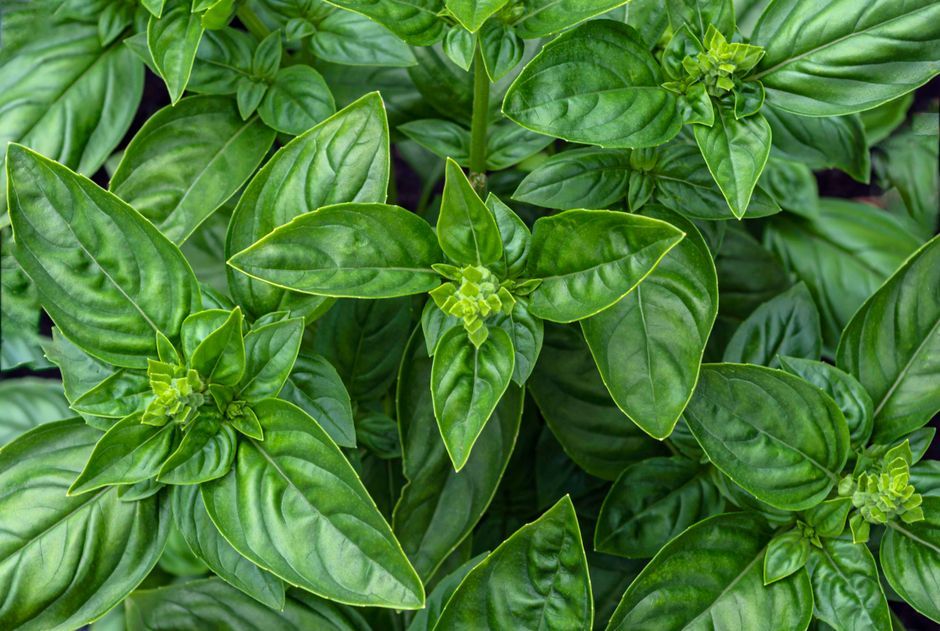
Stock photo for illustration only, not from the actual event
Managing intellectual property rights between public universities and private corporations typically involves complex contracts to incentivize commercial research and development. However, policymakers must carefully balance commercial protections with public access rights to ensure traditional agricultural practices and native plant varieties remain accessible to local farmers.
Regarding technical development details, the National Center for Genetic Engineering and Biotechnology informed the committee about typical public-private research cooperation models. The specific holy basil project was conducted as a contract research agreement where Kasetsart University received approximately 5.5 million baht in funding from CPRAM Co., Ltd. The research aimed to breed basil with uniform aroma, larger leaves, and increased thickness tailored for industrial food production, utilizing selective breeding, chromosome manipulation, and post-harvest management techniques to successfully develop the Kaew Juri strains.
Source: Khaosod Politics
Found something wrong in this article? Report an issue with this article
Comments
Leave a Comment