

A Simple Guide to Climate Change: Causes and Impacts
Explore the 2024-2026 climate crisis, record-breaking global temperatures, melting glaciers, and international efforts to limit warming.

Stock photo for illustration only, not from the actual event
- 2024 was Earth's hottest year on record and surpassed the 1.5C threshold.
- Fossil fuel combustion has raised atmospheric CO2 levels by over 50%.
- Flash floods in Nepal killed over 1,400 people in August 2026.
- Roughly 3.3 to 3.6 billion people are highly vulnerable to climate change.
Climate change is driving significant shifts in the Earth's long-term average temperatures and weather conditions, posing severe threats to both human societies and natural ecosystems. According to the Met Office, every decade since the 1980s has been progressively warmer than the one before it.
The year 2024 was recorded as Earth's hottest year ever, primarily driven by global warming, and marked the first calendar year to exceed 1.5C of warming above pre-industrial levels from the late 1800s, based on data from the Copernicus climate service. Although 2025 maintained high temperatures despite a slight cooling effect from La Niña, the ongoing cumulative impacts remain deeply concerning.
Regarding the primary drivers, the United Nations' Intergovernmental Panel on Climate Change (IPCC) notes that natural factors alone cannot account for the rapid warming observed over the past century. Instead, human activities—particularly the heavy reliance on fossil fuels like coal, oil, and gas across homes, factories, and transport networks—are directly responsible.
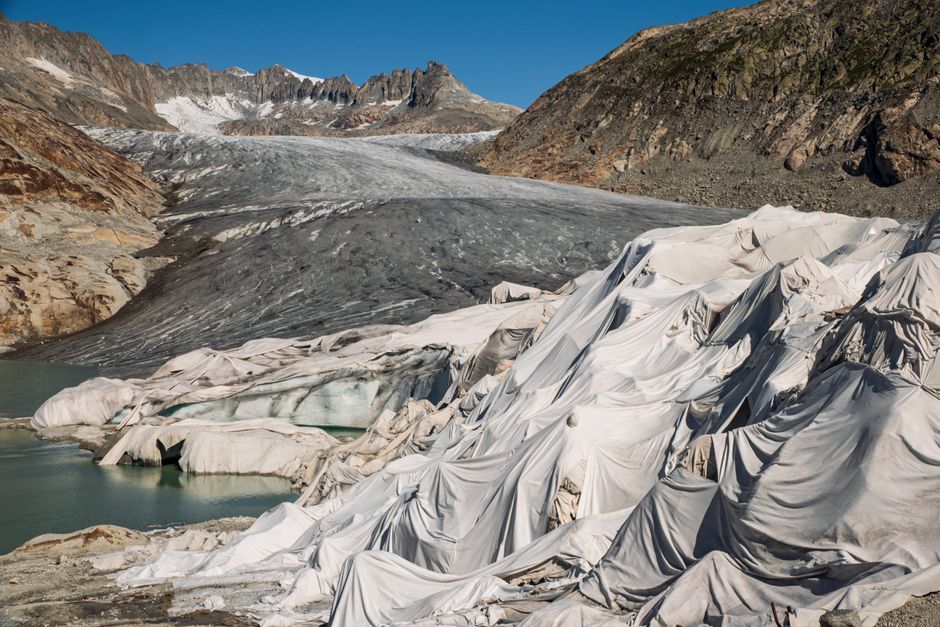
Stock photo for illustration only, not from the actual event
Burning fossil fuels releases greenhouse gases, predominantly carbon dioxide, which acts like an atmospheric blanket trapping heat near the Earth's surface. Since the dawn of the Industrial Revolution, atmospheric CO2 concentrations have surged by more than 50 percent.
Visible consequences of climate change are already unfolding globally, featuring more intense extreme weather events like heatwaves and heavy downpours, the rapid retreat of glaciers contributing to rising sea levels, and warmer oceans fueling severe storms while threatening marine life.
A striking example occurred in August 2026, when a partial glacier collapse triggered a massive avalanche of ice and rock in Nepal and Tibet. The resulting flash floods in Nepal claimed over 1,400 lives. Nepal's Finance Minister, Swarnim Wagle, noted that reconstruction efforts could consume up to a tenth of the nation's economy.
From an analytical standpoint, the climate crisis highlights profound global inequality, as 3.3 to 3.6 billion people in developing regions face the highest risks despite contributing minimal historical greenhouse gas emissions. Understanding climate tipping points is crucial; once these ecological thresholds are crossed, changes such as the potential collapse of the Greenland Ice Sheet could become irreversible.
To avoid catastrophic scenarios, nearly 200 countries committed under the 2015 Paris Agreement to limit global warming to 1.5C above pre-industrial levels. While recent UN Emissions Gap reports suggest this threshold may be breached in the coming years, scientists emphasize that achieving net-zero CO2 emissions and implementing stringent emission cuts remain vital pathways to stabilizing long-term warming by 2100.
Source: BBC Science & Environment
Found something wrong in this article? Report an issue with this article
Comments
Leave a Comment