

Review: The90 Gem UV-Tracking Necklace Hands-On
Testing the $249 Gem UV-tracking necklace from The90 in Los Angeles revealed surprising health insights about shade, sun exposure, and heat.

Stock photo for illustration only, not from the actual event
- The90 Gem UV-tracking necklace retails for $249 at launch
- Measures UVA and UVB radiation separately via mobile app
- Battery life lasts for approximately one full week per charge
- Brings deeper awareness to how sunlight affects overall health
What started as a personal experiment to understand how sun exposure impacts skin aging took an unexpected turn for Sheena Vasani, a commerce writer at The Verge. While attending an outdoor relative's party in Los Angeles where temperatures soared into the 90s, she decided to sit beneath a patio umbrella equipped with a nearby powerful fan, assuming she was fully protected from both the searing heat and the sun.
Only half an hour later, she began feeling exhausted, dizzy, nauseous, and generally unwell—classic symptoms of heat exhaustion. Around that exact moment, a notification popped up on her smartphone app connected to the Gem, a $249 UV-tracking necklace designed by a company called The90. The app warned that her ultraviolet radiation exposure had spiked considerably, proving that UV rays are not entirely blocked by patio umbrellas because radiation easily reflects and scatters off surrounding environmental surfaces.
This incident highlights a broader evolution in wearable technology, moving beyond traditional fitness metrics like step counts and heart rate tracking into environmental health monitoring. As climate change brings more intense heatwaves and shifting weather patterns, consumer devices that quantify invisible environmental hazards like UV radiation play a critical role in bridging the gap between personal well-being and outdoor safety awareness.
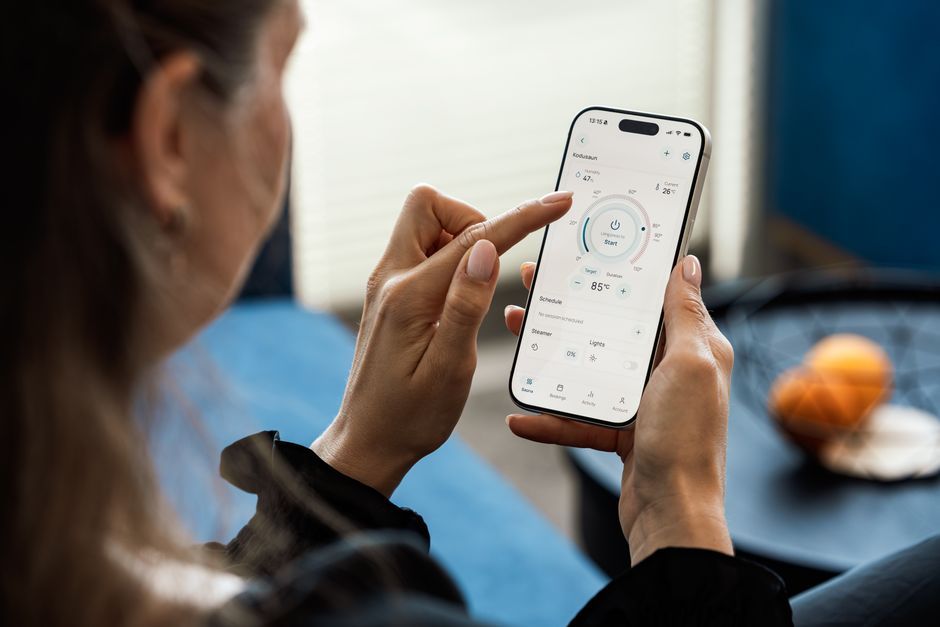
Stock photo for illustration only, not from the actual event
This revelation led to an important medical discovery: one of her prescribed medications increases her sensitivity to heat, neatly explaining similar episodes she had experienced over the years. Although the Gem device did not provide a formal medical diagnosis, it successfully prompted her to investigate an issue she otherwise would have ignored. Ever since that day, she has adopted a more cautious approach by limiting outdoor activities during peak heat and UV hours, maintaining proper hydration, and listening closely to physical warning signs.
Vasani admits her initial curiosity in tracking UV was driven primarily by vanity. Having experienced graying hair since her twenties, she wanted to reasonably slow down visible signs of aging. However, being of Indian descent with higher melanin content—meaning she rarely gets sunburned, though skin damage risks still exist—and living within walking distance of the beach in sunny Los Angeles, she had previously given little thought to her actual cumulative UV exposure until the Gem provided concrete estimates.
The included sensor pendant measures UVA and UVB radiation separately rather than simply displaying a generic local weather forecast. UVB rays are primarily responsible for triggering sunburns and helping the skin produce vitamin D, whereas UVA rays contribute to premature aging even without visible skin burning. Fortunately, acquiring these health metrics does not require wearing a bulky apparatus. The circular pendant comes attached to a thin, attractive necklace paired with a titanium, gold-, or silver-colored chain that complements various outfits effortlessly.
The mobile app serves as the core of the user experience, featuring clean graphs and jargon-free explanations. Users can optionally create a skin profile incorporating skin type, personal sensitivities, clothing choices, and sunscreen usage so the app can estimate customized metrics derived from the sensor readings. While these figures represent predictive estimations rather than direct biological measurements, the app packs numerous insights, including estimated vitamin D production, potential circadian light benefits, nitric oxide-related advantages, cumulative UVA exposure, and recent accumulated metrics.
Source: The Verge
Found something wrong in this article? Report an issue with this article
Comments
Leave a Comment