

Eco Expo Asia 2026: China & UN Urge Global Climate Action
At Eco Expo Asia 2026 in Hong Kong, global leaders from China and the UN emphasize that cross-border cooperation is vital for survival.

Stock photo for illustration only, not from the actual event
- Eco Expo Asia 2026 is held at AsiaWorld-Expo in Hong Kong from October 26-29, 2026
- Huang Runqiu highlights that environmental crises transcend national borders
- China showcases major green transitions and positions Hong Kong as a gateway
- Three key pathways proposed focusing on innovation and international tech cooperation
Discussions surrounding sustainable futures often point directly toward green technology booths and business matching at trade fairs. However, Huang Runqiu, Minister of Ecology and Environment of the People's Republic of China, framed the challenge on a much broader scale, asserting that humanity shares a common destiny and no nation can survive environmental and climate crises in isolation.
On October 27, 2026, during the welcome ceremony of the 21st Eco Expo Asia held from October 26-29 at the AsiaWorld-Expo in Hong Kong under the theme 'Connecting the World for a Sustainable Future,' Huang emphasized that interlinking national policies, industries, technologies, and green markets is the core of tackling these crises.
This sentiment was echoed throughout the day by various officials, including Dr. Samuel Chui, Director of Environmental Protection for the Government of the Hong Kong Special Administrative Region, alongside Luo Xiaoli, Deputy Director-General of the Department of Energy Conservation and Comprehensive Utilization of Resources at China's Ministry of Industry and Information Technology, and Ariesta Ningrum, Director of the Climate Technology Centre and Network (CTCN) under the United Nations Environment Programme (UNEP).
Huang outlined a triple environmental crisis consisting of climate change, biodiversity loss, and pollution. He pointed to examples such as Europe experiencing its most severe heatwave in nearly 80 years this summer, and a glacial collapse in Nepal triggering cross-border mudslides that devastated downstream lives and infrastructure.
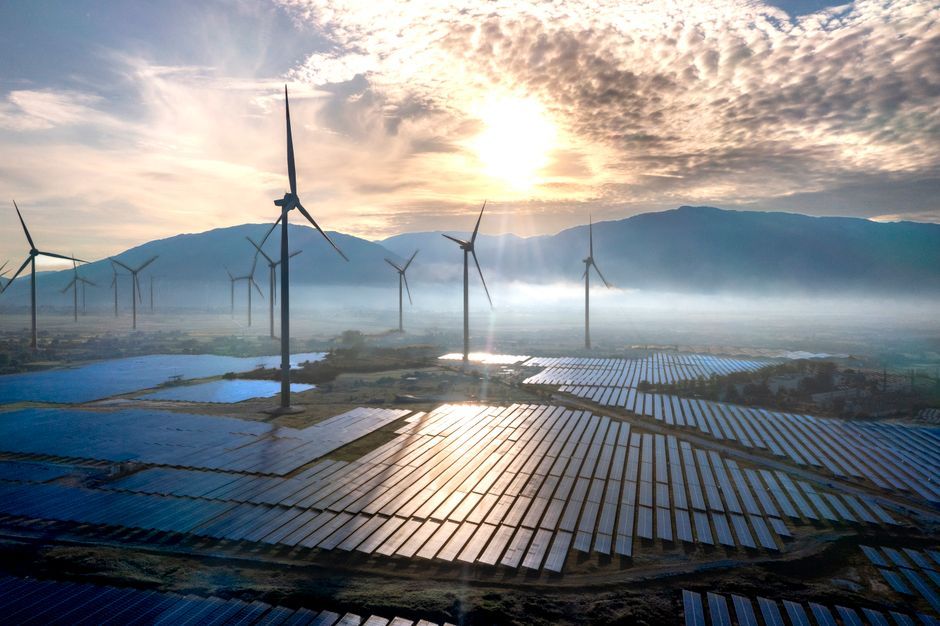
Stock photo for illustration only, not from the actual event
Before urging international collaboration, Huang detailed China's achievements under the ecological civilization framework, noting that in 2025, the national average PM2.5 concentration dropped to 28 micrograms per cubic meter, while the proportion of surface water checkpoints with good quality reached 91.4%, marking an 8 percentage point increase over five years.
Highlighting borderless crises and China's green transition demonstrates how major economies utilize international platforms to establish new ecological standards while positioning regional hubs like Hong Kong as critical bridges connecting domestic policies with global capital and technology.
Regarding low-carbon transitions, China has built the world's largest clean electricity supply and steel production systems. In the first half of 2026, renewable energy accounted for 60.7% of the nation's total power generation capacity, and by late July, solar power capacity surpassed coal for the first time. Furthermore, in 2025, China produced and sold over 16 million new energy vehicles, ranking first globally for the 11th consecutive year.
“No country can survive environmental and climate crises in isolation.”
Huang Runqiu

Stock photo for illustration only, not from the actual event
Stock photo for illustration only, not from the actual event
Source: Techsauce
Found something wrong in this article? Report an issue with this article
Comments
Leave a Comment