

AMR AI and Embodied Intelligence: Robot Safety
Exploring the role of AI safety in modern robotics, capability versus reliability, and hazard management in learning systems.

Stock photo for illustration only, not from the actual event
- Artificial intelligence transitions robots from deterministic rules to learning systems
- AI safety in robotics is a system-level discipline affecting human safety
- High capability during testing does not guarantee safe real-world deployment
- Safety concerns exist across perception, decision making, and execution loops
Artificial Intelligence has become one of the most transformative technologies in modern robotics, enabling Autonomous Mobile Robots, service robots, industrial robots, and embodied AI systems to perceive complex environments and execute actions with increasing autonomy. As robots transition from deterministic rule-based systems to learning-based systems powered by deep neural networks, safety becomes one of the most critical engineering concerns.
Traditional robotic systems were largely governed by explicitly programmed rules and deterministic algorithms. Engineers could analyze state transitions and predict outputs under defined operating conditions. Modern AI-based robots introduce a fundamentally different paradigm where machine learning models derive behaviors from data rather than handcrafted rules, involving billions of parameters whose internal reasoning processes are difficult to interpret.
The concept of AI safety can be defined as the collection of principles, methods, technologies, and validation frameworks that ensure artificial intelligence systems consistently operate within acceptable safety boundaries. The goal is not merely to avoid accidents but to design systems that remain trustworthy under a wide variety of conditions.
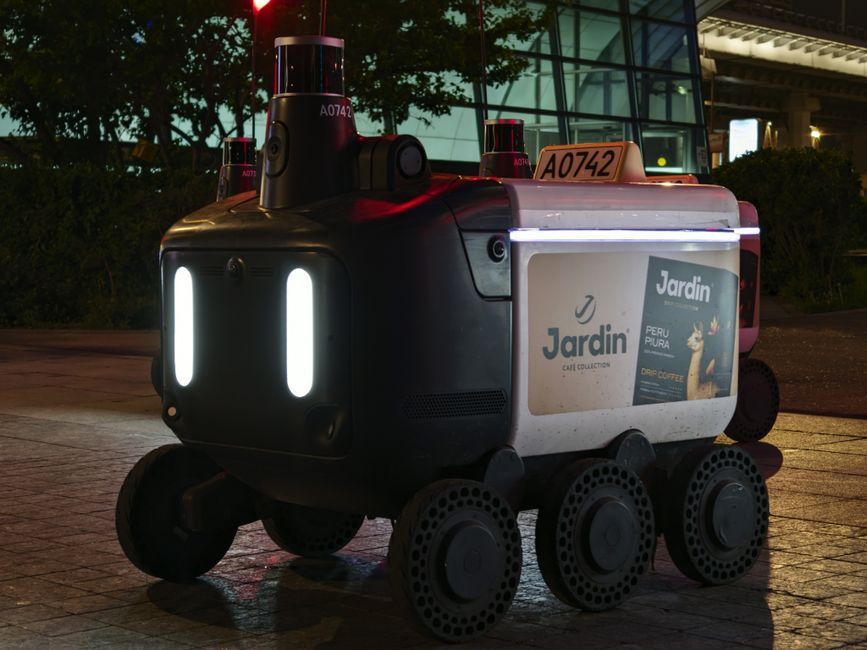
Stock photo for illustration only, not from the actual event
Understanding modern robotic safety requires looking beyond standard software bugs. Because AI relies on probability and learning from data, unexpected emergent behaviors can occur, making real-time monitoring and robust validation frameworks essential for human protection.
One of the most important distinctions in AI safety is the difference between capability and reliability. An AI system may demonstrate extraordinary capabilities during laboratory testing or simulation environments. However, capability alone does not guarantee safe deployment when environmental conditions differ from training data.
Robotic AI systems operate within a perception-decision-action loop, and safety concerns can emerge at every stage of this pipeline. During perception, sensors may experience noise or occlusion. During decision making, AI models may misinterpret observations, and during execution, actuators may experience mechanical wear or communication disruptions.
Source: Dev.to
Found something wrong in this article? Report an issue with this article
Comments
Leave a Comment