

Accelerating Transformer Training with NVIDIA Transformer Engine and FP8
A deep dive into integrating NVIDIA Transformer Engine, fused kernels, and FP8 precision to optimize transformer model training workflows.

Stock photo for illustration only, not from the actual event
- Integrate NVIDIA Transformer Engine into end-to-end transformer training workflows
- Utilize fused transformer modules to reduce kernel-launch overhead and memory traffic
- Apply FP8 autocasting with delayed scaling and automatic PyTorch fallback to BF16 or FP32
- Inspect internal scaling factors and amax history to ensure stable low-precision computation
Optimizing the training pipeline for transformer models remains a critical pursuit for AI researchers and engineers. Recent technical explorations highlight how to seamlessly integrate the NVIDIA Transformer Engine into an end-to-end training loop while preserving compatibility across various Colab GPU environments.
A core strategy in this implementation involves leveraging specialized hardware features to streamline execution. The training methodology incorporates several structural optimizations:
- Deploying fused transformer modules to minimize kernel-launch overhead and memory bandwidth consumption
- Enabling FP8 autocasting with delayed scaling when supported by the underlying hardware
- Maintaining robust execution via automatic fallback to BF16 or FP32 through PyTorch
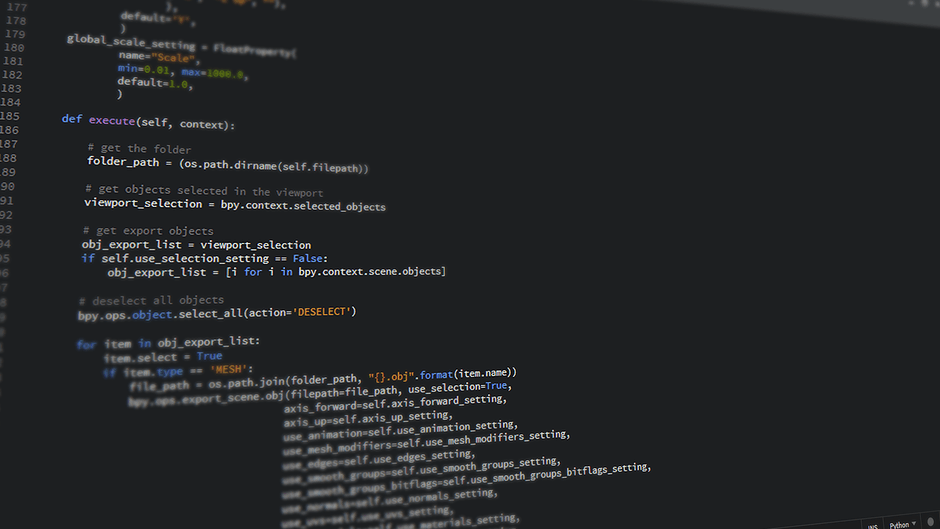
Stock photo for illustration only, not from the actual event
Adopting FP8 (8-bit Floating Point) precision alongside the Transformer Engine represents a major leap in reducing memory footprints and accelerating deep learning workloads on modern GPUs. However, managing numerical stability is paramount; mechanisms like delayed scaling and tracking amax (absolute maximum) history are essential to prevent overflow and maintain training convergence during reduced-precision arithmetic.
Furthermore, evaluating hardware capabilities alongside model scaling provides developers with clearer insights into how execution formats directly influence throughput and resource consumption.
To validate the trained model, the workflow implements greedy autoregressive generation by repeatedly feeding the latest context into the causal language model. Consecutive generated tokens are compared to verify whether the model successfully preserves the constant arithmetic stride established during synthetic data training.
The technical demonstration concludes with practical extension paths for developers, including scaling up model dimensions to D_MODEL=2048 and N_LAYERS=12, experimenting with recipe.Format.E4M3 versus HYBRID formats, setting amax_history_len to 1024, integrating te.LayerNormMLP or te.LayerNormLinear modules, and initializing weights directly in FP8 using fp8_model_init().
Source: MarkTechPost
Found something wrong in this article? Report an issue with this article
Comments
Leave a Comment