

Meta Bond Demand Signals Strong Future for XR Training
Meta secures $580B in bond demand, reinforcing confidence in XR ecosystems that power vision therapy software like Amblyotube.

Stock photo for illustration only, not from the actual event
- Meta secured $580 billion in demand from a $15 billion corporate bond offering
- Amblyotube vision therapy software runs natively on Meta Quest 2/3/Pro/3S headsets
- Utilizes dichoptic rendering to separate left and right eye stimuli for binocular fusion
- Designed for users 13 and older, integrating sessions with YouTube viewing for 30-40 minutes daily
Meta's recent 15 billion dollar corporate bond issuance pulling in a staggering 580 billion dollars in market demand might look like standard financial news at first glance. However, for creators building XR-based rehabilitation and visual training stacks, it carries a profoundly different meaning. It represents a massive vote of confidence from the market in the computing infrastructure, specifically the Meta Quest 2, 3, Pro, and 3S line, upon which their platforms are built.
When building software for amblyopia, commonly known as lazy eye, the most exhausting nights are spent ensuring that distinct images can be rendered reliably for each individual eye. The dichoptic approach delivers separate visual stimuli to the left and right eyes, training the brain to fuse them into a single coherent image. The core engineering hurdle lies within the rendering pipeline. Even a single dropped frame or a 1-to-2-pixel misalignment can shatter binocular fusion and invalidate the entire training session. Consequently, the development team allocated their performance budget toward frame stability and eye-specific alignment precision rather than raw resolution.
Amblyotube, created by Seven Sports, implements this exact architecture on the Meta Quest platform. It applies an adjustable Dominant Eye Shader to the stronger eye and an AI Sharpener (MFBF) to the amblyopic eye, emphasizing human figures with bold red outlines and yellowish-green highlights. It optionally incorporates Wedge Occlusion to restrict each eye to separate viewable areas, reducing binocular rivalry. A magenta focus cue is then introduced to guide both eyes' fields of view into fusing into a single stereoscopic image.
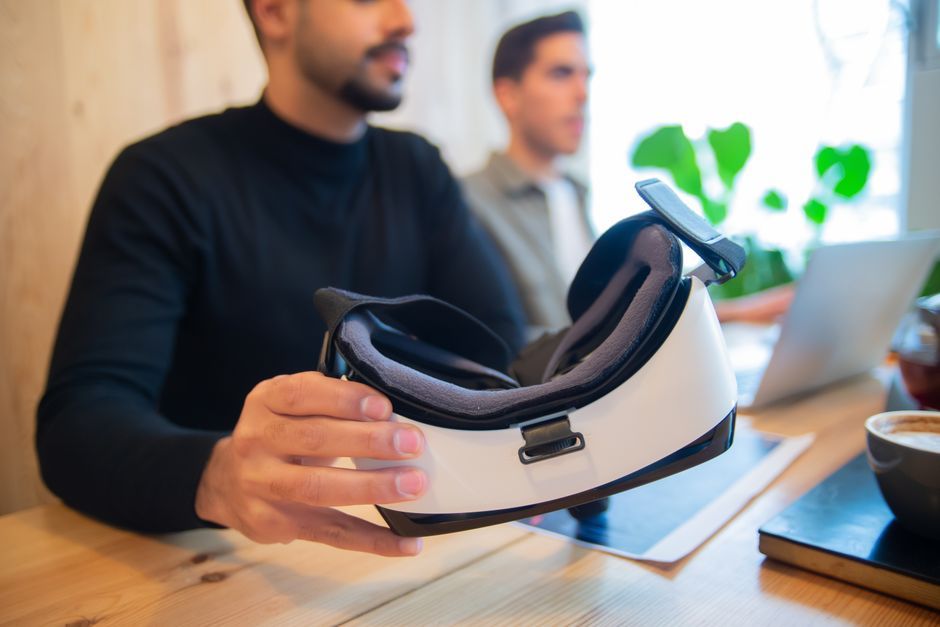
Stock photo for illustration only, not from the actual event
From an engineering standpoint, what makes this fascinating is that all these computational processes occur in real-time within a single active session. The shader stack, eye-specific masking, and fusion guidance cues must synchronize across every single frame, meaning latency and alignment errors directly dictate training quality. The fact that the therapy takes place while users watch their favorite YouTube content is not merely a convenience feature, but a deliberate design decision engineered to maximize user retention. Requiring no physical patches or red-blue glasses, sessions last 30 to 40 minutes a day, up to an hour, for users aged 13 and older. Amblyotube serves strictly as an auxiliary visual training tool for binocular coordination and depth perception, not as a diagnostic, treatment, or cure mechanism.
When massive amounts of capital pour into major technology ecosystems, it creates a powerful ripple effect for specialized software and XR healthcare developers. By leveraging mainstream hardware like Meta Quest, applications like Amblyotube dramatically lower the accessibility barrier for patients. When foundational hardware achieves high reliability and performance, developers can channel their resources into solving niche technical challenges such as mitigating motion sickness and achieving precise dichoptic rendering. This highlights how VR and XR technologies extend far beyond pure entertainment, delivering tangible preventative and rehabilitative medical value.
Sessions run for 30 to 40 minutes, up to an hour daily, for individuals aged 13 and older, functioning strictly as an auxiliary tool for binocular coordination and depth perception rather than a medical cure. In a market fueled by shifting tech capital, the ultimate differentiator remains the actual utility and quality of what is built.
Source: Dev.to
Found something wrong in this article? Report an issue with this article
Comments
Leave a Comment