

Posthuman Architecture: Birds Craft Nests from Human Debris
Birds worldwide incorporate plastic waste, cables, and anti-bird spikes into nests, highlighting a cross-species architectural model.

Stock photo for illustration only, not from the actual event
- Birds use discarded plastics, military cables, and anti-bird spikes to build nests
- This phenomenon points to a collaborative, cross-species construction model
- Magpies and crows in Antwerp used hundreds of metal spikes for nesting
- MIT's Bird+House project uses half-completed 3D-printed scaffolds for swallows
The boundary between animal instinct and human engineering is increasingly blurring as wildlife adapts human-made materials for survival. Birds have long incorporated wire, plastic, fabric, and other discarded scraps into their nests, giving human waste a second life. In recent years, these examples have grown even more striking. Magpies and crows have constructed nests out of metal spikes originally installed on buildings to deter them, while birds near frontline areas in Ukraine have woven fiber-optic cables left behind by military drones into their homes.
These structures reveal a literal model of posthuman architecture where authorship is shared across species. Humans manufacture materials and alter the landscape, while birds gather, select, and reorganize what they find. Nests take shape somewhere between human consumption and animal construction. This phenomenon extends far back in history; during the Dust Bowl era, American crow nests built from barbed wire already signaled an agricultural landscape stripped of natural vegetation.
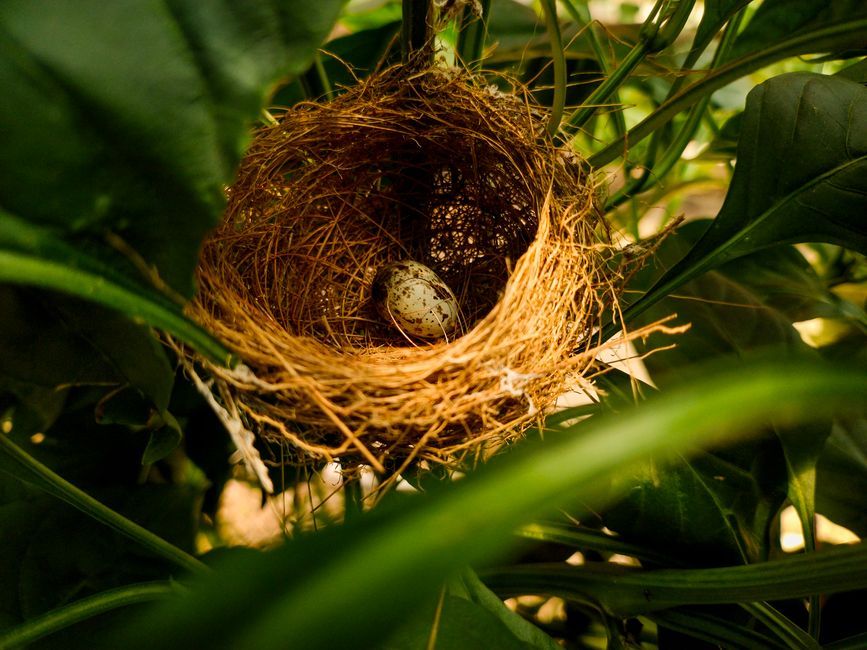
Stock photo for illustration only, not from the actual event
Today, synthetic materials often serve as more durable choices. Amsterdam coots have accumulated layers of plastic into nests that persist across multiple seasons, extending building cycles once dependent on decomposing vegetation. Researchers studying canal nests found plastic layers sourced over decades. Perhaps the clearest reversal occurred in European cities, where carrion crows and Eurasian magpies tore anti-bird spikes off buildings, utilizing hundreds of sharp metal points facing outward in their nests in Antwerp.
Researchers suggest this metal serves a defensive purpose similar to thorny branches, protecting eggs and chicks from predators. An object designed to exclude birds from human architecture effectively became bird architecture itself. This cross-species exchange also moves in the opposite direction. In Chicago, the Best Nest exhibition examines how avian construction has informed architect Jeanne Gang and her studio's design process for human buildings and bird habitats alike.
"Posthuman architecture, seen through the nest, therefore has little to do with copying organic curves or borrowing the appearance of animal structures. Its more radical proposition concerns authorship."
Researchers and exhibition curatorsFurthering this concept, the 2026 Bird+House project by MIT-LUMA Lab's Hiroshi Ishii, Lucy Li, and Hye Jun Youn, with input from the Cornell Lab of Ornithology, develops 3D-printed nesting structures for barn swallows. Because swallows often reject fully completed artificial nests, the team designs open biomaterial scaffolds that stop halfway, leaving the final construction and adaptation entirely up to the bird.
The concept of posthuman architecture challenges traditional design paradigms by acknowledging that buildings exist within ecosystems continually shaped by multiple organisms. When birds dismantle human deterrents to build their homes, it underscores an urgent need for cities and structures to actively accommodate coexistence rather than exclusion.
Source: designboom
Found something wrong in this article? Report an issue with this article
Comments
Leave a Comment