

Slimbridge Wetlands Mark 80 Years as Vital Climate Weapon
As WWT marks 80 years since founding Slimbridge, experts highlight that global wetlands absorb carbon four times faster than trees.

Stock photo for illustration only, not from the actual event
- Wetlands can absorb carbon up to four times faster than trees.
- WWT celebrates 80 years since founding the Slimbridge bird reserve in Gloucestershire.
- The charity campaigns to restore one million hectares of wetlands globally.
- Historic efforts famously saved the rare Hawaiian Nēnē goose from extinction.
While rainforests often take center stage in climate conversations, scientists now emphasize that wetlands could play an even more critical role in tackling global warming. According to the Wildfowl and Wetlands Trust (WWT), saltmarshes, mangrove swamps, and wetlands are capable of absorbing carbon up to four times faster than traditional trees.
This insight comes as WWT celebrates the 80th anniversary of its very first wetland bird reserve, established in Slimbridge, Gloucestershire. To mark the milestone, leaders from the conservation charity have issued an urgent call to restore one million hectares of wetland habitats worldwide.
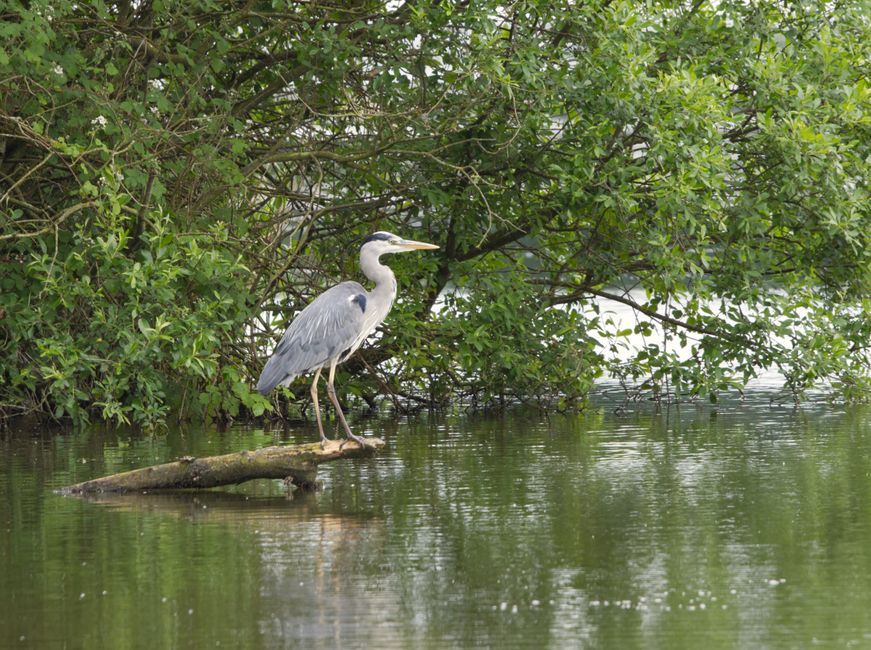
Stock photo for illustration only, not from the actual event
The legacy dates back to November 1946, when naturalist Peter Scott arrived at a marshy expanse near the River Severn, captivated by thousands of migrating geese and swans flying from the Russian Arctic. Scott settled into a cottage, later building a home overlooking the lake with large viewing windows, digging channels, and erecting observation hides to watch the wildlife without disturbance.
Chris Moore, a Slimbridge historian and author, noted that Scott was a true conservation pioneer. Long before climate change entered mainstream discourse, Scott actively campaigned against commercial whaling, hosted early natural history television programs broadcast live from Slimbridge, and helped establish the World Wildlife Fund (WWF), becoming the first person knighted for conservation work in 1973. David Attenborough famously described him as the Patron Saint of Conservation.
"Every time the big tides go over them, the plants that have grown up in the salt marsh get buried. Those plants are full of carbon, so they are a massive carbon sink."
Sarah Fowler, Chief Executive of WWT
Context and Analysis: Often referred to in environmental science as 'Blue Carbon,' the carbon sequestered in coastal and wetland ecosystems is exceptionally stable. Because wetland soils are typically waterlogged and oxygen-poor, organic matter decays very slowly, trapping carbon underground for centuries. This contrasts with terrestrial forests, where carbon can quickly return to the atmosphere via wildfires or deforestation.
Among Scott's most ambitious undertakings was saving the Hawaiian Goose, or Nēnē, which dwindled to just 24 birds by 1949 due to development. After receiving a small group sent from Hawaii, Slimbridge successfully hand-reared the first chicks, bringing populations back to over 3,000 today. Over the decades, teams at Slimbridge have also bred other vulnerable species, including the Common Crane and the critically endangered Madagascan Pochard, experiences that ultimately revealed the urgent need to restore wetland ecosystems globally alongside local communities.
Today, WWT operates 10 wetland reserves across the UK and partners with local councils on urban restoration schemes, such as floating wetland plant islands in Bristol harbor. Sarah Fowler, Chief Executive of WWT, underscored that wetlands serve as essential mood-boosting, flood-buffering habitats that remain indispensable in humanity's fight against climate change.
Source: BBC Science & Environment
Found something wrong in this article? Report an issue with this article
Comments
Leave a Comment