

AMD Pulls Out All the Stops to Launch Helios System to Challenge Defending Champion Nvidia, Aiming for Large-Scale AI Market
AMD unveils the Helios rack-scale server processing system at the Advancing AI event, securing major clients including Microsoft, OpenAI, and Meta, with shipments slated for this year.
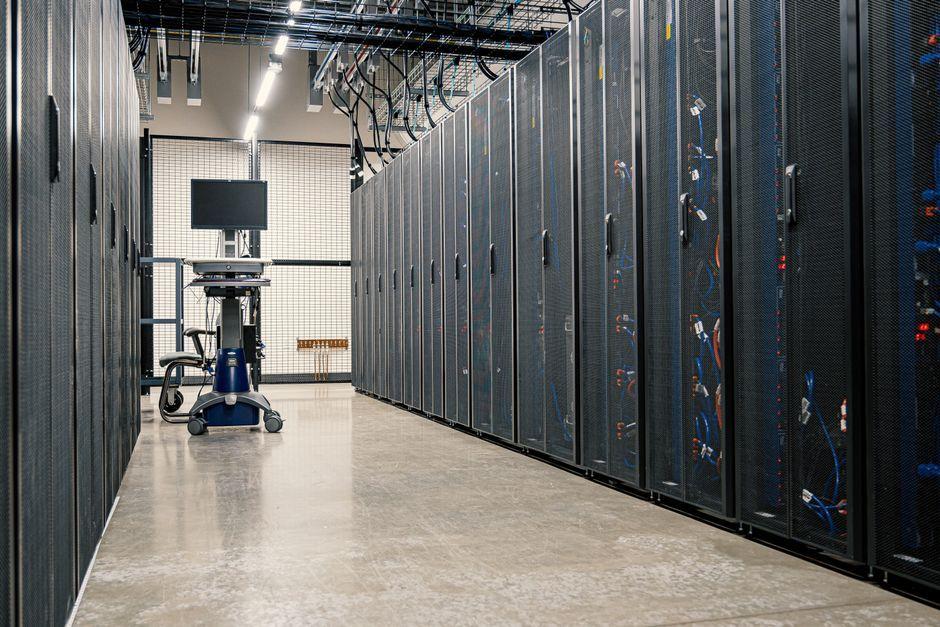
Stock photo for illustration only, not from the actual event
- AMD unveils the Helios server rack system to capture AI market share from Nvidia.
- Dr. Lisa Su presents Helios at the Advancing AI event in San Francisco, backed by a strong lineup of major clients ready for deployment.
- Anthropic announces a partnership with AMD targeting up to 2 gigawatts of GPU deployments through this new system.
- The Helios system scores higher than its competitor Vera Rubin in several metrics, according to a report by The Register.
Chip manufacturer AMD has taken a major step in challenging the throne of the artificial intelligence hardware market against key rival Nvidia by introducing a large-scale rack-scale processing system named Helios, designed to meet the high computational demands of the world's largest AI laboratories.
During the company's Advancing AI conference held in San Francisco, Dr. Lisa Su, Chair and CEO of AMD, took the stage to promote this new AI rack system, listing clients preparing to adopt it, such as Microsoft, alongside preparations to ship products later this year. Additionally, she showcased the latest chips built to meet the explosive growth in computing demands across the artificial intelligence industry.
A rack-scale server system brings together a large number of processors into a single, powerful unit specifically designed for data centers to train and run artificial intelligence models, as well as handle other high-density computing tasks.

This market has long been dominated by Nvidia through its Vera Rubin and Grace Blackwell server rack systems, but the arrival of Helios gives AMD an opportunity to close the gap. A report by The Register noted that several performance metrics of Helios outperformed Vera Rubin.
For the Helios system—first unveiled in 2025 and showcased on stage at CES 2026 this past January—several major global clients are already set to deploy it, including OpenAI, Meta, Oracle, Anthropic, and Microsoft. On Monday, Microsoft CEO Satya Nadella stated that the company will expand its Azure infrastructure with the Helios system, while Anthropic and AMD announced a strategic partnership on Wednesday to deploy up to 2 gigawatts of GPUs through this new rack system as well.
Rack-scale systems are the heart of modern AI processing because current large language models and Agentic AI systems no longer run on single chips, but instead require connecting tens of thousands of GPUs through high-speed networking and advanced power management. AMD's ability to secure major clients like Microsoft and OpenAI to use Helios reflects its full readiness to compete in the data center infrastructure space.
Furthermore, on that same Thursday, AMD launched the Venice-X CPU designed for data centers and heavy workloads, expected to hit the market in 2027.
Toward the end of the presentation, Dr. Lisa Su also shared her perspective on the industry's direction, predicting that by 2030, chips powering AI systems will make up an overwhelmingly large share of the entire computing market as the industry undergoes a major transformation in computing power demands driven by the growth of Agentic AI.
"When you ask an agent to do something, it has to have streams of steps, reasoning, tool-calling, data access, and it has to repeat that over and over until it solves the problem. So you need a lot of GPUs to do all of those things."
Dr. Lisa Su, CEO of AMD
Source: TechCrunch
Found something wrong in this article? Report an issue with this article
Comments
Leave a Comment