

EC Summons Srisuwan Over People's Party Post Concerning Privy Council
Srisuwan urges the Election Commission to quickly send the People's Party dissolution case to the Constitutional Court, citing a May 20 Facebook post as an encroachment on the Privy Council.
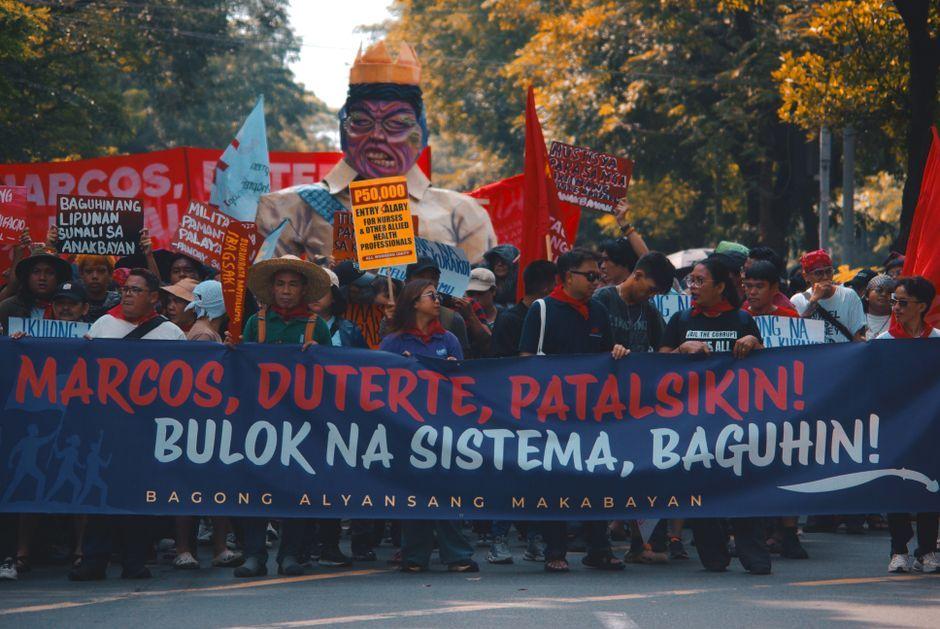
Stock photo for illustration only, not from the actual event
- Srisuwan provided testimony to the EC regarding a People's Party Facebook post criticizing the government
- He pointed out that the post's content targets the Privy Council's role in a 2026 drought preparedness meeting
- The actions allegedly violate organic laws on political parties and the constitution
- He urged the EC to swiftly conclude the case and submit it to the Constitutional Court for party dissolution
Srisuwan appeared before the Election Commission (EC) to provide testimony following a controversial Facebook post published by the People's Party on May 20. The post criticized the government for allegedly acting inappropriately and risking a violation of the principles of the democratic regime of government with the King as Head of State. Although the post superficially appeared to target government performance, a closer examination of the full text reveals criticisms directed at the duties of the Privy Council, raising questions about whether they were interfering in government administration.
During his testimony, Srisuwan cited several provisions of the 2017 Constitution of Thailand, notably Section 6, which clearly states that the King shall be enthroned in a revered position of worship and shall not be violated, accused, or sued in any manner. He also referred to Section 10, paragraph two, which outlines the Privy Council's duty to render advice to the King on all royal functions as consulted.
Complaints of this nature typically leverage strict legal frameworks regarding political parties in Thailand, particularly clauses concerning actions deemed hostile to the constitutional monarchy. The Constitutional Court has previously established precedents in handling similar dissolution cases, making political communications on social media a frequent subject of intense scrutiny by legal compliance watchdogs.
Furthermore, Srisuwan clarified that the Privy Council's participation in a meeting of the National Disaster Prevention and Mitigation Command to prepare for the 2026 drought is a normal practice that has continued since 2017. He emphasized that this provides immense benefits to Thai citizens, as the Privy Council consists of highly experienced senior national figures, including former military officers, executives, and economists appointed to advise and oversee government agencies to ensure maximum efficiency in public assistance, rather than merely sitting in as passive observers.

Stock photo for illustration only, not from the actual event
Srisuwan added that the People's Party's social media post has sparked widespread public criticism and unprecedented ideological conflict. He argued this behavior could potentially be interpreted as an intention hostile to the constitutional monarchy, disruptive to public peace and good morals, or constituting an intervention in state agency operations. Such actions allegedly violate Section 45 in conjunction with Section 92(2), (3), and (4) of the Organic Act on Political Parties B.E. 2560 (2017) and Section 101(7) of the 2017 Constitution.
Concluding his remarks, Srisuwan asserted that the EC should expedite its investigation and submit the findings to the Constitutional Court for a ruling pursuant to Section 82, paragraph four, which could potentially lead to the dissolution of the political party in accordance with legal procedures.
Source: Matichon Politics
Found something wrong in this article? Report an issue with this article
Comments
Leave a Comment