

When Drawings Take Flight: The Art, Design, and History of Kites
Exploring a massive kite exhibition at SFMOMA and tracing the evolution of kite-making from ancient traditions to contemporary art.
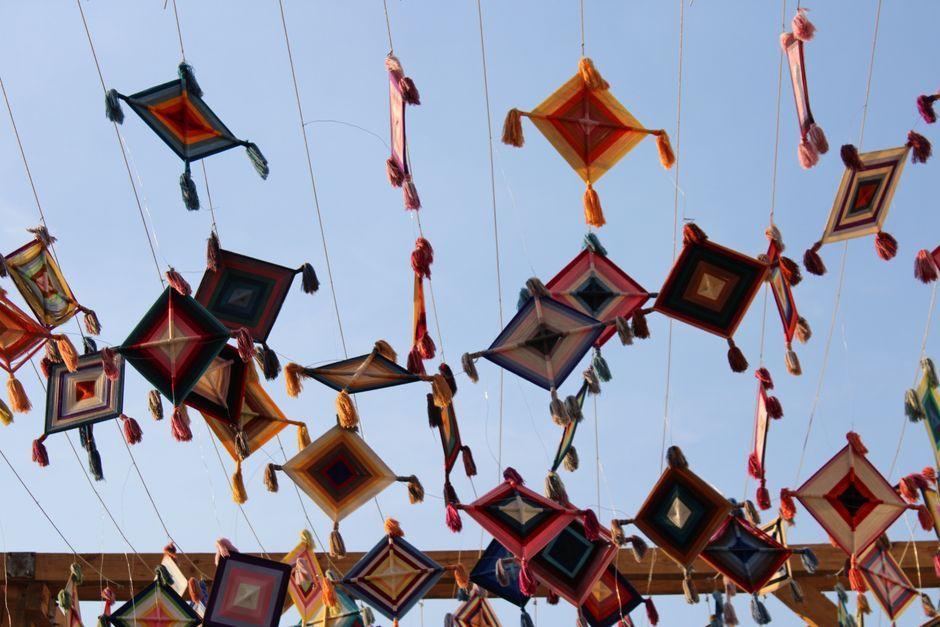
Stock photo for illustration only, not from the actual event
- Jacob Hashimoto's Giant Arc exhibition will feature nearly 75,000 hand-built kites at SFMOMA's Roberts Family Gallery starting August 22, 2026.
- Kites trace back to ancient China between 475 and 221 BCE, initially utilizing wooden bird-like structures for military signaling.
- UNESCO added Guatemala's traditional kite-making technique to its Representative List of the Intangible Cultural Heritage of Humanity in 2024.
- The Art Kites Project, organized by Goethe-Institut Osaka in 1987, invited 100 artists to design Japanese kite forms with specialist makers.
Later this month, SFMOMA's Roberts Family Gallery will fill with nearly 75,000 hand-built kites as Jacob Hashimoto's Giant Arc opens on August 22, 2026. The installation gathers bamboo and Japanese paper from floor to ceiling, creating an expansive canopy that transitions from dense cloud-like clusters to open air. Although displayed indoors away from unpredictable weather conditions, the intrinsic logic of flight remains visible in every delicate rib and taut surface, transforming a familiar object into striking architecture.
The kite originates from a distinct challenge: engineering an image light enough to leave the ground. Decoration must cooperate with lift, balance, tension, and shifting air currents. A painted face can stretch under pressure, and a trailing tail stabilizes the form across the sky, while a sudden drop in wind can instantly rewrite the visual composition.
Early kites trace their origins to ancient China between 475 and 221 BCE, where wooden frames frequently mimicked the forms of birds. Over the centuries, the object transitioned through military signaling, ceremonial uses, and recreational play while maintaining its fundamental simplicity: a framed paper surface tethered by a single line.
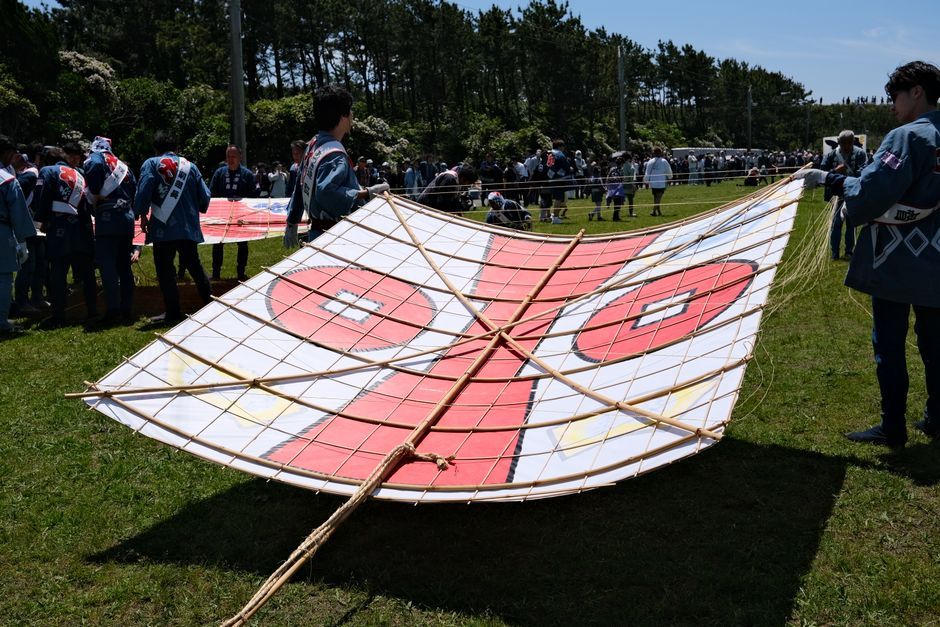
Stock photo for illustration only, not from the actual event
Elevating kites from traditional playthings into museum-scale sculptural installations highlights the enduring intersection of aerospace engineering and fine art. Utilizing traditional materials like bamboo and washi paper preserves ancient craft techniques while challenging contemporary creators to reinterpret three-dimensional spatial design through natural wind dynamics and gravity.
Japanese Edo kites clearly demonstrate this relationship between imagery and structure. Bowed bamboo supports a rectangular washi sheet, often painted with bold warrior faces or features legible from a distance. Developed in Tokyo during the Edo period, this format survives today through master craftsmen like Mikio Toki, who has dedicated decades to preserving the regional technique.
Meanwhile, Korea's bangpae-yeon, or shield kite, features a circular wind window at its center, allowing air to pass through and granting the flyer enhanced control to guide the kite up, down, left, and right during traditional kite-fighting competitions. This central cutout functions simultaneously as an essential engineering component and a crisp piece of negative space within the graphic composition.
In the Guatemalan towns of Santiago Sacatepéquez and Sumpango, the kite expands into a monumental community endeavor. Local groups spend months constructing massive circular barriletes for festivals honoring Saints and the Dead. Their bamboo frameworks support intricate paper artworks reaching architectural proportions, standing as temporary facades before taking flight. In 2024, UNESCO recognized this community kite-making tradition by adding it to the Representative List of the Intangible Cultural Heritage of Humanity.
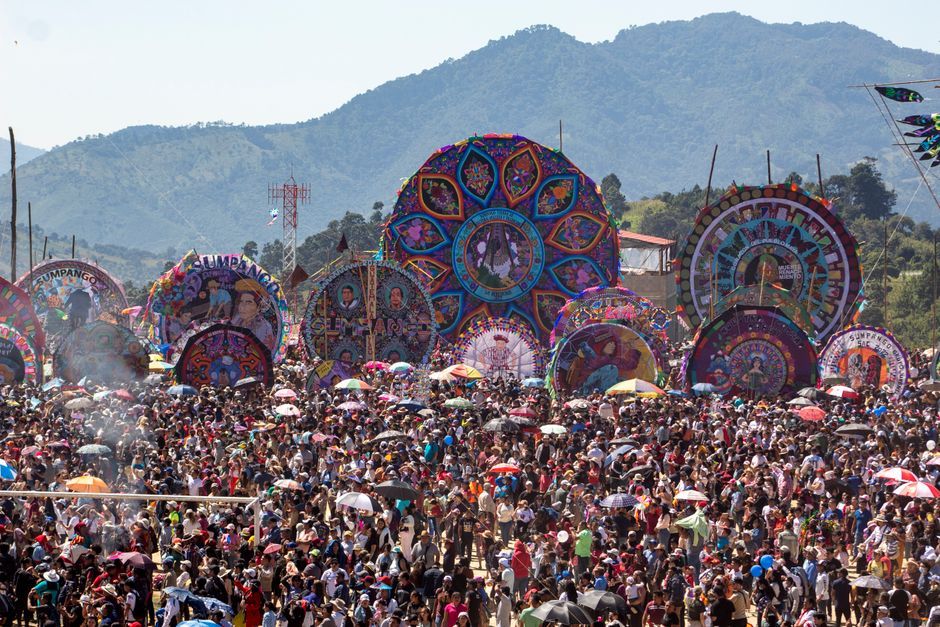
Stock photo for illustration only, not from the actual event
Beyond cultural heritage, numerous renowned artists have explored kites as an artistic medium. Former Warner Bros. artist Tyrus Wong crafted a 100-foot centipede kite and strings of birds, flying them regularly at Santa Monica State Beach. Sculptor Tal Streeter presented paper kites as fine art in his 1972 exhibition Kites: Red Line in the Sky, describing them as 'flying paintings.' Similarly, the Art Kites Project launched by Paul Eubel at the Goethe-Institut Osaka in 1987 invited prominent creators, including Robert Rauschenberg and Niki de Saint Phalle, to collaborate with specialist makers on Japanese kite designs.
Source: designboom
Found something wrong in this article? Report an issue with this article
Comments
Leave a Comment