

Master Advanced Stretching Techniques Like PNF to Unlock Instant Flexibility
Discover how advanced stretching methods like PNF, PAILS, and RAILS can dramatically improve your flexibility in both the short and long term.
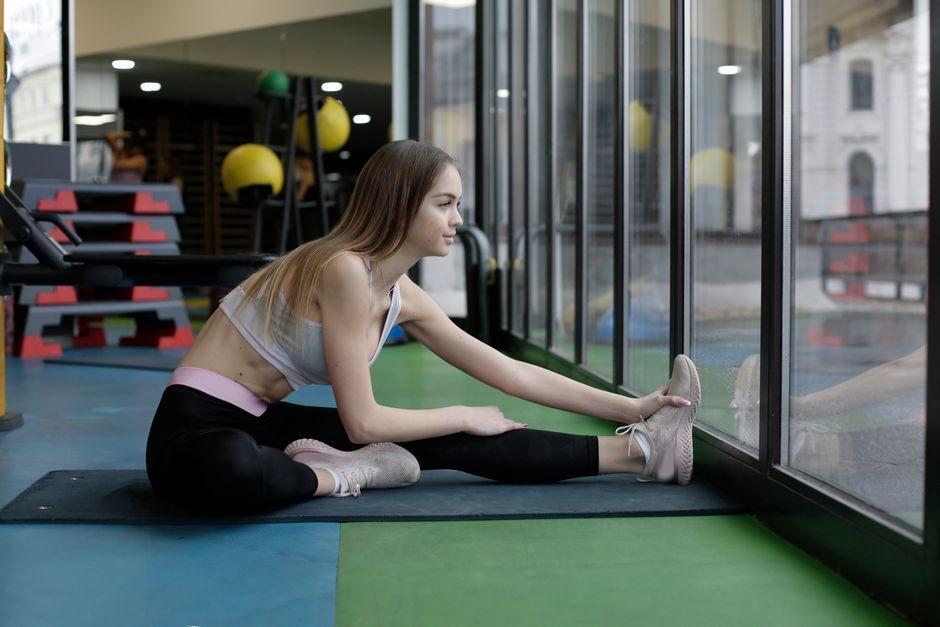
Stock photo for illustration only, not from the actual event
- PNF stretching unlocks dramatic short-term flexibility gains and long-term progress
- Understand seven distinct stretching types from static to ballistic
- Mechanisms rely on autogenic and reciprocal inhibition principles
Stretching genuinely enhances flexibility, but progress often feels frustratingly slow. While long-term gains are the usual focus, knowing the right approach can instantly unlock a dramatic amount of short-term flexibility. These remarkably fast and effective methods are commonly known as PNF or PAILS and RAILS.
The stretching industry features many gurus who complicate the process to sell their proprietary programs. While their techniques aren't necessarily wrong, they aren't always magical either. Examining how different stretching methods operate reveals what makes certain routines truly advanced. Static stretching involves holding a position for 10 seconds or longer, dynamic stretching moves actively through a range of motion, and passive stretching utilizes props, gravity, or immovable objects like the floor.

Stock photo for illustration only, not from the actual event
Other variations include loaded stretching, which uses external weight or force for deeper reach; ballistic stretching, which involves bouncing into a position and requires proper execution; active stretching, where opposing muscles pull you into position; and isometric stretching, which involves contracting the very muscles you intend to stretch.
Proprioceptive Neuromuscular Facilitation (PNF) is traditionally performed by a trainer on an athlete, but these protocols can be safely adapted for solo routines. The technique leverages neurological mechanisms involving Golgi tendon organs, which protect tendons and muscle fibers by signaling the nervous system to ease tension when a threshold is reached.
Applying PNF independently follows a precise sequence: hold a passive stretch for roughly 10 seconds, perform an isometric contraction of the target muscle against resistance like the floor for another 10 seconds, and finally use opposing muscles to pull deeper into the stretch while holding for about 20 seconds. For instance, executing this during a toe-touch stretch transitions the reach from mere fingertips to placing the entire hand flat on the floor.
Research indicates that incorporating a PNF stretching routine yields superior long-term flexibility improvements compared to static stretching alone. Although the immediate surge in range of motion lasts only a few minutes, consistent application over weeks and months yields progressive and permanent gains.
Source: Lifehacker
Found something wrong in this article? Report an issue with this article
Comments
Leave a Comment