

Thailand Environment Minister Orders Maximum Safety After Tiger Attack in Huai Kha Khaeng
Natural Resources and Environment Minister Suchart Chomklin closely monitors the tragic tiger attack in Uthai Thani province and temporarily closes nature trails.
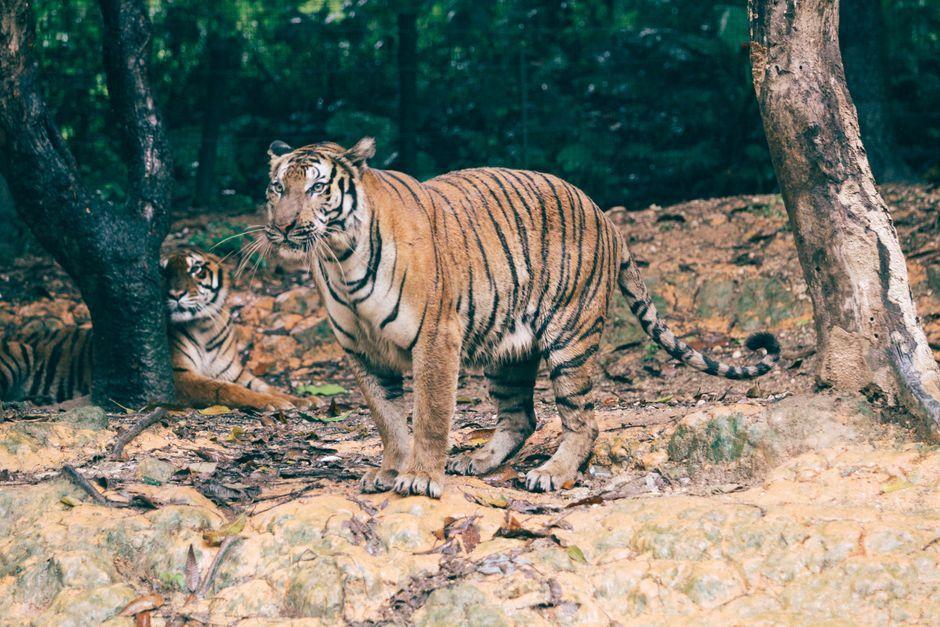
Stock photo for illustration only, not from the actual event
- Environment Minister orders maximum safety protocols in Huai Kha Khaeng Wildlife Sanctuary.
- Confirmed attacker is an 18-month-old male cub of tigress Apinya, not a man-eater.
- Tourism and nature study activities temporarily suspended for safety reasons.
On August 6, 2026, Thailand Minister of Natural Resources and Environment, Suchart Chomklin, expressed deep concern and closely monitored the situation following a tragic incident where a wildlife ranger was killed by a tiger in the Huai Kha Khaeng Wildlife Sanctuary. He immediately instructed relevant agencies to enforce maximum safety measures for field personnel and announced a temporary closure of tourism and nature study routes to allow officials to secure the area effectively.
Meanwhile, Atthapol Charoenchansa, Director-General of the Department of National Parks, Wildlife and Plant Conservation, assigned the Protected Areas Regional Office 12 (Nakhon Sawan) and the Wildlife Conservation Division to hold a press briefing. Officials including Office Director Chayaphorn Amradit, Wildlife Conservation Division Director Sukhee Boonsang, and Huai Kha Khaeng Wildlife Sanctuary Superintendent Permsak Kanitchachat jointly reported the facts and operational measures at the Thung Faek Ranger Station in Uthai Thani province.
Identifying individual tigers in the wild relies on a camera trap database maintained and researched for over 30 years. By cataloging unique stripe patterns, researchers can accurately identify specific animals, serving as a vital tool for wildlife management and mitigating human-wildlife conflicts in Thailand protected forests.
Chayaphorn Amradit stated that checking the camera trap database confirmed the tiger involved is one of three male cubs born to tigress "Apinya," whose home range spans approximately 40 square kilometers in the area. Academic behavioral analysis suggests the incident was a natural accident. The cub, aged about 1 year and 6 months, is a juvenile learning to hunt, playful, and curious. Because the ranger was lying flat and horizontal on the ground during the incident, the young tiger mistook the posture for natural prey and launched an attack.
Stock photo for illustration only, not from the actual event
Officials confirmed this behavior does not classify the animal as a "man-eater" because there is no repeated aggression targeting humans, and the tiger family remains within its original territory without fleeing to cause trouble for surrounding communities. Moving forward, the Department of National Parks has installed camera traps to monitor the cub. If it can hunt naturally, it will remain in the wild with tracking equipment; however, if repeat attacks occur, capture and behavioral rehabilitation will be initiated.
Additionally, field rangers have been instructed to exercise utmost caution, prohibit solo patrols, require buddy systems, secure and illuminate living quarters, and avoid sleeping in vulnerable spots. According to population data, Huai Kha Khaeng currently sustains about 100 adult tigers, around 30 growing cubs, and another 40 tigers distributed into the neighboring Thung Yai Naresuan Wildlife Sanctuary, demonstrating that the forest ecosystem still adequately supports the tiger population safely.
Source: Khaosod Politics
Found something wrong in this article? Report an issue with this article
Comments
Leave a Comment