

StratCraft and the Physics of Quant: Keeping the Render Layer Away from the Core
The final part of the series explores why human trading is bogged down by emotional render layers, while quant models access raw math without distortion.
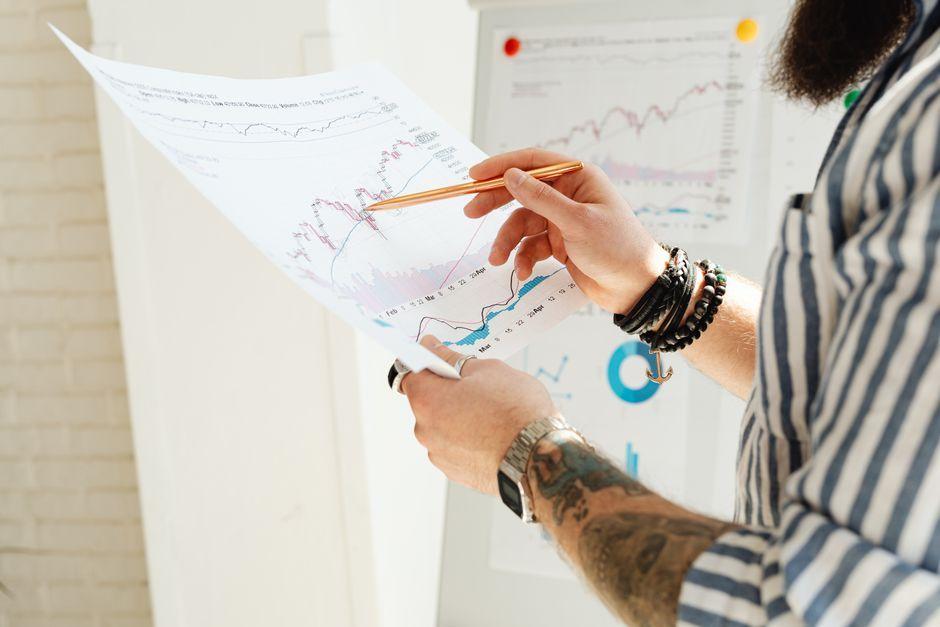
Stock photo for illustration only, not from the actual event
- This is Part 3, the final installment of the series exploring brain and LLM rendering analogies.
- Humans look at price charts and render them into human body parts like head and shoulders patterns.
- Machine learning models like XGBoost process raw numeric tables using hundreds of decision trees without emotion.
- Inserting an emotional render layer between data and decisions is the most expensive cost in financial markets.
This is Part 3 of a 3-part series. Part 1 explored why LLMs and human brains invite the same rendering analogy, Part 2 argued that scaling compute doesn't cross the consciousness boundary, and this final part asks what happens when you bring a render layer into a domain that punishes distortion.
I have a friend who trades. Not professionally. He has a day job, a brokerage account, and strong opinions about charts. One evening he pulled up a stock chart and pointed at a formation near the top, stating it was a classic reversal pattern known as head and shoulders and that he was getting out.
When I looked at the same chart, I saw price going up and then going down. I didn't see a head, I didn't see shoulders, I just saw a line. He wasn't wrong, exactly, as head-and-shoulders is a real pattern used for decades, but his brain took a time series of prices and rendered it into a human body part, making a financial decision based on anatomy rather than numbers.
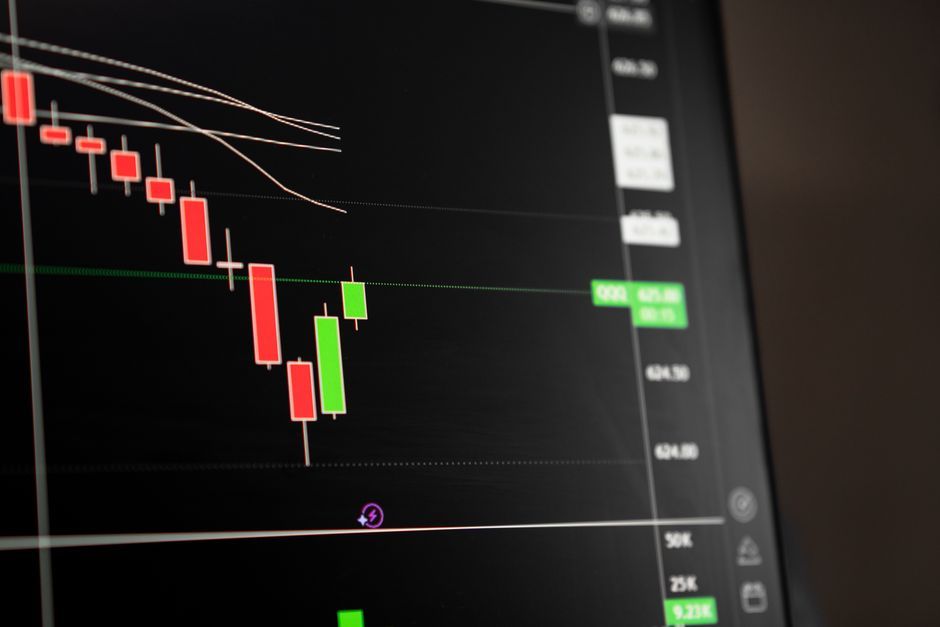
Stock photo for illustration only, not from the actual event
That is the render layer at work, and markets are the worst possible place to let it run unchecked. When a discretionary trader looks at a chart, their brain takes raw input and collapses it into a rendered scene pre-loaded with pattern names, emotional associations, and memories.
"Head and shoulders. Classic reversal pattern. I'm getting out."
Trading Friend
This is not a minor problem, but the entire problem. Human trading is emotional trading not because traders lack discipline, but because the hardware lacks an off switch, attaching feelings and pattern-matched associations to every data point before you even look at it.
Technically speaking, human brains evolved for visual pattern recognition and survival, making us prone to finding meaning even in random financial noise. While rendering raw numbers into visual scenes helps reduce cognitive load, in financial markets this evolutionary shortcut introduces dangerous biases, replacing probability-based decisions with fear and greed.
Most people have never looked inside an ML model, so here is the secret: it is boring. Take XGBoost, one of the most widely used algorithms in quantitative finance, which operates on tables where each row is a moment in time and columns represent numerical features like price changes and volume ratios.
XGBoost asks simple split questions like whether a 5-minute price change exceeds 0.3%, building small decision trees and layering hundreds of them to correct previous errors. The final prediction relies entirely on ensemble voting with no feelings, no childhood memories, and no market opinions.
The ML model has no render layer, never sees a chart, and takes numbers in while putting numbers out. By skipping the render layer entirely, it touches the core mathematics without passing through a distortion filter shaped by personal history.
Source: Dev.to
Found something wrong in this article? Report an issue with this article
Comments
Leave a Comment