

Why can't the Premier League attract the world's best players in their prime?
Despite unmatched financial power and dominance, English clubs still struggle to sign established Ballon d'Or contenders at the peak of their careers.

Stock photo for illustration only, not from the actual event
- Arsenal targeted Vinicius Jr, but the 26-year-old forward opted to sign a new Real Madrid contract until 2032.
- The Premier League excels at turning elite talents into global stars rather than buying finished superstars.
- Spain continues to hold unique allure through climate, lifestyle, and prestigious Champions League history.
Arsenal's pursuit of Vinicius Jr serves as a fascinating case study highlighting a curious contradiction in modern football. Had the Brazil forward chosen a move to north London, he would have been a rare genuine global superstar transferring to the Premier League right at the height of his powers. The Gunners were prepared to make him their primary target, and the 26-year-old was open to the possibility, but he ultimately committed his future to the Bernabeu until 2032.
This episode underscores a lingering paradox in English football. Premier League clubs wield unrivalled collective spending power, and the top flight is widely regarded as the strongest domestic competition globally, yet attracting established Ballon d'Or contenders remains a difficult feat.
While English teams have little trouble signing and retaining elite centre-backs and goalkeepers, the scarcity becomes glaringly obvious further forward, where the most coveted attackers and attacking midfielders frequently choose alternative destinations.
This dynamic reveals the distinct strategic model of English football. Rather than importing a ready-made Galactico like Vinicius, the Premier League thrives on a developmental blueprint—bringing in players like Dennis Bergkamp, Thierry Henry, or a young Erling Haaland before they reach their absolute zenith and molding them into world-beating legends within the competitive English environment.
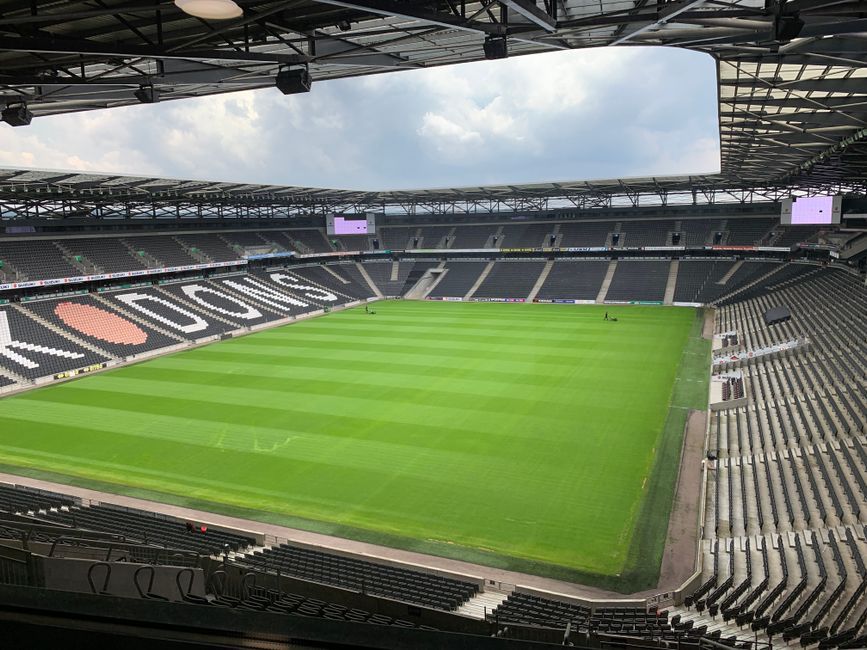
Stock photo for illustration only, not from the actual event
English clubs have proven exceptionally skilled at providing the ecosystem where elite prospects evolve into global icons. Thierry Henry arrived in London following an underwhelming spell at Juventus before becoming a generational forward, while Cristiano Ronaldo joined Manchester United as an 18-year-old from Sporting, claimed the Ballon d'Or five years later, and then moved to Spain. Similarly, Erling Haaland was already coveted when Manchester City signed him from Borussia Dortmund in 2022, but he scaled unprecedented heights after arriving in England.
"Haaland is perhaps the clearest recent example of developing an elite talent rather than signing a player after he has already won multiple Champions Leagues."
BBC Sport report
Historical exceptions are few and far between. The closest parallel to Vinicius is Andriy Shevchenko, who joined Chelsea from AC Milan in 2006 at age 29, having won the Ballon d'Or two years prior. Other past winners like Ruud Gullit, George Weah, Zlatan Ibrahimovic, and Jurgen Klinsmann arrived later in their respective careers.
Consequently, the financial model of English clubs focuses heavily on assembling deep squads of 18-22 elite players capable of surviving a grueling 38-game domestic campaign, rather than breaking the bank for a single marquee icon. Massive internal transfers, such as Alexander Isak, Moises Caicedo, and Declan Rice commanding fees exceeding £100m, illustrate this squad-building priority.
Real Madrid and Barcelona retain an unmatched pull when generational players become available. Jude Bellingham chose a move to Madrid over a return to his home country from Dortmund, Kylian Mbappe fulfilled his lifelong dream of joining Los Blancos, and Neymar chose Barcelona in 2013 over English interest. Practical advantages like climate, cultural familiarity, and the unique historical prestige associated with individual accolades like the Ballon d'Or ensure Spain remains the ultimate destination club status.
Source: BBC Sport
Found something wrong in this article? Report an issue with this article
Comments
Leave a Comment