

The ultimate eclipse chase: A Concorde raced against the Moon's shadow
Looking back at the historic mission where a supersonic Concorde aircraft was fitted with telescopes to achieve the longest imaging of the Sun's corona.
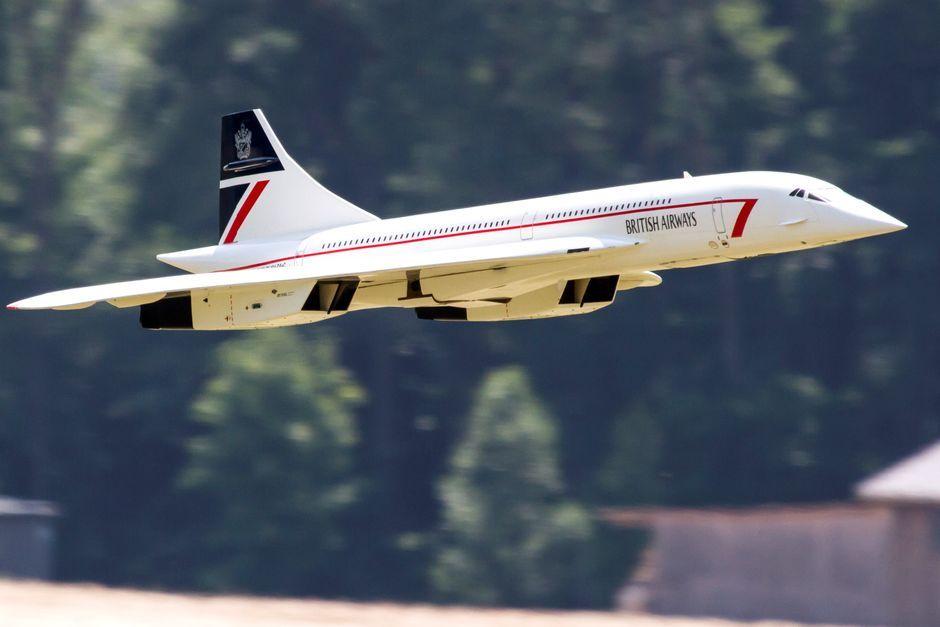
Stock photo for illustration only, not from the actual event
- A Concorde aircraft was specially fitted with telescopes for an ultimate solar eclipse chasing mission
- Its supersonic speed allowed the aircraft to successfully race alongside the Moon's shadow
- The mission achieved the longest continuous imaging of the Sun's corona in history
Capturing total solar eclipses has always faced a major obstacle due to the fleeting window of totality, where the Moon blocks the Sun for only a few fleeting minutes on Earth. This extremely limited timeframe makes studying the outermost layer of the Sun, known as the corona, a formidable challenge for astronomers.
To overcome this geographical limitation, a legendary supersonic passenger jet, the Concorde, was repurposed into an airborne laboratory. Engineers modified the cabin to securely mount specialized telescopes, enabling a team of scientists to keep pace with the path of totality.
Stock photo for illustration only, not from the actual event
Using a supersonic jet to chase the Moon's shadow represents a brilliant intersection of aerospace engineering and observational astronomy. Because the Concorde flew at speeds exceeding Mach 2, it could effectively slow down the relative movement of the eclipse across the Earth's frame of reference, vastly extending the observation window far beyond what terrestrial observatories could ever achieve hindered by weather and ground rotation.
The combination of exceptional aircraft performance and precise navigational calculations allowed this special flight to stretch out the eclipse observation period significantly. Consequently, the astronomical community was rewarded with an unprecedented collection of high-value imaging and spectral data.
Although commercial supersonic flight operations eventually concluded years later, the legacy of utilizing high-altitude aircraft to outrun the Moon's shadow remains a remarkable milestone in combining aviation technology with space science research.
Source: Ars Technica
Found something wrong in this article? Report an issue with this article
Comments
Leave a Comment