

Luca Boscardin on Why Play Belongs in Toys, Cities, and Daily Life
An interview exploring how designer and illustrator Luca Boscardin uses play as an open-ended tool to reshape public spaces and imagination.

Stock photo for illustration only, not from the actual event
- Luca Boscardin views play as a way of thinking that sparks curiosity well beyond childhood.
- His diverse portfolio ranges from the instruction-free cardboard city Archiville to Animal Factory.
- He believes physical objects remain unfinished until completed by the magic of human interaction.
Luca Boscardin firmly rejects the notion that play is reserved strictly for childhood. Spanning across toys, playgrounds, books, and public installations, his creative portfolio investigates play as a cognitive approach that invites curiosity. Whether through projects like Archiville, a cardboard city built without instructions, or Animal Factory, his growing family of abstract animal structures produced by Magis, Boscardin designs open-ended objects that intentionally leave room for individual interpretation.
After undertaking architecture studies in Venice followed by a transition into graphic design, Boscardin gradually recognized that his core passion lay in establishing the physical conditions required for imagination to thrive. Today, alongside his professional practices as a designer, illustrator, and educator, he collaborates closely with prominent institutions such as Palazzo Grassi, La Triennale, Arte Sella, and Museo Pecci, continuously investigating how playful design philosophies can reshape everything from public infrastructure to modern education.
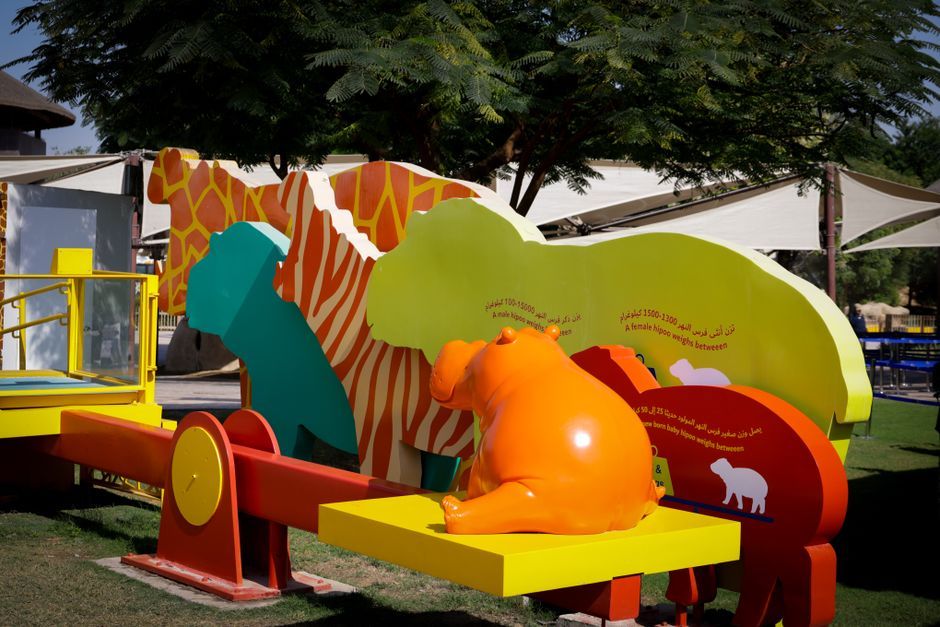
Stock photo for illustration only, not from the actual event
This open-ended design philosophy highlights a broader shift in contemporary spatial design away from rigid, single-use objects toward modular, interactive elements. By leaving room for personal interpretation, designers like Boscardin empower users to actively co-create their environments, fostering deeper social connections and active engagement in urban and educational spaces.
In conversation with designboom, Boscardin reflects on the deeper meaning of play, noting that it functions far beyond mere entertainment. Instead, it serves as a fundamental language through which individuals discover their own identities, connect with peers, and envision alternative ways of living collectively. Even though he primarily designs with children in mind, he maintains that play is never something humans truly outgrow.
“I like to think that I design objects that need the magic of play to come alive. Without someone imagining, exploring and interacting with them, they are simply unfinished. It is play that completes the design.”
Luca Boscardin
This playful mindset extends deeply into his material choices as well. Boscardin carefully evaluates not just visual aesthetics, but tactile sensations, the acoustic feedback an object produces when dropped, and its physical properties like stackability and squisheability. He argues that an engineered object is only half-realized until an end-user initiates physical contact.
When asked where playful design could ultimately make the most profound impact, Boscardin points directly to the classroom. By introducing modular architectural elements and balancing structures into educational and public spaces, children and communities are encouraged to transform movement into spontaneous encounters and author their own spatial narratives.
Source: designboom
Found something wrong in this article? Report an issue with this article
Comments
Leave a Comment