

frank kunert’s miniature worlds bend the logic of familiar architecture
the german photographer has been crafting surreal, handcrafted architectural models loaded with dark humor since the 1990s.

Stock photo for illustration only, not from the actual event
- frank kunert has been building and photographing miniature architectural sets since the 1990s.
- models range from 1:12 to 1:43 scale, meticulously handcrafted from lightweight foam board and everyday materials.
- human figures are omitted, leaving only traces of imaginary occupants to encourage viewer projection.
- the works blend playful humor with darker themes concerning human flaws and coping mechanisms.
a running track curves around a stadium, except one lane abruptly drops into a staircase and disappears below ground. elsewhere, a narrow apartment is wedged tightly beneath a highway overpass, and a hotel requires guests to reach their rooms via ladders fixed along the exterior walls. these are the meticulously crafted miniature worlds of frank kunert, a photographer who starts with places that feel entirely ordinary before introducing a subtle architectural twist.
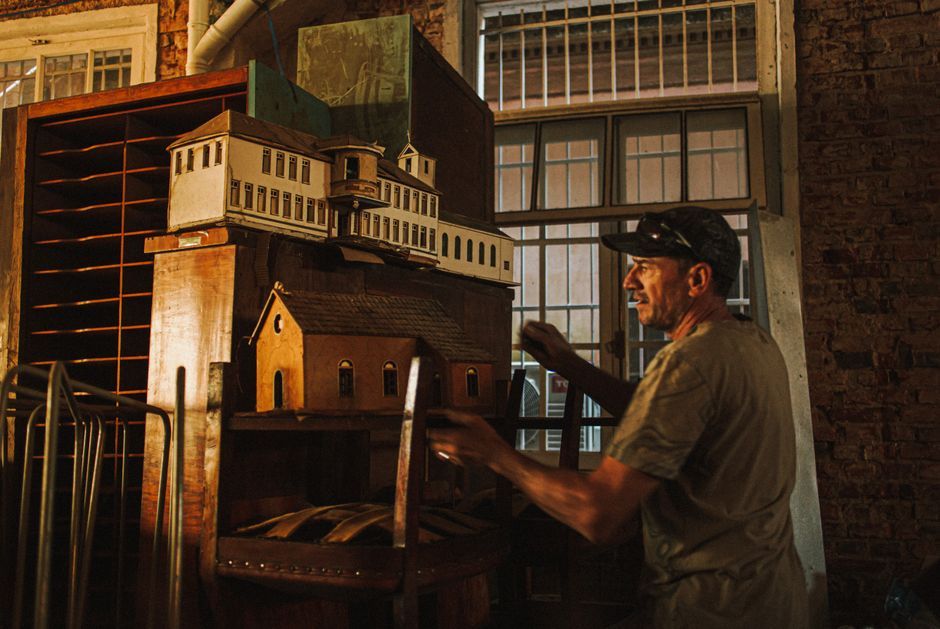
the german photographer has been building and photographing these small environments since the 1990s. his houses, interiors, roads, and public spaces range from roughly 1:12 to 1:43 scale, playfully constructed by hand using lightweight foam board and whatever materials the specific scene demands. floors are laid down, windows installed, furniture built from scratch, surfaces painted, and roofs clad in tiny shingles. kunert then carefully lights the set and photographs it, turning a tabletop creation into a place that takes a few confusing seconds to reveal its true size.
Stock photo for illustration only, not from the actual event
kunert originally trained as a photographer and began his career focusing on landscape photography before studio work gradually pulled him toward miniature sets. his earliest installations even included clay figures. however, as the architecture grew increasingly realistic, he noticed that the tiny inhabitants began to get in the way of the narrative. he ultimately removed them altogether, leaving buildings and interiors to quietly suggest whoever had just passed through, where an abandoned glass or a worn wall speaks volumes.
removing human figures is a masterstroke in kunert's artistic process, as it transforms specific vignettes into universal blank canvases. without characters dictating a storyline, viewers are free to project their own psychological states, anxieties, and fantasies directly into the physical spaces.
the photographer has frequently described these miniature scenes as stage sets onto which viewers can project their own thoughts and fantasies. the spaces appear ready for occupation, even when actual occupation would be entirely absurd. a room may be impossibly narrow, while an entrance might demand an unreasonable physical climb. the core joke rests securely inside the architecture itself, and the miniature format gives kunert enough distance from literal reality to let the surreal humor happen.
"shrinking reality fascinated him because it allowed him to construct scenes that could never exist otherwise."
frank kunert
for frank kunert, scale remains central to unlocking that creative freedom. a full-size building must constantly negotiate gravity, public access, strict construction codes, and practical use. his miniature buildings still visually obey those exact rules, which is precisely why their small, logical deviations land with such visual and emotional impact. the world is shrunk down until familiar architecture becomes entirely editable.
while undeniably humorous, the scenes frequently carry a darker, more melancholic edge. kunert repeatedly returns to examine human hopes, fears, failures, and the strange, makeshift solutions people devise to handle their own daily problems. architecture functions as a physical stand-in for these psychological compromises. his empty rooms and silent buildings still hold tangible traces of imagined occupants, keeping up appearances even when their underlying systems feel mildly ridiculous.
Source: designboom
Found something wrong in this article? Report an issue with this article
Comments
Leave a Comment