

AI detectors are creating a new era of distrust as accusations ruin careers
AI writing detection tools are widely adopted by schools and publishers despite shaky reliability and severe reputational damage.

Stock photo for illustration only, not from the actual event
- 43% of US teachers in grades 6-12 regularly used AI detectors between 2024-2025.
- AI detectors analyze wording and rhythm instead of doing direct text matching.
- Publisher Minotaur dropped a $2M book deal over AI usage allegations.
Long before ChatGPT became a household name, educators and editors frequently relied on anti-plagiarism tools to verify the authenticity of written work. These systems functioned by comparing text against a vast database containing web content and scholarly articles to identify overlapping sentences and phrases. Platforms like Turnitin offered percentages illustrating how much a student's writing overlapped with existing sources. Between potential false positives and ambiguities regarding intentional duplication, certain educators gradually stepped away from utilizing that specific software.
However, the hunt for copied content has now transformed into a full-scale war against AI-generated material. As rapidly as students embraced ChatGPT, Google Gemini, and Microsoft Copilot, instructors adopted so-called AI detectors at a matching pace. A survey conducted by the Center for Democracy and Technology revealed that 43 percent of sixth to 12th grade teachers in the United States regularly used AI detectors between 2024 and 2025. Furthermore, select universities already utilizing Turnitin within their learning management systems discovered that the platform automatically enabled AI detection features upon the tool's rollout in 2023.
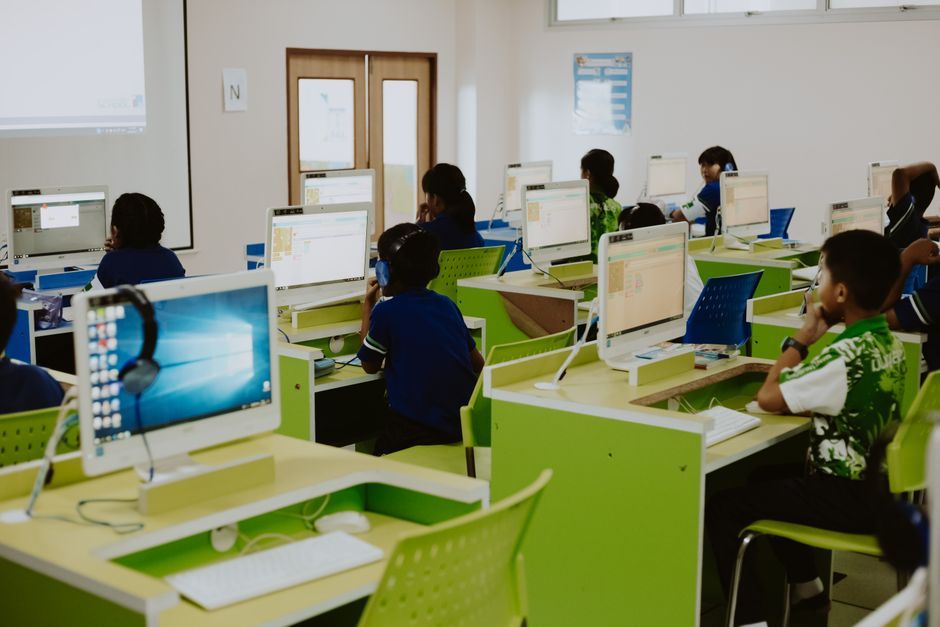
Stock photo for illustration only, not from the actual event
Rather than performing direct text comparisons, AI detectors such as GPTZero, Pangram, and Turnitin's proprietary tool depend on their own AI models to guess whether content might be machine-written—a methodology arguably murkier than matching web text. As noted by GPTZero, these detectors utilize algorithms to analyze wording, rhythm, structure, and patterns in length and tone commonly found in AI-generated text. This relatively subjective evaluation lacks the solidity of direct online text matching and frequently trips up writers who use English as a second language. Despite these limitations, Turnitin asserts that its AI detector falsely flags under 1 percent of human-written content, while Pangram claims a false positive rate of just 1 in 10,000, with GPTZero claiming a similarly low error rate.
The widespread deployment of AI detection tools highlights profound transitional challenges in the tech landscape. Because algorithms predicting machine authorship rely on statistical pattern analysis rather than concrete evidence, minor detection flaws can inflict devastating damage on personal reputations, particularly affecting non-native English speakers whose natural phrasing frequently triggers false alarms.
People online are already accusing one another of sounding like artificial intelligence, and the easy availability of detection tools simply adds fuel to the LLM witch hunt. In several high-profile instances, AI writing accusations have directly impacted individuals' livelihoods and reputations. Last month, publisher Minotaur dropped a $2 million book deal over concerns that author Jerry Falade utilized AI—an allegation he vehemently denies.
Another notable case involves Thierry Rignol, a French national who filed a lawsuit against Yale last year after a professor accused him of authoring portions of his final exam using artificial intelligence, resulting in a failing grade and a one-year suspension. The professor had utilized GPTZero to scan Rignol's submission.
Source: The Verge
Found something wrong in this article? Report an issue with this article
Comments
Leave a Comment