

Your AI Agent Needs a Maintenance Window Protocol
A deep dive into managing long-running AI agents for hours or days when deploying new images, rotating credentials, or migrating databases mid-task.

Stock photo for illustration only, not from the actual event
- Long-running AI agents often lack proper handling during the awkward transition between active work and shutdown.
- Low-level process supervisors cannot make business-logic safety decisions like the runtime can.
- Durable state persistence, idempotency keys, and strict deadlines are essential for recovery.
- Restarting a process is an infrastructure task, while recovering an agent is a correctness task.
Long-running agents are usually tested at startup and during normal operation, while the awkward middle is frequently ignored: what happens when you need to deploy a new image, rotate a credential, migrate a database, or restart the host while the agent is halfway through a tool call?
A process supervisor can restart a crashed agent, but it cannot decide whether a browser checkout was committed, whether a webhook was acknowledged, or whether a tool call is safe to replay. That decision belongs strictly in the agent runtime.
This post presents a small maintenance-window protocol for agents that run for hours or days, aiming for four core goals: moving away from treating maintenance as a blind kill -TERM followed by hope, and instead giving the runtime a durable state machine.
Persisting the transition involves more than just an in-memory flag. A minimal record can look like a specific state tracking runtime, maintenance ID, and active runs.
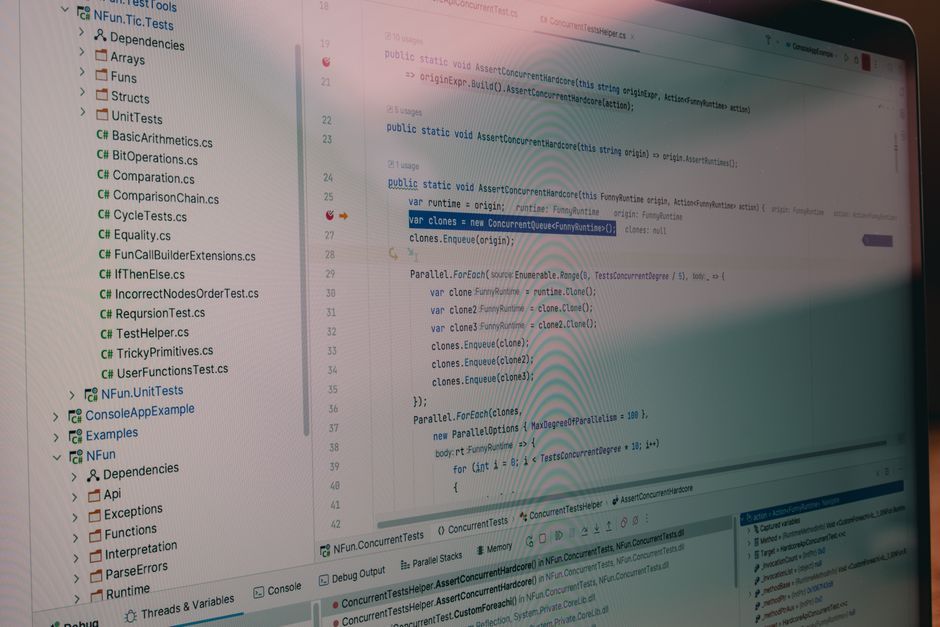
Stock photo for illustration only, not from the actual event
Understanding the fundamental split between infrastructure-level process management and application-level agent recovery is vital. Operating system tools only track process existence, whereas AI workflows require precise state tracking to handle unexpected interruptions safely.
If the host disappears, the replacement process can see that the previous shutdown never reached QUIESCED. That is much more useful than inferring health from a missing PID.
An LLM step is usually replayable, but actions like a payment, email, browser click, deployment, or Git push may not be. You must record a checkpoint immediately before and after every non-idempotent boundary.
An idempotency key should be derived from the logical operation rather than the process attempt. For example, use invoice:8472:send instead of a random UUID generated after every restart.
Every maintenance request needs a deadline and a policy for work that misses it, such as setting a drain timeout of 90 seconds, setting the deadline action to checkpoint and stop, quarantining unknown side effects, and refusing new work.
For browser agents, checkpoint the URL, authenticated identity, page state hash, last submitted action, and external request ID. Do not claim that a page reload proves a form submission did not happen; instead, put the run in quarantine and reconcile against the application’s actual state.
A maintenance protocol is only real if you can interrupt it at each boundary. Running a small matrix in a staging environment helps capture the run ID, checkpoint sequence, provider request ID, and final classification for every test, proving that a green process health check is not evidence that the recovery decision was correct.
If the agent must be available continuously, use a deployment environment that preserves the runtime’s state and gives you a controlled restart path. Managed OpenClaw hosting on Ampere can be relevant when the problem is the always-on host, but it does not replace application-level checkpoints, idempotency, or reconciliation.
Whether you run on a VPS, a local machine, or a managed host, keep these layers separate. The key distinction is simple: restarting a process is an infrastructure action, while recovering an agent is a correctness action. A maintenance window protocol gives the second one a place to live.
Source: Dev.to
Found something wrong in this article? Report an issue with this article
Comments
Leave a Comment