

What We Learned From PLAY: How Design and Architecture Embrace Playfulness
Exploring how play across architecture, art, and design doesn't take us away from reality, but rather makes us more alert to the spaces we inhabit.
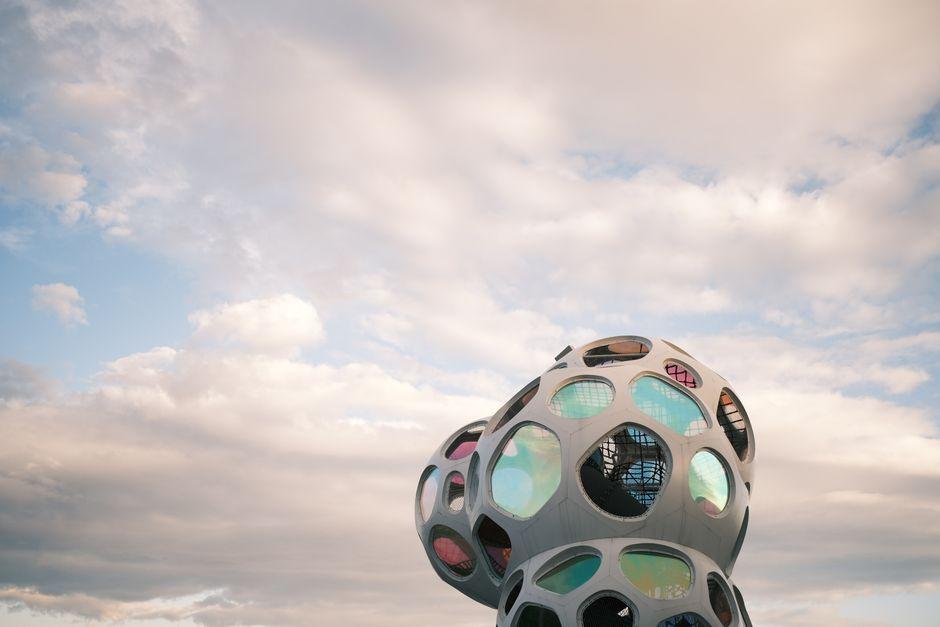
Stock photo for illustration only, not from the actual event
- Play reveals how spaces are organized and how tightly our behaviors are scripted
- Achille Castiglioni and Bruno Munari treated curiosity as part of their rigorous working method
- The Draw Me A Face project translated children's drawings into makeup looks without correcting anatomy
- Public spaces and sports courts can be reimagined through color and materials to challenge conventions
Across architecture, art, and design, the projects we encountered suggested that play does not necessarily remove us from reality. Quite the opposite: it can make us more alert to how spaces are organized, who gets to participate in them, and how tightly our behavior is usually scripted. From basketball courts and labyrinths to swinging bells and experiments with chance, here is what play taught us.
Achille Castiglioni and Bruno Munari understood this long before playfulness became a design-world adjective. At Fondazione Achille Castiglioni, an exhibition bringing the two Italian designers into conversation revealed curiosity as part of a rigorous working method: Castiglioni collected toys, glasses, gadgets, and everyday curiosities, while Munari experimented with the photocopier through his Xerografie Originali. Their pleasure in things was not separate from their practice. Looking, collecting, testing, and occasionally doing something simply because it was amusing became ways of generating ideas.
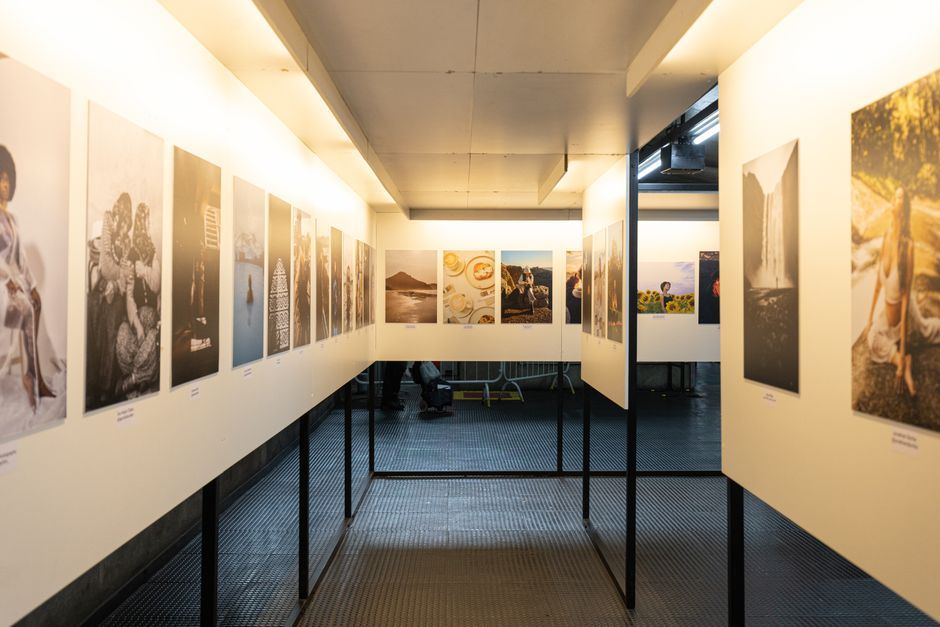
Stock photo for illustration only, not from the actual event
The same freedom appeared when children were asked to draw faces without worrying about anatomy, proportion, or good taste. In Draw Me A Face, their drawings were translated into makeup looks, preserving misplaced eyes, irregular lines, and strange combinations instead of correcting them. The experiment exposed something adults spend years learning to suppress: an idea does not need to be reasonable before it can be interesting. Play makes room for the unfinished, the absurd, and the apparently wrong—precisely the places where something new can begin.
Translating children's unfiltered drawings directly into makeup looks serves as a powerful reminder of how unlearning perfectionism fosters genuine creative breakthroughs. In design theory, removing the pressure of immediate rationality allows unconventional concepts to surface naturally.
Public space is full of quiet instructions. Benches tell us where to sit, paths where to walk, fences where to stop, and signs what not to touch. Looking at projects by designers and artists working differently, we found another possibility: architecture can signal that unusual behavior is not only tolerated but welcome. Thoughtful interventions can give adults permission to climb, linger, splash, balance, wander, or simply behave less predictably in the city.
Sports courts demonstrate how little it can take to change that relationship. Basketball and tennis courts are among the city's most standardized environments, governed by familiar dimensions, lines, and rules. Yet artists and architects have repeatedly treated those same surfaces as civic canvases, using color, material, landscape, and construction to turn ordinary sporting infrastructure into recognizable pieces of public space. The rules remain, but the atmosphere changes. A court can still tell you how to play while simultaneously suggesting that the city belongs to you.
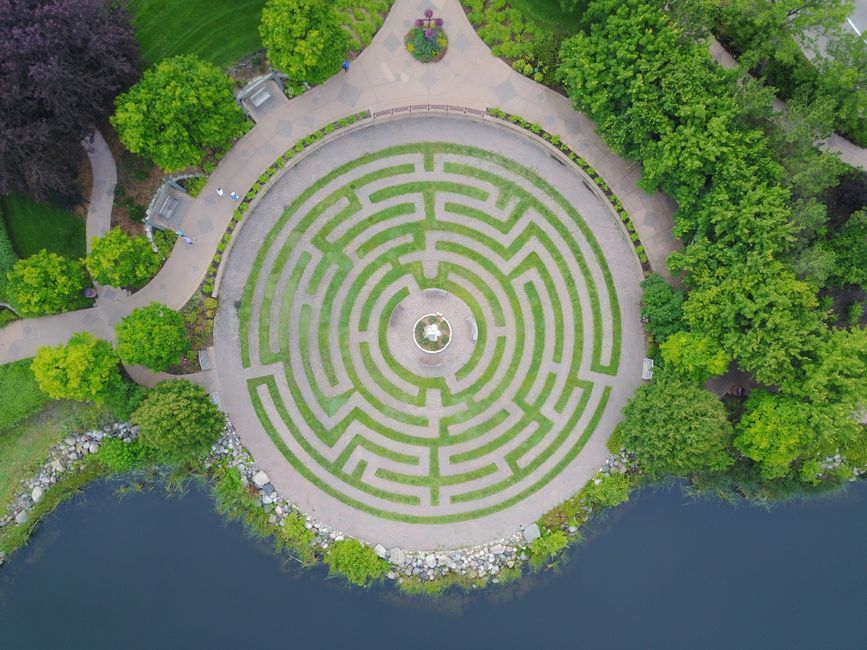
Stock photo for illustration only, not from the actual event
That loss of certainty also runs through the labyrinth. From Robert Smithson's Spiral Jetty to Franco Maria Ricci's monumental bamboo maze, labyrinths give architecture a wonderfully inefficient task: getting us nowhere quickly. They replace the straight line with hesitation, repetition, wrong turns, and time apparently wasted. In doing so, they remind us how unusual it has become to encounter a path whose value lies in the experience of following it rather than the destination waiting at its end, such as the Borges Labyrinth in Venice, Italy, showcased in 2026.
During the chapter, we also asked a less comfortable question: if contemporary public art is so eager to call itself playful, why can so much of it feel strangely dull? Interactive installations routinely invite us to touch, enter, pose, or press something, but participation alone does not create play. The difference often lies in agency. Cj Hendry's colossal inflatable Keff Joons, for example, offered a three-dimensional tangle without the usual railings and prescribed choreography, allowing visitors to climb through it according to their own curiosity.
Play needs enough structure to begin, but enough openness for something unexpected to happen. Otherwise, interaction becomes another instruction to follow. Perhaps the most memorable playful spaces are therefore not those that perform playfulness most loudly, but those willing to surrender a little control over what their users will actually do.
Céline Boursier-Mougenot's Ring makes that surrender audible. Installed at FRAC Normandie in Caen, France, the work connects swings with bells of different sizes so that visitors produce an evolving composition simply by moving. There is no audience sitting quietly on one side and finished artwork waiting on the other. Bodies, motion, sound, and chance build the piece together.
Perhaps that is where many of the ideas explored throughout play eventually meet. Play can temporarily soften the separation between designer and user, object and participant, rule and improvisation. It reminds us that spaces and things do not become meaningful only because someone has carefully determined what they are for. Meaning can also emerge through what people decide to do with them.
Source: designboom
Found something wrong in this article? Report an issue with this article
Comments
Leave a Comment