

Thailand's Human Capital Challenge: Building Future Talent Amid 1.47 Trillion Baht Investments
An in-depth look at Thailand's human capital development strategy as massive tech investments flow in, requiring a rapid boost in workforce knowledge and real-world experience.

Stock photo for illustration only, not from the actual event
- Thailand recorded over 1.47 trillion baht in investment promotion applications in H1 2026, up 37% year-on-year
- A target is set to develop 280,000 specialized workers within 5 years for semiconductors and AI
- Dr. Santitarn Sathirathai highlights the goal to raise total national investment to 30% of GDP
- The 'Milk-Whisky-Water' framework emphasizes balancing knowledge acquisition with hands-on experience
During the first half of 2026, Thailand experienced a robust wave of investment, securing promotion applications valued at over 1.47 trillion baht, marking a 37 percent increase from the previous year. This growth is heavily driven by digital infrastructure such as Data Centers, Cloud services, and AI. Concurrently, the public and private sectors are rushing to cultivate approximately 280,000 specialized professionals over the next five years to support key industries including semiconductors, advanced electronics, EVs, and AI.
However, drawing massive funding and setting up physical facilities or data centers is merely the starting point. A critical question remains whether the country can develop a capable workforce fast enough to match incoming technologies. While physical infrastructure can be built within a few years, human attributes such as knowledge, skills, experience, and critical judgment require time to mature and generate high value in complex industries.
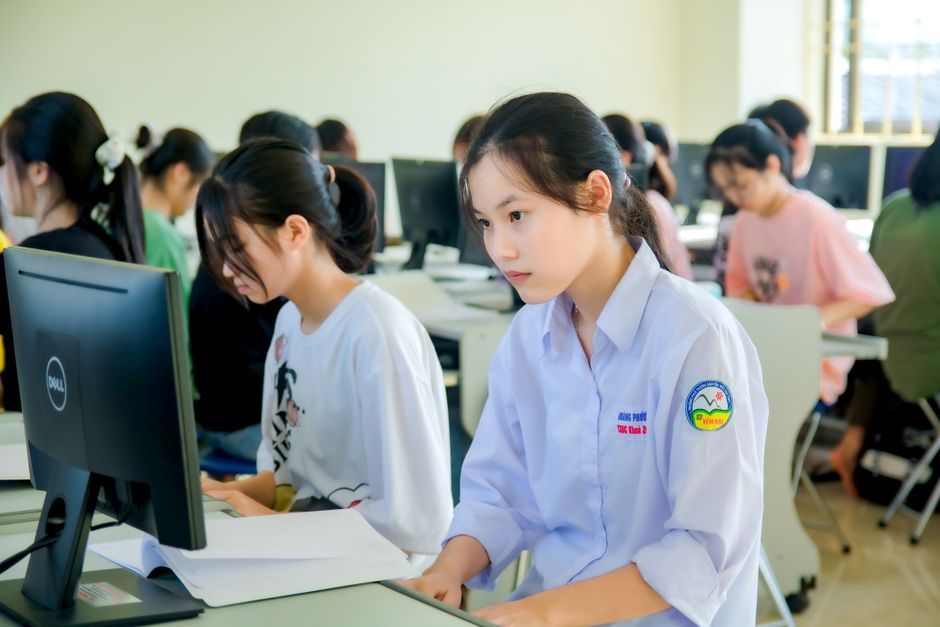
Stock photo for illustration only, not from the actual event
To address this human capital puzzle, Dr. Santitarn Sathirathai, Assistant Minister to the Ministry of Finance and former senior executive at Credit Suisse and Sea Group, proposed a conceptual framework comparing workforce development to three types of beverages. The first is 'Milk' (Knowledge), which is valuable but has an expiration date. In an era where Generative AI can instantly retrieve and summarize data, human advantage shifts from memorization to inquiry, critical verification, and continuous learning.
The second component is 'Whisky,' representing skills that must be cultivated through hands-on practice and experience, such as critical thinking, creativity, communication, and judgment. These cannot be mastered through textbooks alone; they require trial, error, and real-world problem-solving. Yet, a major modern dilemma arises as Generative AI absorbs entry-level junior tasks—ranging from data organization to basic coding—which traditionally served as vital training grounds for young professionals to build initial experience before tackling complex responsibilities.
Structural analysis indicates that Thailand's core challenge lies not in a shortage of capital or technology, but in the acceleration gap between rapid technological disruption and the adaptive speed of the educational ecosystem. Relying solely on conventional, long-cycle curricula is no longer sufficient, prompting stakeholders to integrate practical workplace training much earlier to bridge the skills gap.
The final element is 'Water' (Self-awareness), which involves understanding one's strengths, weaknesses, and adaptability in ever-changing career landscapes. As career paths are no longer linear, national workforce planning must evolve beyond merely counting required engineers or programmers, focusing instead on building adaptable skill portfolios that empower workers to transition across industries and collaborate effectively with AI.
Dr. Santitarn also noted that traditional education tends to heavily overweight 'Milk' inside classrooms while leaving insufficient space for students to accumulate 'Whisky' or real-world experience. Expanding models such as internships, apprenticeships, and project-based learning directly within educational frameworks is essential to equip the younger generation before they enter the full-scale labor market.

Stock photo for illustration only, not from the actual event
Source: Techsauce
Found something wrong in this article? Report an issue with this article
Comments
Leave a Comment