

What Do Ho Suh’s Fabric Houses Reveal About Architecture After Permanence
Exploring artist Do Ho Suh's translucent fabric installations, which question traditional architectural permanence through memory and mobility.
Stock photo for illustration only, not from the actual event
- Do Ho Suh reconstructs former living spaces using translucent polyester and delicate steel frames.
- His works reflect his personal journey living across Seoul, New York, and London.
- Architectural theorist Gottfried Semper argued that architecture originated from textiles.
- The artworks redefine home as something built through movement and memory rather than a fixed address.
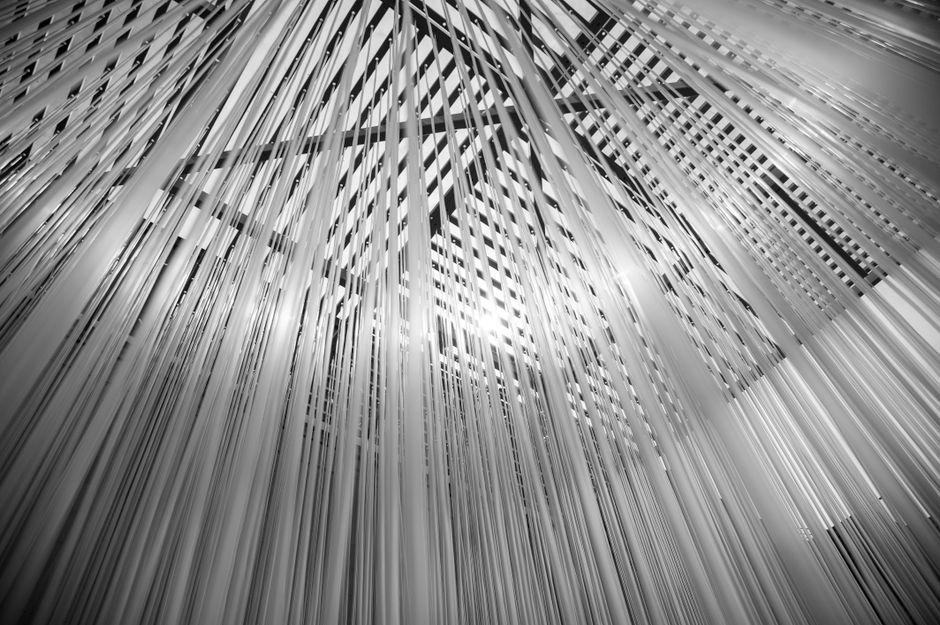
Across apartments, staircases, corridors, kitchens, and entire homes, contemporary artist Do Ho Suh repeatedly reconstructs spaces he once inhabited using translucent polyester stretched over delicate steel frames. In these fabric houses, every door handle, light switch, radiator, and window frame is measured with remarkable precision before being painstakingly stitched into place. His installations possess the scale and logic of architecture while remaining impossibly light, as though buildings had shed their weight and become memory suspended in space.
The translucent walls appear solid enough to define a room yet soft enough to dissolve into light. Doorways lead somewhere familiar, though nowhere you have ever lived. Corridors unfold like memories rather than architecture, allowing the certainty of the house to give way to something more elusive.
At first glance, these works appear deeply autobiographical, tracing Suh’s journey from Seoul to New York and London. However, between one room and the next, they stop belonging exclusively to him, prompting visitors to recognize fragments of their own lives.
Stock photo for illustration only, not from the actual event
For much of architectural history, permanence has been treated as the defining virtue of the discipline, where buildings were expected to outlast their occupants. Stone replaced timber, concrete replaced brick, and foundations anchored architecture to land. Suh’s houses can be folded, transported, unpacked, and rebuilt elsewhere, resisting conventional monumentality and suggesting that continuity matters more than permanence.
Long before walls became masonry, architect and theorist Gottfried Semper argued that architecture originated in textiles, where the first enclosure was a woven surface. Suh returns architecture to this forgotten origin through buildings that behave less like rigid structures and more like skins.
Do Ho Suh's choice of lightweight polyester and steel is not merely an artistic statement, but a direct challenge to architecture's traditional obsession with permanence. In an era where modern lifestyles demand constant relocation across cities and borders, his work visualizes a shifting societal reality: that a home is no longer tethered to a single permanent physical address, but is instead assembled from transferable memories and routines.
Fabric transforms architecture from an object into an atmosphere, making walls reveal interiors and boundaries permeable. Specific everyday architectural details replicated with exact precision include:
- Electrical outlets
- Hinges
- Pipes
- Doorframes
- Window casings
Philosopher Gaston Bachelard described the house as a place where memory gradually settles into everyday life. Suh approaches architecture similarly, focusing on elements that shape our lived experience. Walking through his installations reveals that these spaces are less about documentation and more about recognition.
Leaving one country for another inevitably alters one's relationship to home. For Suh, home exists across multiple places simultaneously. His installations overlap apartments inhabited years apart, connecting homes separated by continents through recurring doorways and staircases.
The work abandons home as a fixed location, replacing it with something assembled through movement and memory. As people increasingly build lives across multiple cities and temporary spaces, Suh’s fabric houses make invisible gestures visible, proving that home lingers in the routes our bodies remember and the rhythms we carry with us.
Source: designboom
Found something wrong in this article? Report an issue with this article
Comments
Leave a Comment