

Algorithm of War: How Sensor Fusion and Autonomy Are Redefining the Battlefield
Artificial intelligence is shifting military power toward data pipelines and distributed processing amidst critical safety and ethical challenges.
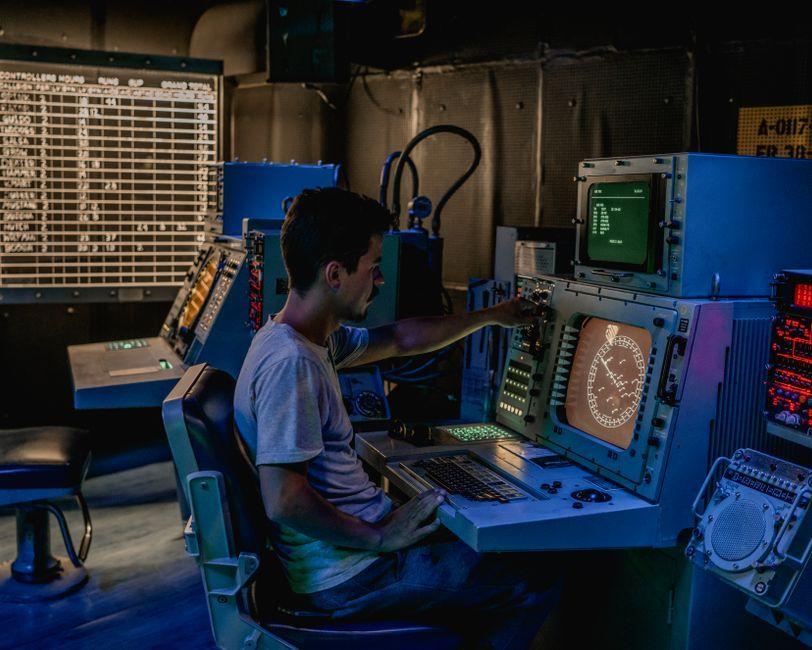
Stock photo for illustration only, not from the actual event
- AI is reshaping combat through high-speed data processing and automated analysis.
- Sensor fusion combines multiple intelligence streams into a shared operational picture.
- Automation bias poses a critical risk to military decision-making and oversight.
- Drone swarms and distributed autonomy introduce unprecedented tactical challenges.
Artificial intelligence is shifting military power away from physical platforms alone and toward data pipelines capable of detecting, deciding, and acting faster than human-only command structures. While advanced legacy assets like stealth bombers, guided missiles, and radar satellites remain expensive and strategically vital, the real transformation lies in the connective software layer comprising machine learning models, edge processors, automated targeting aids, synthetic training environments, and decision-support systems.
For IT-literate readers, this narrative is strikingly familiar. Warfare is rapidly evolving into a distributed computing problem bounded by extreme constraints in latency, bandwidth, security, and reliability. The critical difference is that system failure in this domain can result in civilian casualties, escalating conflicts, or severe strategic miscalculations.
Modern military operations generate massive data volumes from satellites, drones, radar, sonar, signals intelligence, cyber sensors, logistics systems, wearable devices, and open-source feeds. The core challenge transcends mere data collection, focusing instead on extracting actionable signals from noise quickly enough to matter.
A single high-altitude drone can stream full-motion video for hours, while small satellite constellations capture repeated imagery across vast regions. Ground sensors detect acoustic, seismic, thermal, or radio-frequency events faster than human analysts can manually process. Consequently, military AI systems are deployed to execute several vital functions:
- Detect vehicles, vessels, aircraft, and troop movements within imagery
- Classify objects derived from radar, infrared, and electro-optical sensors
- Correlate disparate intelligence reports from multiple sources
- Flag anomalies in network traffic or communication patterns
- Prioritize operational alerts for human review
- Predict equipment failures and supply chain shortages
Much of this utility is unglamorous; operational value stems from reducing analyst workload. A model filtering 10,000 image tiles down to 400 high-priority candidates often delivers greater practical impact than a humanoid robot equipped with a rifle.

Stock photo for illustration only, not from the actual event
The technical hurdles far surpass civilian image recognition tasks. Military data is frequently sparse, degraded, intentionally manipulated, and captured from unconventional angles. Adverse weather, camouflage, decoys, electronic interference, and adversarial maneuvers degrade model performance, transforming the identification of a partially concealed tank into a far more complex challenge than recognizing household objects online.
Sensor fusion addresses this by aggregating multiple data sources into a cohesive operational picture. Systems correlate satellite imagery, drone feeds, radar tracks, intercepted emissions, and field reports to enhance detection confidence and minimize latency. Modern architectures leverage machine learning to identify patterns across heterogeneous data streams, verifying stationary satellite observations through correlated radio emission shifts and confirmed ground vehicle movements.
A functional military AI architecture must answer rigorous queries regarding sensor lineage, data recency, alternative classifications, civilian presence probabilities, positional changes, and spoofing indicators. These are fundamental operational safety parameters rather than optional interface features.
"A model that cuts 10,000 image tiles down to 400 high-priority candidates may have more practical impact than a humanoid robot with a rifle."
Dev.to Analysis
The integration of AI into military frameworks demonstrates that modern security relies less on hardware scale and more on data pipeline velocity and the management of algorithmic risks. Software architecture and interface design now dictate tactical success and human safety on the digital battlefield.
Source: Dev.to
Found something wrong in this article? Report an issue with this article
Comments
Leave a Comment