

HANGHAR Challenges Traditional Domestic Architecture with Fluid, Non-Prescriptive Spaces
Architecture studio HANGHAR explores flexible domestic layouts in Madrid and sets a definitive 10-year lifespan ending in 2030.

Stock photo for illustration only, not from the actual event
- HANGHAR designed the 65-square-meter Lara House in Madrid with zero predetermined program layouts.
- The Studiolo project features a compact deep-green central cabinet acting as both storage and a private retreat.
- The studio operates on a strict 10-year timeline, scheduled to cease all activities on December 31, 2030.
Architecture studio HANGHAR is actively questioning standard domestic living by exploring novel ways to organize home interiors. This experimental approach is vividly demonstrated in Lara House, a 65-square-meter apartment located in Madrid, Spain. The space features four visually linked rooms completely devoid of predetermined programming. Large central openings maintain seamless visual continuity between the spaces, while the fireplace and kitchen remain as the few designated anchors for specific functions.
Rather than relying on moving partitions or complex mechanical gadgets to achieve flexibility, HANGHAR deliberately designs architecture to be less instructive. While room dimensions and atmospheres remain distinct, the exact activities taking place inside them are left open to change. Furthermore, privacy is carefully shaped through spatial thresholds, architectural scale, natural light, and material selection.
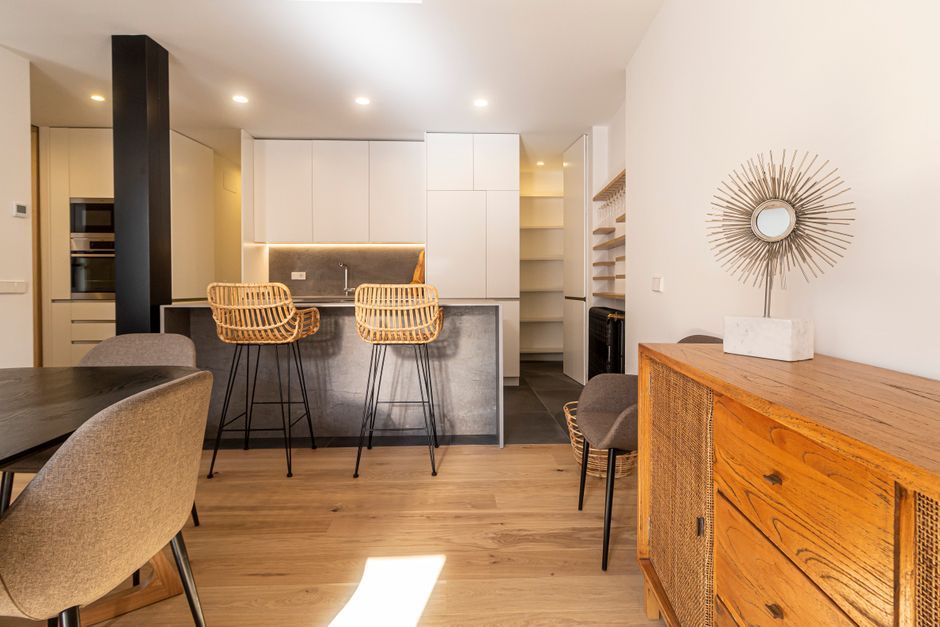
Stock photo for illustration only, not from the actual event
Stripping away fixed functions, however, does not mean reducing domestic life into one massive, unstructured open-plan room. In contrast, the Studiolo project completed in Madrid in 2024 takes a nearly opposite approach. HANGHAR gutted a 1970s apartment and placed a compact deep-green cabinet-room right at its core, channeling the logic and name of private studiolos from Renaissance Italy. Functioning somewhere between a piece of furniture and built-in architecture, this central object absorbs storage needs while carving out an intimate space for retreat, leaving the surrounding perimeter open.
Setting a strict ten-year expiration date for an architectural practice is a bold methodological choice. By imposing a finite lifespan, HANGHAR creates an artificial sense of urgency that frees them to push radical spatial theories to their absolute limits without the usual commercial compromises of long-term commercial firms. This philosophy turns architectural practice into a concentrated series of ideological experiments.
This ongoing experimental journey operates against a literal ticking clock. HANGHAR was established as a decade-long architecture practice scheduled to officially close operations on December 31, 2030. According to Mediero, this finite lifespan injects a crucial sense of urgency to test and stretch spatial concepts as far as humanly possible. Spanning across Ronda House, Lara House, Casa Gracia, Studiolo, and Casa Guadalupe, a single core question persists through every iteration: which elements of domestic architecture are genuinely necessary, and which merely persist because society stopped questioning them?
"connected rooms replace rigid hierarchies and fixed functions."
Mediero
Source: designboom
Found something wrong in this article? Report an issue with this article
Comments
Leave a Comment