

When Computers Were Human: The Untold Story of ENIAC's Female Programmers
Discover the pioneering women behind the world's first programmable digital computer whose contributions were forgotten for decades.

Stock photo for illustration only, not from the actual event
- The term computer originally referred to a human job title, not a machine.
- The US Army hired around 200 human calculators to compute ballistic firing tables.
- Six talented women were selected to program the ENIAC computer in 1945.
Amidst the escalation of World War II, the United States military faced one of its most critical mathematical challenges: calculating ballistic firing tables. Every artillery shell size, daily weather condition, and wind velocity required precise and complex physics equations.
Consequently, the word computer did not mean a processing machine back then, but rather a human job position. The military hired about 200 brainpower workers at the University of Pennsylvania in Philadelphia to sit and operate calculators performing manual arithmetic all day long, with almost everyone in this math force being women.
Meanwhile, in the shadows of the Moore School of Electrical Engineering, two engineers John Mauchly and J. Presper Eckert were secretly developing a top-secret project named ENIAC (Electronic Numerical Integrator and Computer). It was the world's first operational general-purpose digital computer, designed to revolutionize warfare by computing trajectories in mere seconds instead of days like human laborers.
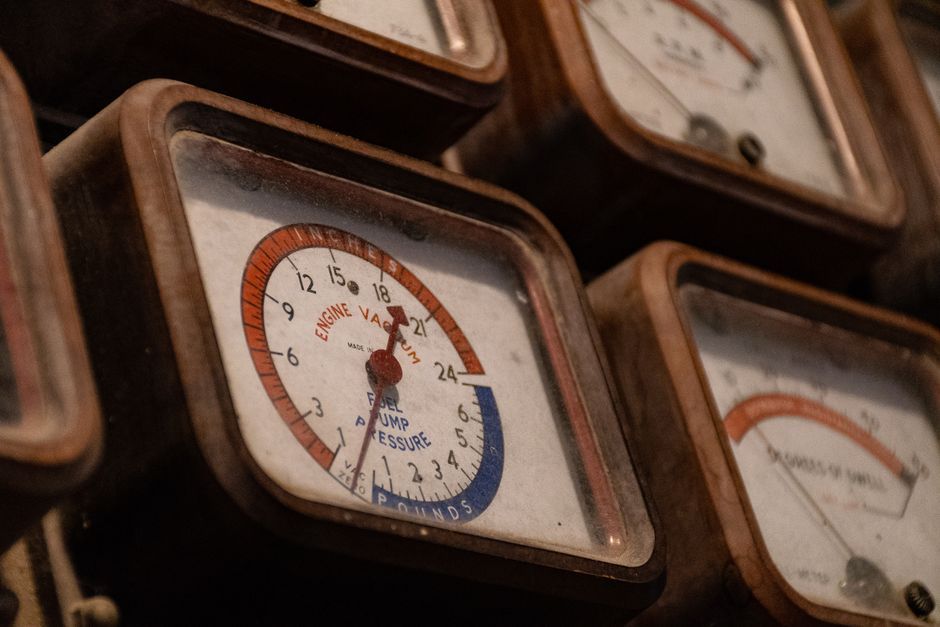
Stock photo for illustration only, not from the actual event
In 1945, while ENIAC was still a massive framework of steel and vacuum tubes, the military selected 6 top female mathematicians from the pool of 200 to take on this national mission, including Betty Holberton and Jean Bartik.
They began their training with IBM tabulating machines at the Aberdeen Proving Ground before being sent to face the ENIAC hardware directly.
Working with the early ENIAC system was akin to charting unexplored territory since no programming manuals or high-level languages existed. These six women had to apply advanced logic to translate complex physics equations into physical electrical pathways, laying the foundational framework for modern software engineering.
Back then, terms like programming language, system manual, or even programmer had not yet been coined in any dictionary. The only things these six individuals received were piles of electrical circuit blueprints along with a brief instruction from the engineering team to figure out how the machine works and program it yourselves.
Without keyboards or monitor screens, programming the ENIAC required intense physical labor. All six women had to plug thousands of cables and manually adjust thousands of switches to force electrical currents through correct logic pathways. They mastered the quirks and breakdowns of this giant machine down to the exact vacuum tubes that failed.
In late 1945, ENIAC ran its first actual test by computing top-secret complex equations for the Los Alamos Laboratory regarding the development of the hydrogen bomb.
By February 14, 1946, when ENIAC was publicly unveiled to the press, the team demonstrated artillery trajectory calculations. The results shocked the industry because ENIAC finished calculating within just 20 seconds, beating the actual shell flight time of 30 seconds and drastically outperforming the 40 hours human calculators required.
Go figure out how the machine works and program it yourselves.
Instruction from the engineering team
Following the demonstration, thunderous applause filled the room. The male engineers who built the hardware took center stage for praise, but in the shadows of the celebration party, the six women who operated and commanded the switches behind the scenes were never mentioned at all. Furthermore, at the victory banquet held at Houston Hall, none of them received an invitation to attend.
Stock photo for illustration only, not from the actual event
As time passed, their achievements faded into obscurity. Old archive photos of them standing next to the ENIAC machine often lacked name identifications, or worse, they were misidentified as mere models hired to pose next to the machinery for aesthetic appeal.
Each woman eventually pursued careers in their respective fields. Betty Holberton joined Eckert and Mauchly's company to develop early commercial computers like the UNIVAC, invented the first sort-merge generator in 1952, designed the UNIVAC I keyboard and control console, and later contributed to the FORTRAN language standards.
Nobody in the subsequent computer industry knew their names for decades until attorney Kathy Kleiman discovered vintage ENIAC photographs during her research in the 1980s and tried to identify the women in the pictures, finding no records in university archives or historical documents.
Source: Techsauce
Found something wrong in this article? Report an issue with this article
Comments
Leave a Comment