

Dyna Robotics Unveils Dyna-2: A World-Action Model Trained on 1 Million Hours
Dyna Robotics introduces Dyna-2, a new world-action model pre-trained on extensive human egocentric video data to enhance robotic capabilities.
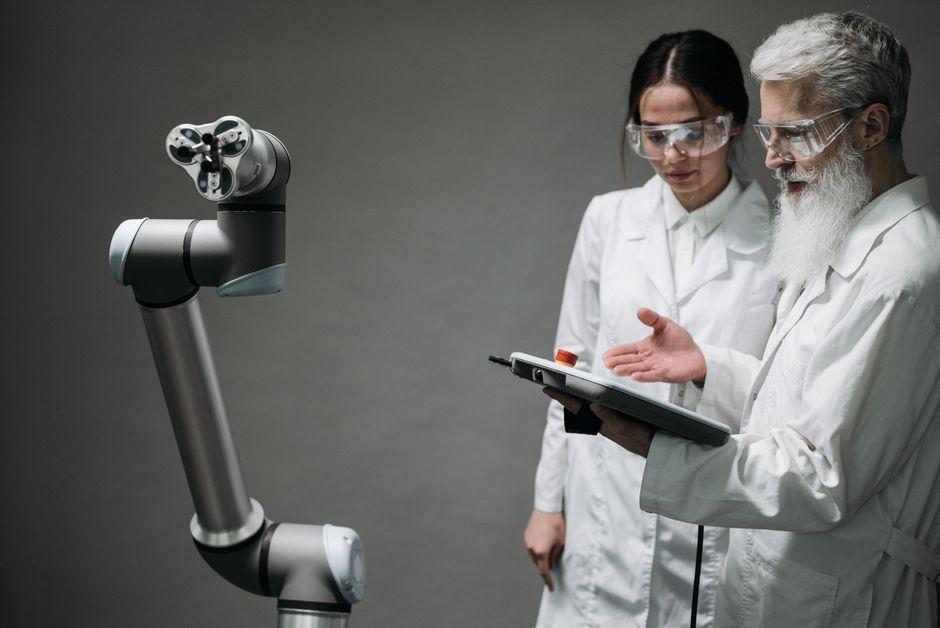
Stock photo for illustration only, not from the actual event
- Dyna-2 is a world-action model (WAM) generating future video and action chunks jointly.
- Pre-trained on over 1,000,000 hours of egocentric human video data.
- Average normalized scores scaled progressively up to a peak of 53%.
- Distributed as a vendor-operated hardware cell system rather than downloadable model weights.
Dyna Robotics has officially introduced Dyna-2, a cutting-edge world-action model (WAM) designed to denoise future video and upcoming action chunks either jointly or separately using a video-diffusion backbone. The system was pre-trained on more than one million hours of egocentric human video, which roughly equals 170 years of continuous waking human experience.
From an architectural standpoint, the model integrates a mixture of transformers where video and actions are tokenized separately. They are processed through distinct DiT layer stacks that attend to each other, while proprioception feeds directly into the action transformer. Video tokens utilize causal masking, and action tokens employ bidirectional self-attention.
The training procedure implements flow matching, sharing a trunk as two separate marginal velocity fields for video and action losses. Because the action network never processes noised video latents as an input argument, the policy remains highly reactive during inference. The action transformer is built intentionally shallower to improve real-time latency without sacrificing overall task performance.
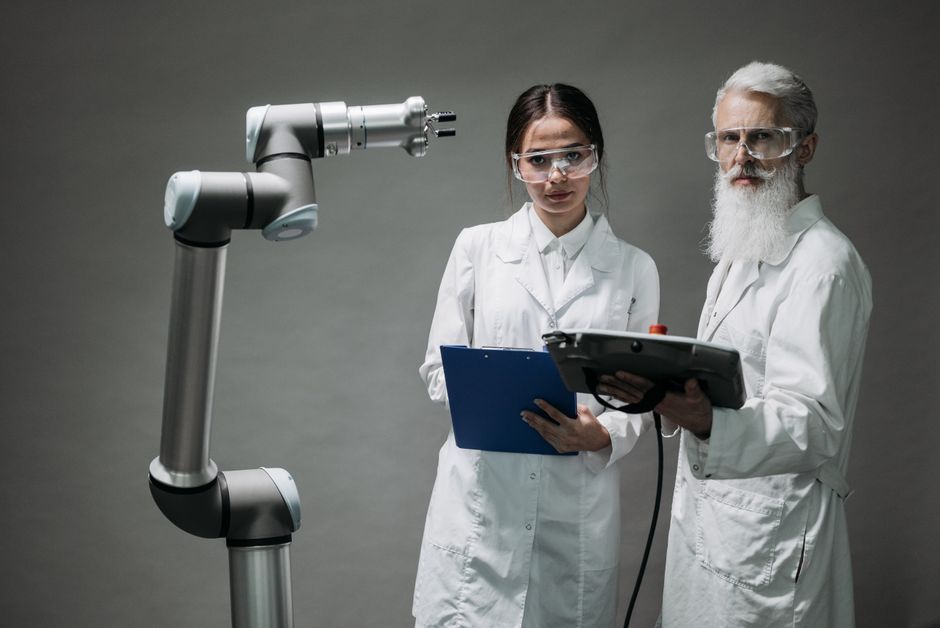
Stock photo for illustration only, not from the actual event
World-Action Models represent an evolution in robotics by bridging the gap between visual perception and physical execution. By predicting future actions alongside environmental changes, these models allow robotic systems to react dynamically to complex real-world environments without requiring explicit manual programming for every single movement.
The engineering team structured nested subsets containing exactly 1,000, 10,000, 100,000, and 1,000,000 hours, maintaining identical proportions across all sources. Across the scaling ladder, mean normalized scores increased progressively from 20% to 28%, 45%, and finally 53%, performing best on 9 out of 14 tasks at the one-million-hour threshold.
When compared against its predecessor Dyna-1, an early version of Dyna-2 achieved a 1.55x success rate and a 1.12x grade across tested benchmarks. At deployment sites unfamiliar to the system, Dyna-2 met production criteria in 87% of cases compared to 46% for Dyna-1, alongside a specialized distillation pipeline that reduced video sampling time down to 110 milliseconds on a single H100 GPU.
Source: MarkTechPost
Found something wrong in this article? Report an issue with this article
Comments
Leave a Comment