

UK economy grows in Q2 but experts warn of challenging months ahead
Official data shows the UK economy expanded between April and June, driven by temporary factors, while economists warn of inflation and energy risks.
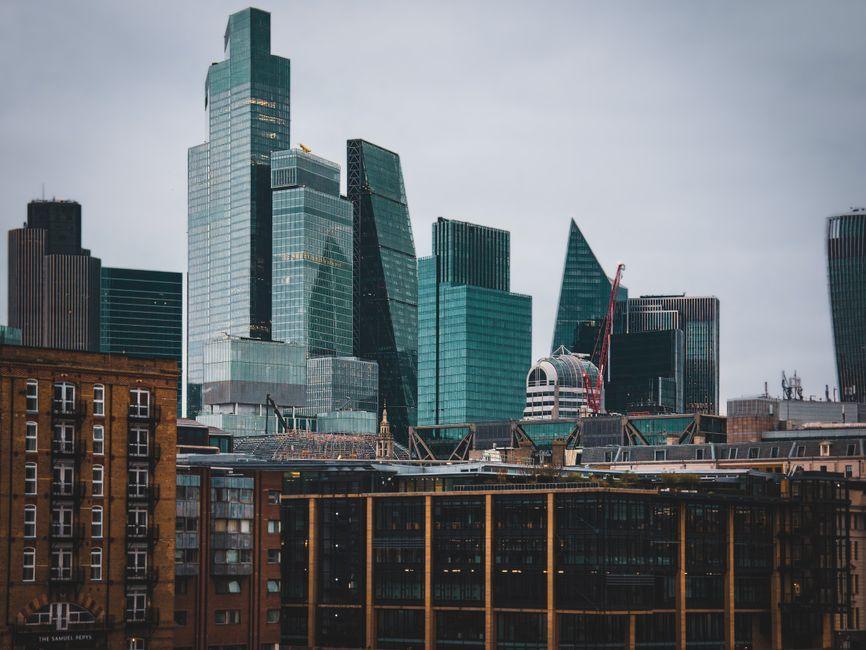
Stock photo for illustration only, not from the actual event
- UK gross domestic product expanded by 0.4% between April and June 2026.
- Growth outpaced G7 peers but slowed from 0.6% in the first quarter.
- Temporary boosts came from summer weather and men's football World Cup matches.
- Experts warn of rising unemployment and inflation amid ongoing Middle East energy volatility.
The UK economy expanded by 0.4% between April and June, according to official figures from the Office for National Statistics (ONS), matching market forecasts while slowing down from the 0.6% growth recorded in the first three months of the year. Although this performance kept the UK ahead of fellow G7 economies for the year so far, experts have questioned the longevity of this resilience as much of the momentum relied on temporary factors and potential energy price swings linked to the Middle East conflict.
The British economy stands 1.2% larger than it was a year ago, according to the ONS, despite earlier fears that the conflict involving Iran starting in late February and political uncertainty surrounding Sir Keir Starmer's resignation would heavily suppress growth. Sector-wise, computer programming, advertising, and pharmaceuticals drove expansion during the second quarter, successfully offsetting contractions in power generation and sewerage.
The ONS reported that favorable weather conditions and sporting events contributed to a 0.3% month-on-month growth rate in June. The men's football World Cup, which kicked off in mid-June, drove customer traffic higher at hospitality establishments broadcasting the matches, alongside summer heatwaves. Conversely, May's growth figures were revised downward from 0.1% to flat growth.

Stock photo for illustration only, not from the actual event
Fergus Jimenez-England, associate economist at the National Institute of Economic and Social Research (NIESR), noted that the UK economy had navigated the recent energy shock better than many had anticipated. Matt Harwood, director of Clarity Plastics, a plastic injection moulding company operating in Birmingham and Telford, added that while conflict-driven raw material costs had spiked earlier, pricing had since shown signs of stabilization.
"Both inflation and unemployment are set to rise in the coming months while business sentiment remains fragile and could dampen further with ongoing energy price volatility."
Fergus Jimenez-England, NIESR
The ability of the UK economy to sustain growth amid geopolitical tensions highlights the adaptability of its service sector and business community. However, persistent risks surrounding supply chains and energy bottlenecks, particularly concerning shipping routes like the Strait of Hormuz, remain critical variables. These factors continue to influence long-term fiscal planning as policymakers monitor potential downside risks to upcoming annual growth forecasts.
Documents emerging on Wednesday revealed that Prime Minister Andy Burnham was warned by the Treasury that annual growth might reach just 0.9% this year and drop as low as 0.3% in 2027 should disruptions in the Strait of Hormuz persist. Responding to the data, government and opposition figures traded criticisms, with Shadow Chancellor Sir Mel Stride accusing Labour of economic mismanagement, and Liberal Democrat Treasury Spokesperson Daisy Cooper characterizing the figures as offering little cause for celebration.
Source: BBC Business
Found something wrong in this article? Report an issue with this article
Comments
Leave a Comment