

Future Made in China: China's Hi-Tech Industrial Push and Thailand's Strategic Choices
An in-depth look at China's manufacturing transformation toward high-tech industries and its economic implications for the global market and Thailand.

Stock photo for illustration only, not from the actual event
- China is accelerating the integration of research and technology with manufacturing to scale innovation
- China's high-tech manufacturing value-added grew by 13.3% in the first half of 2026
- Surging production capacity outpacing domestic demand is intensifying export competition and trade pressures
- Thailand faces the critical challenge of converting foreign investment inflows into sustainable domestic capabilities
Over recent years, the global technology landscape has witnessed a surge of Chinese innovations spanning electric vehicles, energy storage batteries, solar panels, artificial intelligence, and robotics. These developments reflect a major economic restructuring aimed at shifting away from reliance on massive manufacturing bases toward building a high-tech, innovation-driven industrial ecosystem.
At the core of the 'Future Made in China' vision is the leverage of established manufacturing prowess, comprehensive supply chains, and a massive domestic market, combined with aggressive research and technology investments. This strategy aims to shorten the journey from laboratory prototypes to factory floors, reduce costs, and scale market penetration rapidly. In the first half of 2026, indicators showed that China's high-tech manufacturing value-added expanded by 13.3% year-on-year, significantly outpacing the broader industrial sector growth of 5.4%.
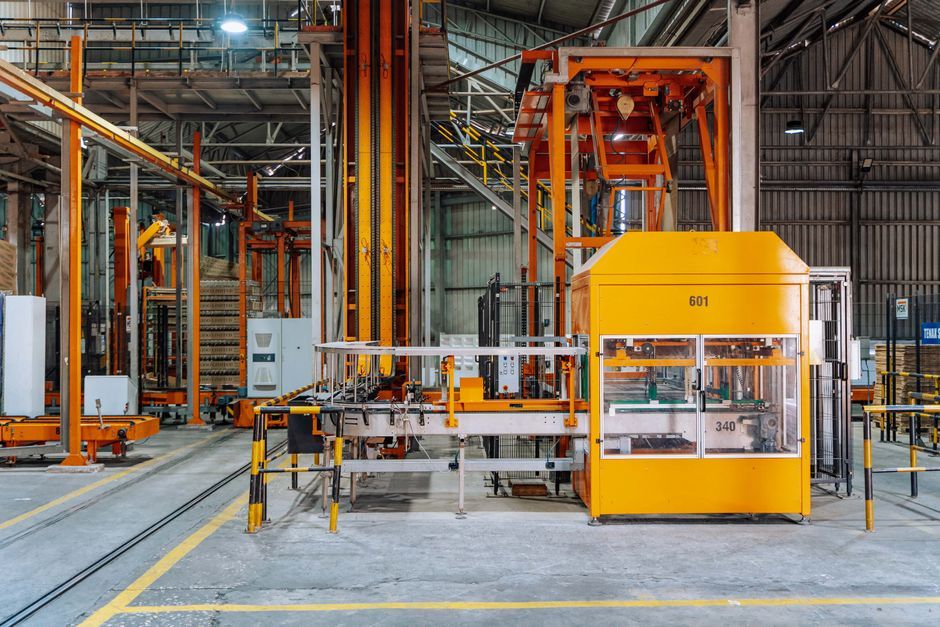
Stock photo for illustration only, not from the actual event
Nevertheless, deep tech ventures must navigate rigorous transitional phases ranging from industrial-scale testing, mass production, cost optimization, and supplier establishment to customer acquisition. China's concerted effort to bridge these gaps forms the heartbeat of modern industrial competition, as nations capable of swift commercialization and resilient supply chain management capture the fastest market expansion.
Yet, this immense industrial scaling brings distinct economic imbalances. During the first half of 2026, while high-tech manufacturing surged, retail sales grew by a mere 1.3%, private investment contracted by 8.5%, and real estate investment dropped by 18%. This disparity indicates that production capacity is expanding much faster than domestic purchasing power recovery, forcing excess goods into international markets and stoking fierce price competition and trade tensions.
Analytical Context: The phenomenon of industrial overcapacity in China highlights a crucial macroeconomic lesson for developing economies. When manufacturing output outpaces domestic demand, it frequently triggers aggressive price wars and international trade friction, requiring destination markets like Thailand to fortify local industry defenses and upgrade product standards.
As ASEAN and Thailand remain geographically and economically intertwined with these shifts, investment capital continues to flow inward. During the first half of 2026, Thailand registered total investment promotion applications worth 1.47 trillion baht, with foreign direct investment accounting to 1.37 trillion baht. Among these, Chinese investors submitted 321 project applications valued at approximately 45,800 million baht, reinforcing Thailand's position in regional supply chain realignment.
The true opportunity, however, lies far beyond factory headcounts or capital volumes. The pressing question is whether this investment wave will help Thailand climb higher up the value chain. If factories are located in Thailand while research, software design, and intellectual property remain abroad, the country's structural role in the supply chain may remain largely unchanged.
Ultimately, Thailand's core mission is to transform capital investment into genuine capability through human capital development, local supplier upgrading, R&D promotion, and tighter synergy between universities and technology sectors, ensuring long-lasting economic value long after the investment wave settles.
Source: Techsauce
Found something wrong in this article? Report an issue with this article
Comments
Leave a Comment