

Agata Kurzela Studio Weaves Emirati Craft into Zayed National Museum
Agata Kurzela Studio shapes the interiors of the Zayed National Museum in Abu Dhabi around cycles of time, ritual, and material memory.

Stock photo for illustration only, not from the actual event
- Agata Kurzela Studio designed the interiors for the Zayed National Museum in Abu Dhabi.
- The concept is structured around the Al Durour calendar and regional traditions.
- Natural materials like wool, rope, and local stone define the tactile palette.
- Collaborations with regional designers and artisans integrate contemporary craftsmanship.
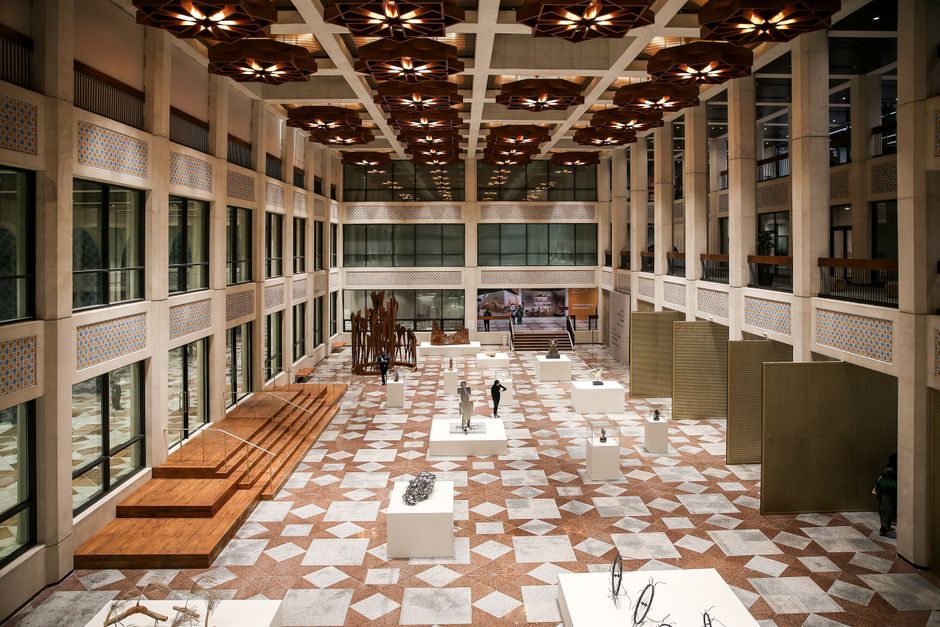
The interior concept by Agata Kurzela Studio for the Zayed National Museum in Abu Dhabi, United Arab Emirates, is structured around cycles of time, ritual, and material memory. At Majlis Al Shaheen, the tradition of welcoming guests with gahwa informs a palette of textures and references associated with dates, coffee pots, and woven safeefah. On the first floor, interconnected meeting spaces are arranged around a central courtyard. Their spatial sequence draws from the Al Durour calendar, a traditional regional system that divides the year according to ecological and climatic changes. This reference is expressed through variations in spatial density, color, and surface texture across the sequence of rooms.
The luminous atrium, Al Liwan, retains a more open and monumental character, providing areas for orientation and pause beneath the building's large-scale architecture. A modular seating system developed by the studio is integrated into the space as part of its architectural organization. The majlis interiors adopt more contained material palettes. Majlis Al Hurr 1 references Al Sheta, the winter season, through muted greens, desert-inspired tones, and embroidered motifs associated with rain, while Majlis Al Hurr 2 responds to Al Qaith, the intense summer period, through a brighter palette. In the main Boardroom, Al Saif informs the interior, with kandura-imprint wall panels introducing a direct material reference to regional clothing.
Stock photo for illustration only, not from the actual event
Integrating traditional ecological calendars like Al Durour into interior architecture highlights a growing trend in modern museums to embed deep cultural roots into contemporary spaces. This approach not only provides a distinct spatial identity but also allows visitors to intimately experience regional heritage through tangible architectural elements.
The Research Library adopts a more graphic and contrasting material language inspired by the construction and material qualities of the Bedouin tent. Positioned overlooking the Magan Boat and its black woollen sail, the library combines burnished bronze, solid timber, and semi-raw wool sofa systems. Across the museum, the material palette incorporates wool, rope, hand-thrown ceramics, camel leather, patinated metals, and local stone, establishing physical connections to regional craft traditions. In Majlis Al Shaheen, custom carpets feature long tactile fringes referencing animal fur, alongside patterns derived from traditional carved wooden doors.
The development of these elements involved material testing, kiln trials, and full-scale prototyping carried out with local artisans and regional workshops. Details were developed specifically for the museum to meet technical and performance requirements while retaining evidence of handcraft within the finished surfaces and objects. Collaboration forms an integral part of the interior design strategy. Agata Kurzela Studio directed the overall design and developed key elements including the custom library furniture, boardroom tables, lighting fixtures, and studio carpets, while a wider group of regional makers contributed bespoke pieces.
All carpets were woven by Zuleya, with hand-finished Emirati tassels developed in collaboration with tarboush specialist Loretta Bilinskaite. Furniture and lighting include modular bead benches by Abdalla Al Mulla, Takya stone-embedded sofas by Aljoud Lootah, Nomad chairs by Latifa Saeed, reinterpreted residential seating by Omar Al Gurg, and lighting pieces by Roudha Al Shamsi, Alya Al Ghefeli, Khalid Shafar, and Nader Gammas. The museum also incorporates artworks by Afra Al Dhaheri, Juma Al Haj, Michael Rice, and Stephanie Neville, connecting the institution's historical subject matter with current practices in Emirati design, art, and craft.
Source: designboom
Found something wrong in this article? Report an issue with this article
Comments
Leave a Comment